

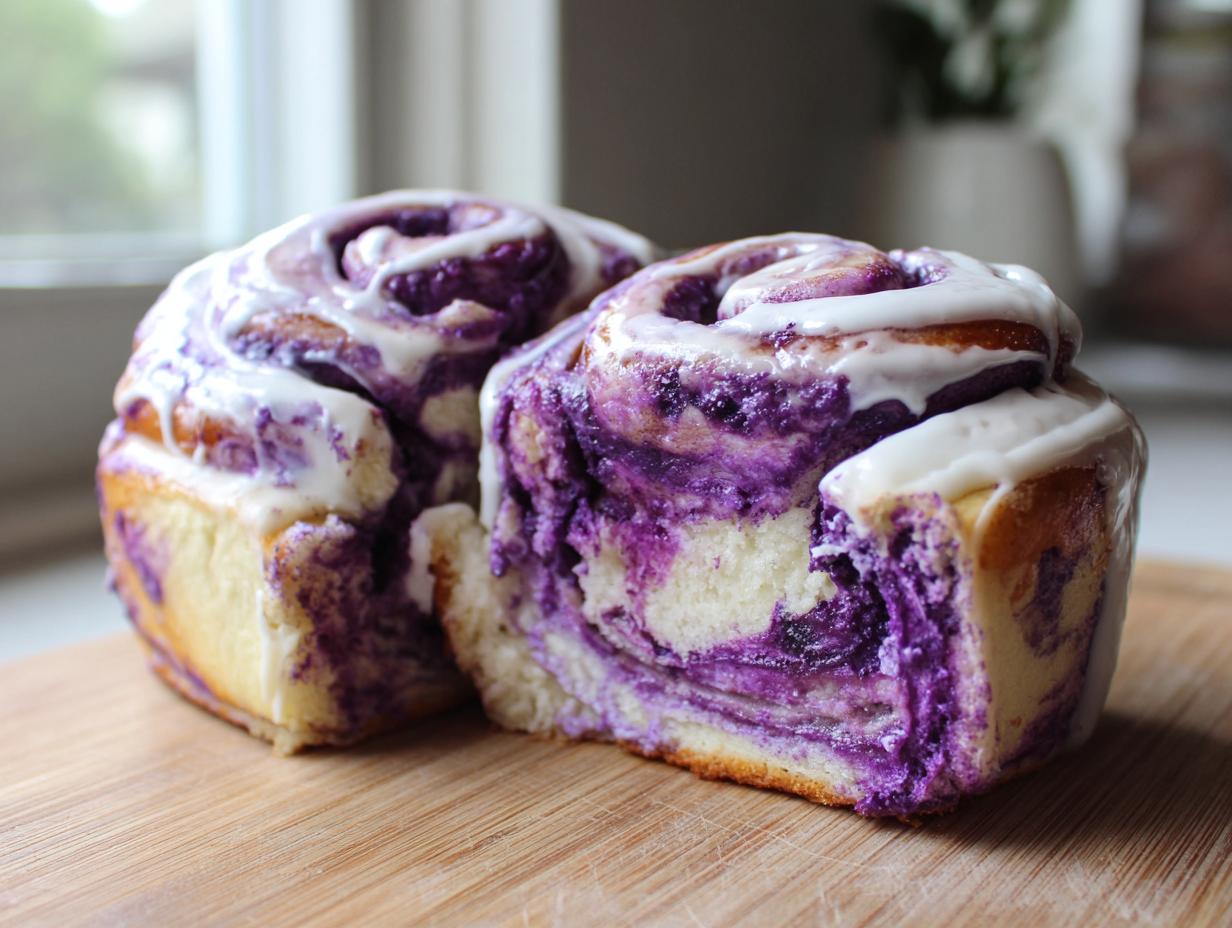
Doesn’t food just taste better when it’s spectacularly colored? I’m Amelia, and coming from a family that loves heritage baking, I’m always looking for ways to honor my roots while embracing comfort food classics. That’s where this recipe was born: the marriage of the gorgeous, earthy flavor of Filipino ube with the warm, gooey swirl of a perfect American staple. Forget everything you thought you knew about boring breakfast pastry; these ube cinnamon rolls are showstoppers! I worked hard to adapt my grandmother Daisy’s patient mixing philosophy to this unique dough, ensuring you get that incredible vibrant purple color and the softest texture imaginable, right here in your own kitchen. You can read more about my journey back to my roots on our About Page.
- Why You Will Love This Ube Cinnamon Rolls Recipe
- Gathering Ingredients for Your Ube Cinnamon Rolls
- The Soft Ube Dough Tutorial for Perfect Ube Cinnamon Rolls
- Preparing the Rich Cinnamon and Ube Filling
- How to Shape and Bake Your Ube Cinnamon Rolls
- Crafting the Cream Cheese Glaze for Ube Rolls
- Tips for Sourcing Ube Ingredients and Variations
- Frequently Asked Questions About Ube Cinnamon Rolls
- Storing and Reheating Your Homemade Ube Pastries
Why You Will Love This Ube Cinnamon Rolls Recipe
I know there are a million cinnamon roll recipes out there, but trust me, you need these in your life. This isn’t just another sweetened bread; it’s an experience! If you’ve been looking for that perfect showstopper brunch item, you’ve found it. Here’s why I think this recipe for ube cinnamon rolls is going to become legendary in your house, just like it is in mine.
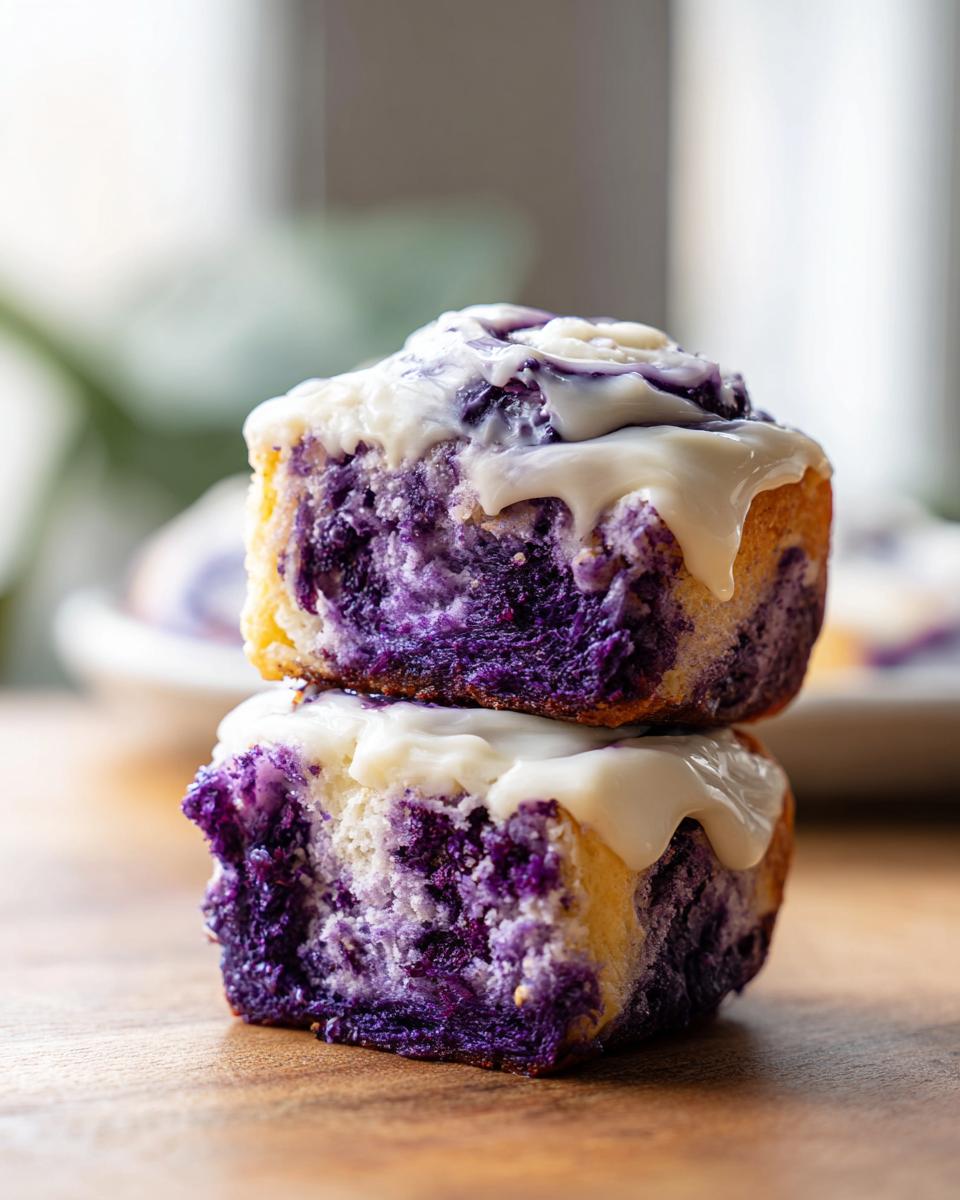
- That Color, Though! Seriously, you won’t believe how vibrant they are! The natural purple yam brings this incredible, deep hue that makes people stop and stare. They look totally fancy, but they are surprisingly easy to pull off.
- Flavor Harmony: I worried the ube and cinnamon would clash, but they don’t! The warm, familiar spice complements the slightly nutty, earthy sweetness of the purple yam perfectly. It’s unique without being strange.
- Grandma’s Texture Secret: We used some of my Grandma Daisy’s techniques in the dough mixing process, and it pays off huge. These rolls are unbelievably soft and pillowy, never dense or dry, even the next morning.
- The Cream Cheese Factor: The tanginess in the generous cream cheese glaze cuts through the richness of the filling so beautifully. It’s the perfect creamy topping for these vibrant rolls. If you want to see another simple, delicious pairing, check out my thoughts on my favorite sugar cookie frosting!
- It’s A Great Project: If you love the process, this recipe gives you beautiful milestones—the yeast blooming, the dough turning purple, the incredible smell while baking. It’s very rewarding!
Gathering Ingredients for Your Ube Cinnamon Rolls
Okay, the fun part—gathering our supplies! Because we are aiming for the absolute best, softest ube cinnamon rolls here, precise measurement is key, especially when we get to that flour and yeast. Trust me on this; taking an extra minute now prevents a sticky disaster later! Since ube halaya is the star, make sure you track down a good quality jar of it. If you’re unfamiliar, it’s a sweet, thick purple yam jam, and it’s worth the hunt. You can usually find it in the international aisle of big grocery stores or at any Asian market.
We’re making three main components, so I’ve broken down the list below. This is the exact inventory I use when I bake a batch for my Sunday brunch crew. It’s almost like setting up my mise en place, just like they taught me!
For ingredient substitution ideas, especially if you can’t find ube halaya right away, make sure to check out my tips later on in the post, but for now, get these staples ready. If you love a great cream cheese element, you might also want to bookmark my recipe for Cream Cheese Banana Bread!
For the Dough: The Foundation
- 1 cup whole milk, warmed (Needs to be warm, like bathwater—not hot!)
- 2 1/4 teaspoons active dry yeast (That’s one standard packet, usually!)
- 1/4 cup granulated sugar
- 1 large egg, room temperature (Let it sit out for 30 minutes before you start!)
- 1/4 cup unsalted butter, melted
- 1 teaspoon salt
- 3 1/2 cups all-purpose flour, plus more for dusting (Seriously, spoon and level this!)
- 1/2 cup ube halaya (This is what gives us that amazing natural color!)
For the Filling: All That Good Stuff
- 1/2 cup unsalted butter, softened (It needs to be nice and spreadable, but not oily)
- 1 cup packed light brown sugar
- 2 tablespoons ground cinnamon
- 1/4 cup ube halaya
For the Glaze: That Final Touch
- 4 ounces cream cheese, softened
- 1/2 cup unsalted butter, softened
- 3 cups powdered sugar, sifted (Sifting is non-negotiable for a lump-free glaze!)
- 1 teaspoon vanilla extract
- 2 tablespoons milk or heavy cream (Add slowly until you get the perfect drizzle)
The Soft Ube Dough Tutorial for Perfect Ube Cinnamon Rolls
Alright, let’s get scientific for a minute, but don’t worry, it’s the fun kind of sticky science! Making yeast dough can feel intimidating, but it’s really just about patience. Remember how my grandma Daisy always said that happy yeast makes a happy loaf? We start there! In a big bowl, you want to combine your warm milk—and I mean warm, like a cozy blanket, not a raging hot tub, or you’ll kill the yeast!—with the yeast and a tiny bit of sugar. Wait about ten minutes until it gets foamy. If it blooms right up like that, we’re good to go! If you’ve seen my sourdough process, you know how important this first step is; you can check out my whole guide on making a sourdough starter from scratch if you want to get really deep into yeast magic!
Next, you toss in the rest of your wet ingredients and the salt, then start adding the flour bit by bit. This is where you need my secret tip for the softest dough possible: don’t scoop the flour directly from the bag! That compacts it too much. Instead, spoon the flour loosely into your measuring cup, then level it off with a knife. Trust me, getting that flour measurement right is how we avoid dry, boring rolls.
Once you have a shaggy mass, it’s time for the manual labor. Turn that dough out onto a floured surface and knead for a full 8 to 10 minutes. You are looking for smooth, elastic dough—it should spring back slightly when you poke it. Only then do we introduce the magic ingredient for these fantastic ube cinnamon rolls!
Incorporating Ube Halaya for Color and Flavor
When the dough is smooth and feels ready, that’s the moment to bring in that sweet, sticky ube halaya. Break it into a few pieces and start kneading it right in. This part takes patience because the jam will look messy at first! It’ll streak yellow and purple, but keep folding and pushing. You want to knead for just a few minutes extra—maybe two or three—until that gorgeous, vibrant purple hue is completely uniform throughout the dough. Don’t over-knead past this point, or you might toughen up all that beautiful gluten we just built.
Preparing the Rich Cinnamon and Ube Filling
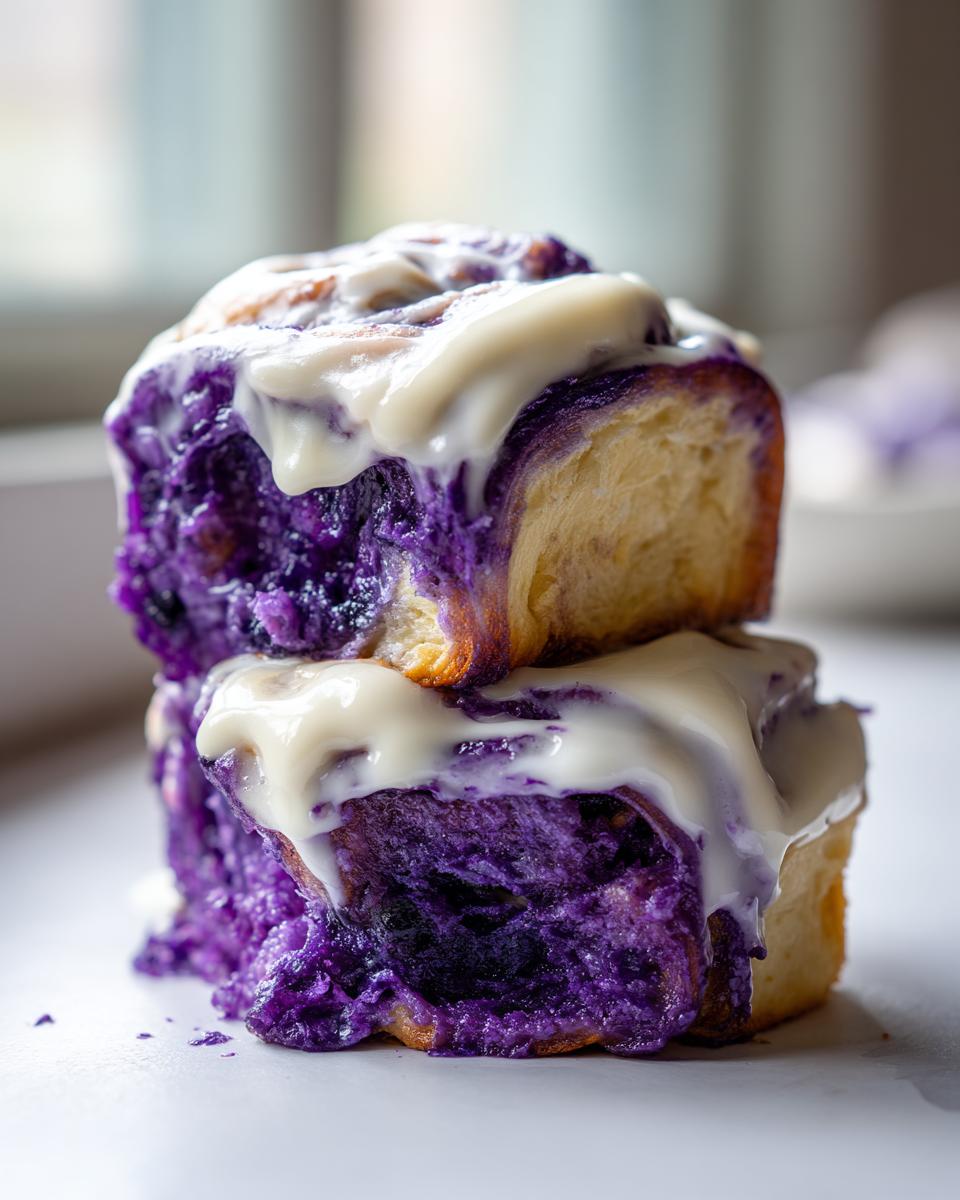
Now that our stunning purple dough is resting—and hopefully, your kitchen smells a little bit like sweet earth and promise—it’s time to whip up the heart of the roll! This filling is where we layer on that classic comfort flavor we all crave with a secondary little burst of ube richness.
The secret to a filling that spreads like a dream and doesn’t tear your delicate dough later is totally dependent on your butter consistency. Remember how I mentioned the butter for the dough needed to be melted? For the filling, we want the exact opposite! The butter needs to be perfectly softened. If it’s too cold, you’ll end up dragging and pulling holes in your beautiful, risen dough when you try to spread it, and trust me, we don’t want to deflate all that hard work!
Get yourself a small bowl. Get that softened butter in there first. Then, add your packed light brown sugar—packing it tight ensures we get enough sweetness without adding too much dry graininess—and your cinnamon. This is the moment you get to appreciate the amazing scent of cinnamon by itself before it even hits the oven. If you are obsessed with excellent cinnamon spreads, you have to check out my recipe for Copycat Texas Roadhouse Cinnamon Butter; it’s divine!
Once you’ve creamed the butter and brown sugar until it’s starting to look sandy and smooth, stir in that final quarter cup of ube halaya. That bit of jam in the filling adds moisture and another layer of that amazing purple flavor right into the swirl. Mix it just until everything is combined into a thick, easily spreadable paste. Don’t overmix! We want it ready to go so we can move onto shaping the rolls when our dough is perfectly puffy.
How to Shape and Bake Your Ube Cinnamon Rolls
The dough has risen, the filling is mixed, and now comes the satisfying part where we turn that soft purple cloud into actual, rollable treats! This is where we build in those beautiful, tight spirals that define a great sweet roll. Don’t rush this shaping process; it’s what guarantees those satisfying, colorful swirls in every slice of your ube cinnamon rolls.
Carefully punch down your risen dough—it should deflate with a lovely sigh—and turn it out onto a lightly floured surface. You need to roll this dough into a very specific shape: a 12 by 18-inch rectangle. If you can get it close to those dimensions, you’re golden! Take your time getting the edges relatively even. Once you have your rectangle, grab that rich filling we just made and spread it evenly across the entire surface. I mean *everywhere*, but leave about a 1-inch border clear along one of the long edges. This border is your seal, and it’s super important!
Now, starting from the long edge *opposite* that empty border, roll that dough up as tightly as you possibly can without squishing the air out. Think of it like rolling a yoga mat—snug! When you reach the end, use the empty border to seal the log. Just pinch that seam together firmly. If you skip the sealing, the rolls will try to unwind while they bake, and nobody wants messy oven sides.
After sealing, use a very sharp, un-serrated knife or, even better, dental floss (seriously, it makes perfectly clean cuts!) to slice that log into 12 even pieces. Try to keep those cuts straight down so your swirls stay defined. Place your cut rolls, snug but not squished, into a well-greased 9×13 inch baking pan. They need another rest—this is the second rise. Cover them gently and let them sit in a warm spot for 30 to 45 minutes. They should look puffy again, almost touching each other when they are ready.
Here’s a crucial timing note: During the last 15 minutes of that second rise, turn your oven on to 375 degrees Fahrenheit. We want everything hot and ready for blast-off! If you’re looking for other sweet roll inspiration, I have a fantastic twist when I combine them with fruit over on my Cinnamon Roll Apple Pie recipe.
Achieving the Perfect Bake Time for Purple Yam Cinnamon Rolls
The actual baking time is usually about 20 to 25 minutes, but you have to watch them! If you notice the edges of your purple yam cinnamon rolls are turning a bit too brown too quickly, you can loosely place a piece of foil over the top to shield them. We aren’t aiming for a dark golden crust here, remember; we want them cooked through but still tender.
How do you know they are done? First, look for that light golden color on the very top edges, but since these are purple, that might be hard to see! The real tell is texture. Gently press the top of a center roll with your finger. It should feel springy, not dense or squishy. If you suspect the very center might still be doughy (this happens in deeper pans!), take one roll out, pull it apart slightly, and check the inside. You want moist crumbs clinging to the strands, not wet, sticky batter. If it looks wet, pop them back in for another three minutes and check again. We want tender, gooey insides, not raw dough!
Crafting the Cream Cheese Glaze for Ube Rolls
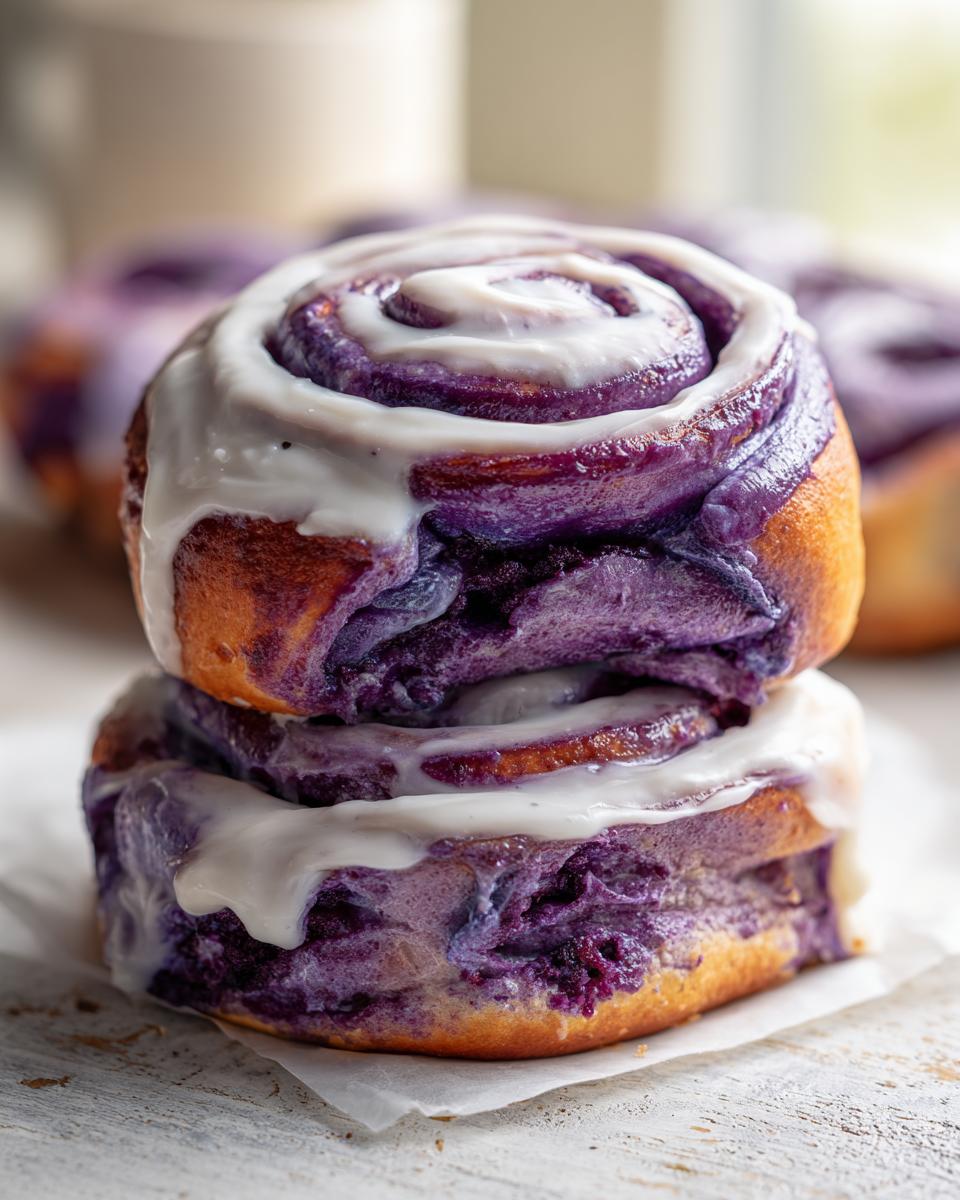
The moment those warm, purple, sweet rolls come out of the oven, you know what time it is? Glazing time! If you skip this step, I’m going to be sad, because that tangy cream cheese frosting is the perfect counterpoint to the earthy sweetness of the ube and cinnamon filling. We aren’t aiming for a thin, watery liquid here; we want a thick, luxurious blanket that sets up just enough to hold its shape.
The key to that perfect, lump-free texture is starting with room temperature dairy and fat—just like in baking, temperature matters! Make sure your cream cheese and the half-cup of butter you’re using are genuinely soft. If they aren’t soft, you’ll end up with little chunks of hardened cheese floating around in your beautiful glaze, and nobody wants that work.
Start by beating the softened cream cheese and butter together first. I use my hand mixer on medium speed until everything is perfectly smooth and fluffy, almost like an airy paste. This takes about a minute. You can see the difference between this step and just jamming them together with a spoon!
Now, we add the powdered sugar. This step needs patience! Add the sifted powdered sugar one cup at a time. If you dump it all in at once, you’re asking for a sugary cloud explosion in your kitchen—and trust me, I learned that lesson the hard way when I was younger! Mix on low speed until it’s just incorporated, then kick the speed up to medium to whip a little air into it.
Once all the sugar is in, you’ll likely have a very thick, stiff frosting. This is where the vanilla extract and the milk or cream come in. Add those two tablespoons of milk slowly, mixing the whole time. You only want to add just enough liquid to make it easily spreadable for your gorgeous rolls. If it looks too thick to drizzle, add another teaspoon of milk, one at a time, until it flows smoothly off your spatula but still holds its body. If you happen to overdo it with the milk, don’t panic! Just dump in another quarter cup of powdered sugar and beat it smooth again. If you ever need a solid, stable frosting base for other projects, I swear by my recipe for Ultimate Fluffy Stable Buttercream!
Don’t wait for the rolls to get completely cold! Spread this luscious glaze generously over the rolls while they are still slightly warm. That warmth helps the glaze melt just slightly, allowing it to settle right down into all those beautiful purple swirls you worked so hard to create.
Tips for Sourcing Ube Ingredients and Variations
Look, making these ube cinnamon rolls is one thing, but finding the star ingredient, ube halaya, can sometimes feel like a small quest! I totally get it. When I first started exploring Filipino flavors, I felt a bit lost wandering the international aisle. But don’t let sourcing stop you from making these vibrant purple beauties! I’ve learned a few tricks over the years to help you, just like my Grandma Daisy always managed with whatever she had on hand.
Your absolute best bet is finding ube halaya (which is cooked, sweetened, and mashed purple yam) pre-made. Check the freezer section or the international aisle of larger standard grocery stores. If you can’t find it, and you don’t have a dedicated Asian market nearby, you *can* improvise, though the texture might change a bit. Remember that note in the recipe? If you are short on halaya for the filling, you can totally substitute it with ube extract and sugar. The extract gives you that amazing flavor and color component without the thick jam texture. You’ll want to mix about a teaspoon of extract with two tablespoons of sugar and maybe a tiny bit of cornstarch to mimic the thickness.
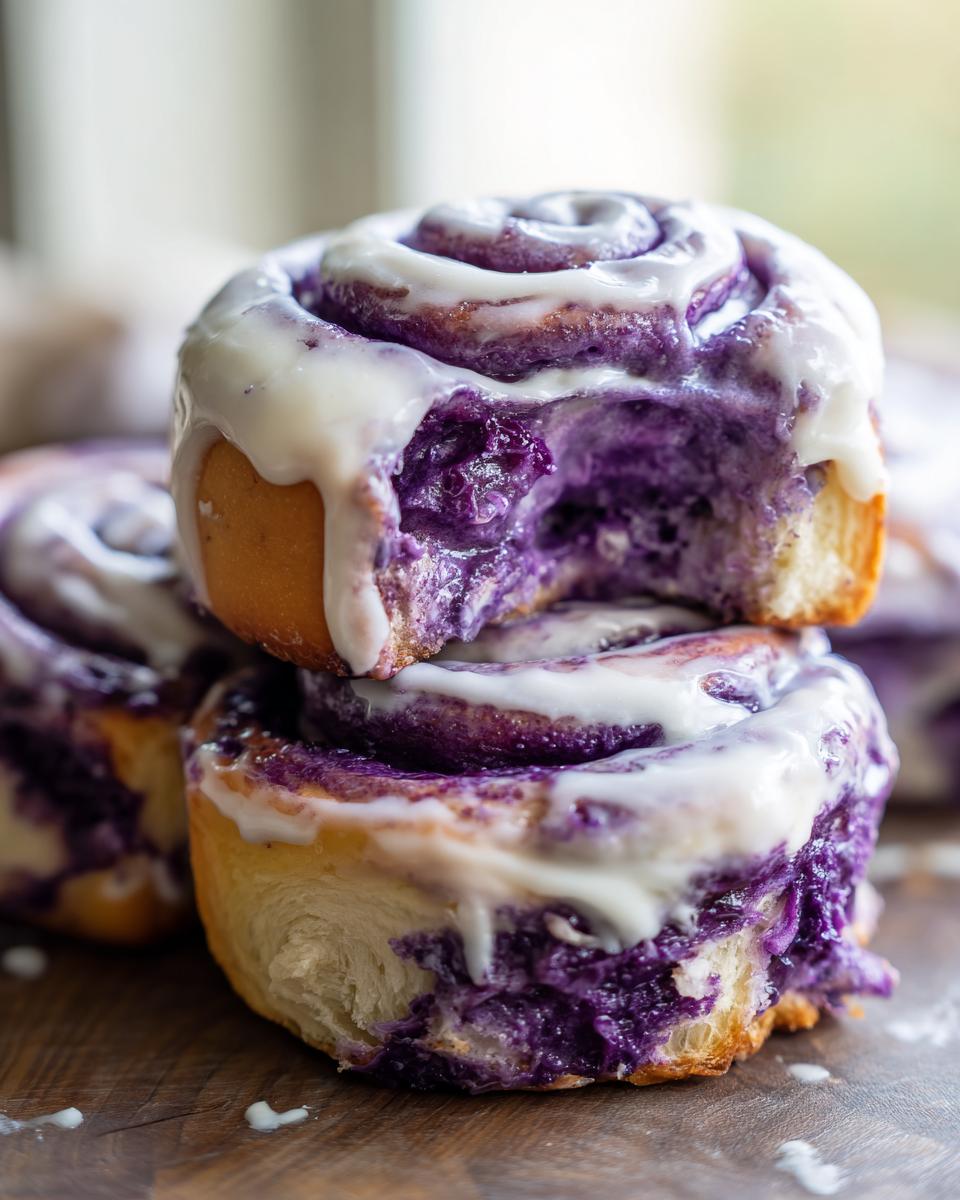
Also, if you want to double down on that gorgeous color, try this little trick for your glaze! Take a quarter teaspoon of ube extract (not halaya, just the extract!) and whisk it right into your cream cheese frosting when you add the vanilla. It kicks the purple up a notch without affecting the taste much at all. The richness of the cream cheese handles the flavor beautifully. Think of it as a secret weapon for achieving maximum visual impact!
For those who might want a slightly different spice profile, try swapping just one tablespoon of the cinnamon for ground cardamom in the filling. It brings a slightly floral note that pairs surprisingly well with the yam. It’s fun to experiment, but I always recommend trying the classic cinnamon first so you can appreciate the foundation of this amazing fusion pastry. If you like experimenting with citrus flavors in your bakes, you should definitely bookmark my recipes for Orange Juice Cake!
Frequently Asked Questions About Ube Cinnamon Rolls
I know when you look at something this colorful and unique, you’re bound to have a few questions before diving in. Believe me, I did too! I’ve gathered the ones I get asked most often about these beautiful ube cinnamon rolls below. If you have a question that isn’t answered here, drop it in the comments, and I’ll personally get back to you. Every baker deserves success, so we need to clear up any confusion about the texture or sourcing that makes these Filipino Dessert Rolls so special!
Why is my Ube Cinnamon Roll dough purple in some spots and not others?
Ah, this usually means you didn’t knead in the ube halaya quite long enough! Remember I said to keep kneading until it was *uniformly* purple? If you stop too soon, you’ll get those streaks, which technically look cool, but when you bake them, the unmixed dough spots can bake up a little harder or just taste plain. The key to even color in your Soft Ube Dough Tutorial is making sure that sticky jam is fully dispersed before the first rise. Keep working the dough until it looks like a lovely lavender canvas!
How should I store leftovers to keep them soft?
Since these rolls have that rich, buttery filling and the heavy cream cheese glaze, storage is important. If you plan to eat them within the first day, keeping them covered tightly at room temperature is fine. However, for longer storage, my advice is always to refrigerate them inside an airtight container. The cold can stiffen the glaze a bit. To bring back that fresh-from-the-oven tenderness, don’t microwave them straight from the fridge! Instead, wrap your portion loosely in a paper towel and heat them for about 15-20 seconds. That steams them just enough to soften the dough and melt the glaze perfectly.
Can I make the dough the night before? (A great tip for weekend brunches!)
You absolutely can, and I highly recommend it if you’re planning a big weekend brunch featuring these Vibrant Purple Baked Goods! After you’ve mixed the dough and incorporated the ube halaya but *before* the first rise, you can heavily grease the bowl, cover it tightly with plastic wrap, and pop it in the refrigerator overnight. The cold temperature slows the yeast way down. Then, the next morning, just let it sit on the counter for about an hour to take the chill off before you proceed with the rest of the rising and shaping instructions. It makes the morning so much less rushed!
I can’t find Ube Halaya—what’s the best substitute for these Ube Sweet Rolls?
This is the most common question I get! If you truly cannot source the jam, you have to rely on the extract, but you need something to thicken it up, otherwise, you’ll just have purple liquid seeping out everywhere. For the filling, I suggest using about 2 teaspoons of good quality ube extract mixed with 1/4 cup of softened butter, 1 cup of brown sugar, and about 2 tablespoons of cornstarch. The cornstarch will help that filling stay put. If you want to learn more about handling slow-rising doughs, my guide on making sourdough starter goes into a lot of detail on temperature control!
Storing and Reheating Your Homemade Ube Pastries
Once you’ve finished glazing those beautiful rolls, the last thing anyone wants is for them to go stale! These sweet treats are best enjoyed the day you bake them, but let’s be real—there are usually leftovers. We want to treat these delicate rolls right so they stay soft and flavorful.
If you’re lucky enough to have any remaining, you have two main options based on how soon you plan to eat them. For short-term storage, say, 24 hours, keeping them covered tightly on the counter at room temperature is perfectly fine. If you use a container with a tight-fitting lid, they should maintain their soft exterior nicely. My grandmother Daisy always kept leftovers under a big glass dome, and honestly, I think the presentation helped them disappear slower!
If you know you won’t get to them until day two or three, you absolutely need to move them to the refrigerator in an airtight container. Storing them airtight prevents them from drying out against the cold air. Just know that the colder temperature will make the cream cheese glaze firm up a bit—it will get solid, almost like fudge. Don’t worry; that’s fixable!
The Secret to Reheating for That Fresh-Baked Feel
Reheating is where we bring these pastries back to life, and it requires a little bit of moisture management. You absolutely should not just microwave them cold from the fridge, or you’ll end up with a dense, hot center and brittle edges. We need gentle heat!
My method involves using the microwave in short bursts. Take the roll (or two!) you plan to eat and wrap it loosely in a barely damp paper towel. This might sound weird, but that damp towel creates steam around the pastry as it heats. Microwave it on 50% power for about 15 seconds. Check it. If it still feels slightly firm, give it another 5 to 10 seconds. That steam will completely re-moisten the dough, the butter in the filling will melt wonderfully, and the glaze will get that perfectly soft, oozy texture again.
If you’re warming up a whole pan of rolls, the best tool is the oven! Cover that pan loosely with foil so the tops don’t burn, and heat them in a 300-degree oven for about 10 minutes. It warms them through gently all the way to the center. If you love making delicious things warm, you should check out how I warm up my leftover banana bread—the same low temperature, foil-covered method works wonders!
PrintUbe Cinnamon Rolls with Cream Cheese Glaze

Make soft, vibrant purple yam cinnamon rolls using ube halaya for color and flavor. This recipe yields tender sweet rolls perfect for brunch or dessert.
- Prep Time: 45 min
- Cook Time: 25 min
- Total Time: 185 min
- Yield: 12 servings 1x
- Category: Breakfast
- Method: Baking
- Cuisine: Filipino Fusion
- Diet: Vegetarian
Ingredients
- For the Dough: 1 cup whole milk, warmed
- 2 1/4 teaspoons active dry yeast
- 1/4 cup granulated sugar
- 1 large egg, room temperature
- 1/4 cup unsalted butter, melted
- 1 teaspoon salt
- 3 1/2 cups all-purpose flour, plus more for dusting
- 1/2 cup ube halaya (purple yam jam)
- For the Filling: 1/2 cup unsalted butter, softened
- 1 cup packed light brown sugar
- 2 tablespoons ground cinnamon
- 1/4 cup ube halaya
- For the Glaze: 4 ounces cream cheese, softened
- 1/2 cup unsalted butter, softened
- 3 cups powdered sugar, sifted
- 1 teaspoon vanilla extract
- 2 tablespoons milk or heavy cream
Instructions
- Activate the yeast: In a large bowl, combine the warm milk, yeast, and a pinch of sugar. Let stand for 5 to 10 minutes until foamy.
- Mix the dough: Add the remaining sugar, egg, melted butter, and salt to the yeast mixture. Stir in the flour gradually until a shaggy dough forms.
- Knead in the ube: Turn the dough onto a lightly floured surface. Knead for 8 to 10 minutes until smooth. Incorporate the 1/2 cup of ube halaya during the last few minutes of kneading until the dough is uniformly purple.
- First rise: Place the dough in a lightly oiled bowl, turning to coat. Cover and let rise in a warm place for 1 to 1 1/2 hours, or until doubled in size.
- Prepare the filling: While the dough rises, mix the softened butter, brown sugar, cinnamon, and 1/4 cup ube halaya in a small bowl until well combined.
- Shape the rolls: Punch down the risen dough. Roll it out on a lightly floured surface into a 12×18 inch rectangle. Spread the ube filling evenly over the dough, leaving a 1-inch border on one long edge.
- Roll and cut: Starting from the long edge opposite the border, tightly roll the dough into a log. Pinch the seam closed. Cut the log into 12 equal rolls.
- Second rise: Arrange the rolls in a greased 9×13 inch baking pan. Cover and let rise again for 30 to 45 minutes. Preheat your oven to 375 degrees Fahrenheit during the last 15 minutes of the rise.
- Bake: Bake for 20 to 25 minutes, or until the tops are lightly golden brown and cooked through.
- Make the glaze: While the rolls cool slightly, beat the cream cheese and butter until smooth. Gradually add the powdered sugar, vanilla, and milk until you reach a thick, spreadable consistency.
- Glaze and serve: Spread the cream cheese glaze generously over the warm Ube Cinnamon Rolls. Serve warm.
Notes
- If you cannot find ube halaya, you can substitute it with 1/4 cup of ube extract mixed with 2 tablespoons of cornstarch and 2 tablespoons of sugar for the filling, though the texture will change.
- For an extra purple glaze, add 1 teaspoon of ube extract to the frosting mixture.
- To achieve the softest dough, measure your flour by weight if possible, or spoon the flour into the measuring cup rather than scooping directly from the bag.
Nutrition
- Serving Size: 1 roll
- Calories: 450
- Sugar: 45
- Sodium: 280
- Fat: 24
- Saturated Fat: 15
- Unsaturated Fat: 9
- Trans Fat: 0
- Carbohydrates: 58
- Fiber: 2
- Protein: 5
- Cholesterol: 65