

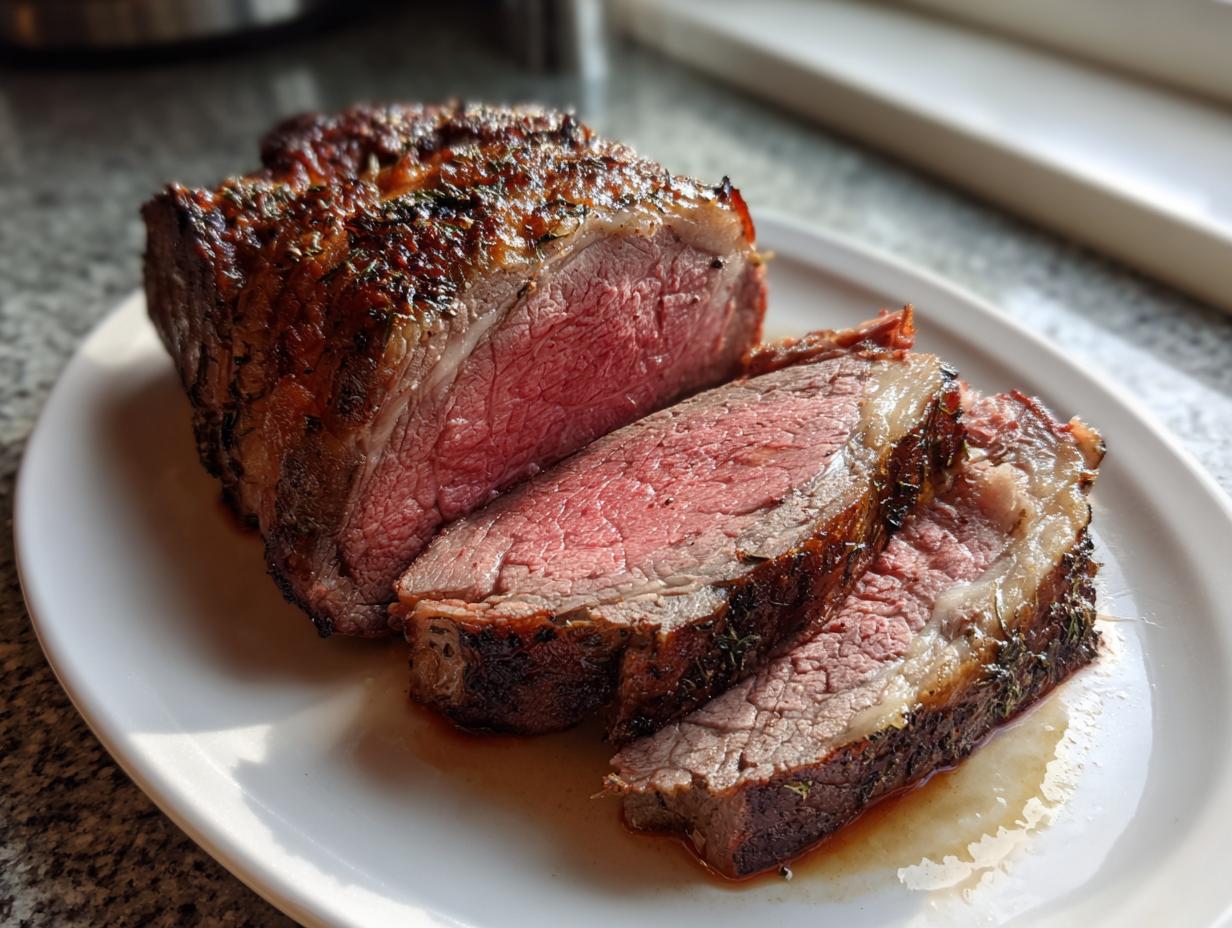
If you’ve ever avoided making a huge roast because you were terrified of ending up with dry, gray beef, I totally get it. I remember feeling that pressure when I first started cooking again, trying to reclaim some of that comfort from my grandmother Daisy’s kitchen. But here’s the secret I learned that changed everything for me: Forget the stress! We are making a totally foolproof garlic herb standing rib roast using the reverse sear method. Trust me, this technique practically guarantees the juiciest, most tender result possible. This standing rib roast is my absolute go-to for any special occasion dinner, and it’s about to be yours too! You can see how much I love a good technique like this over at our recipe for a quick sear.
- Why This Garlic Herb Standing Rib Roast is Your New Holiday Favorite
- Gathering Ingredients for Your Standing Rib Roast
- How to Prepare Your Garlic Herb Standing Rib Roast
- Tips for a Perfect Standing Rib Roast Every Time
- Serving Suggestions for Your Centerpiece Roast Dinner
- Storage and Reheating Instructions for Leftover Standing Rib Roast
- Frequently Asked Questions About Your Prime Rib Roast Recipe
- Nutritional Estimates for This Garlic Herb Standing Rib Roast
- Share Your Perfect Standing Rib Roast Experience
Why This Garlic Herb Standing Rib Roast is Your New Holiday Favorite
When you’re preparing a centerpiece that everyone will remember, you need reliability, not guesswork. That’s why I love this preparation! It delivers that truly perfect roast every single time, meeting all my high standards for a holiday showstopper. Forget dry meat; we are talking melt-in-your-mouth, tender roast beef here. It’s one of the most impressive beef dishes you can serve, but honestly, the method is surprisingly gentle. I learned so much perfecting my base prime rib recipe, which you can see here. It really sets the stage for this version!
- It guarantees edge-to-edge pinkness without any gray banding.
- The crust forms beautifully during that final blast of heat.
- You have more control over the final temperature than traditional roasting methods.
If you want to check out another method that prioritizes moisture, look at my slow-cooker stew—it proves that low and slow always wins for tenderness!
The Secret to a Juicy Roast Recipe: Reverse Sear Prime Rib
This is the game-changer for any large cut, especially the standing rib roast. Instead of blasting it hot right away, we cook it slowly at a low 250°F until it just kisses the perfect internal temperature. This slow cooking gets the meat perfectly even. Then, we blast it at 450°F just long enough to build that beautiful, dark crust you see on restaurant prime rib roast.
Flavor Profile: Herb Crusted Roast Beef
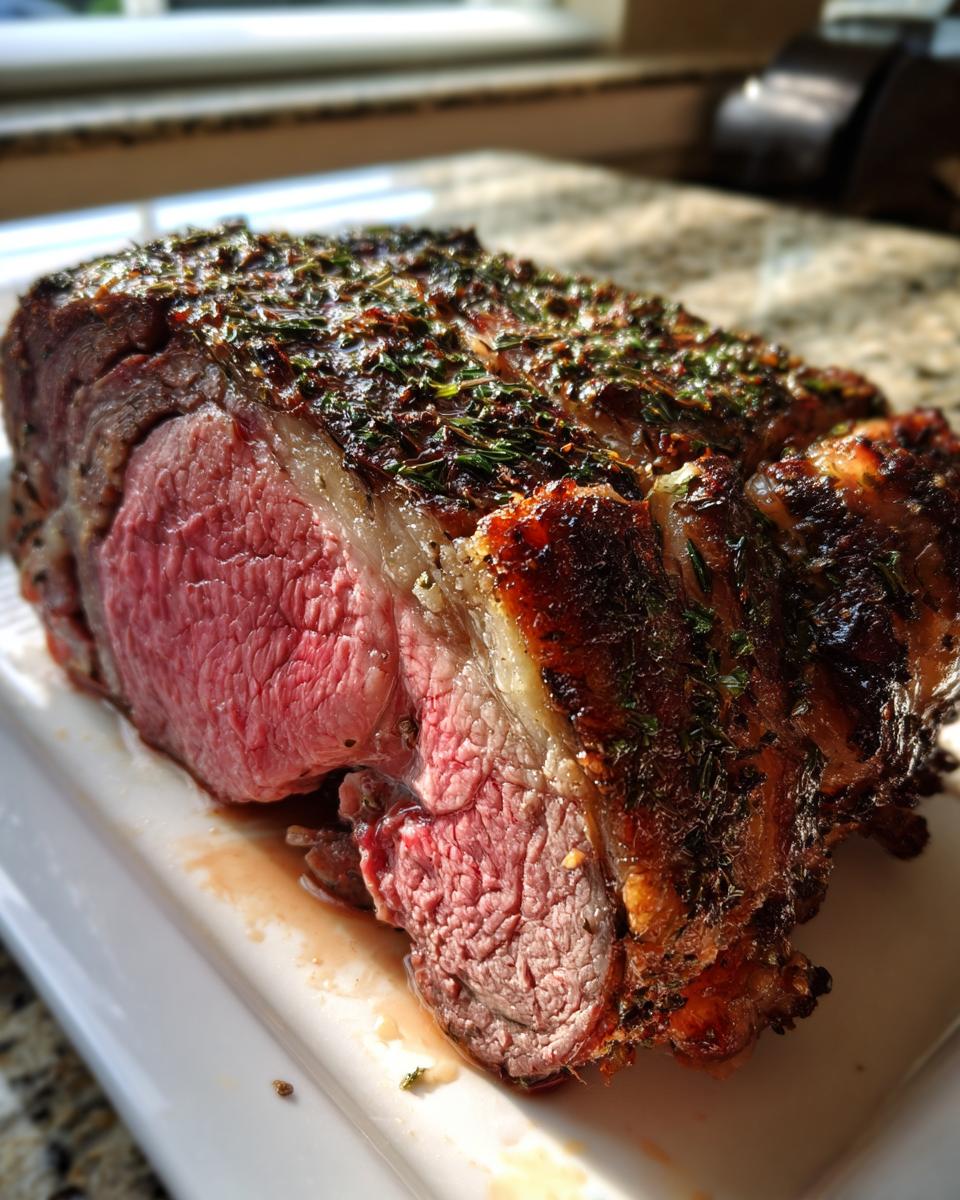
That glorious crust isn’t just for looks, though! We use a punchy mix of Dijon, butter, fresh rosemary, and garlic. This creates an incredibly fragrant barrier that essentially steams the meat underneath while it sears. You get that fantastic pop of savory herbs with every single slice of your garlic herb prime rib.
Gathering Ingredients for Your Standing Rib Roast
Alright, let’s talk ingredients. This is where simple quality shines, especially since we aren’t drowning the meat in overly complex marinades. For a truly amazing standing rib roast, you absolutely need to start with a good cut. I insist on a bone-in rib roast—it helps insulate the meat and keeps everything so much juicier. If you are looking for other ways to keep things simple and delicious, check out my garlic chicken side dish; it uses similar flavor starters.
Once you have that gorgeous cut, the rest is just about layering flavor into that crust. Don’t use cold butter, seriously! We need everything ready to go at room temperature so it spreads like silk.
Herb Paste Components for the Perfect Standing Rib Roast
This paste is the engine of our flavor profile. You’ll need a few things to make it perfectly spreadable:
- Softened unsalted butter (must be soft, not melted—this is key for spreading!)
- Fresh garlic, minced finely—none of that jarred stuff for this centerpiece!
- Fresh rosemary and thyme leaves, chopped up small.
- A teaspoon of Dijon mustard for a little tang that helps that herb crust adhere.
Mix these together carefully until you have one glorious, easy-to-spread mixture ready for the meat.
How to Prepare Your Garlic Herb Standing Rib Roast
This is the part where patience pays off, so don’t rush! Before we even think about turning on the heat for this beautiful oven roasted beef, we need to temper the meat. Take that glorious standing rib roast out of the fridge for a full three hours before cooking. This makes sure the internal temperature starts evenly, which is critical for the reverse sear method. While it’s sitting out, use paper towels to pat the entire surface bone-dry. Seriously, dry! A wet roast steams; a dry roast crisps!
Prepping the Roast and Creating the Herb Crust
Once dry, we build our flavor base. Mix up that garlic and herb paste we talked about—rosemary, thyme, garlic, Dijon, and soft butter—until it’s smooth. Then, rub the whole roast evenly with olive oil, season it aggressively with salt and pepper, and finally, spread that glorious herb paste all over the top. Spread it thick! This is your garlic herb prime rib flavor.
Executing the Reverse Sear for Your Standing Rib Roast
Now, preheat your oven low and slow to 250°F. Put the roast fat-side up on a wire rack in a pan—no covering allowed. You want that low temperature to gently bring the roast toward the final temperature you’re aiming for needed for cooking prime rib medium rare, which for me is about 120°F internally. Pull it out when it hits that mark. Seriously, use that thermometer! Then, let it rest on the counter for 20 minutes while the oven heats up to 450°F.
The Final Sear and Resting for Tender Roast Beef
This is the sizzle event! Return the roast to that screaming hot 450°F oven. You are only searing it for about 8 to 12 minutes. Watch it like a hawk! We are aiming for 125°F for rare or 130°F for medium-rare based on the thermometer reading. The instant it hits that, pull it out. Do not skip the final, mandatory rest—at least 20 minutes under foil. This resting period is what guarantees you end up with the most amazing juicy roast recipe possible, letting those juices settle back in for the best tender roast beef.
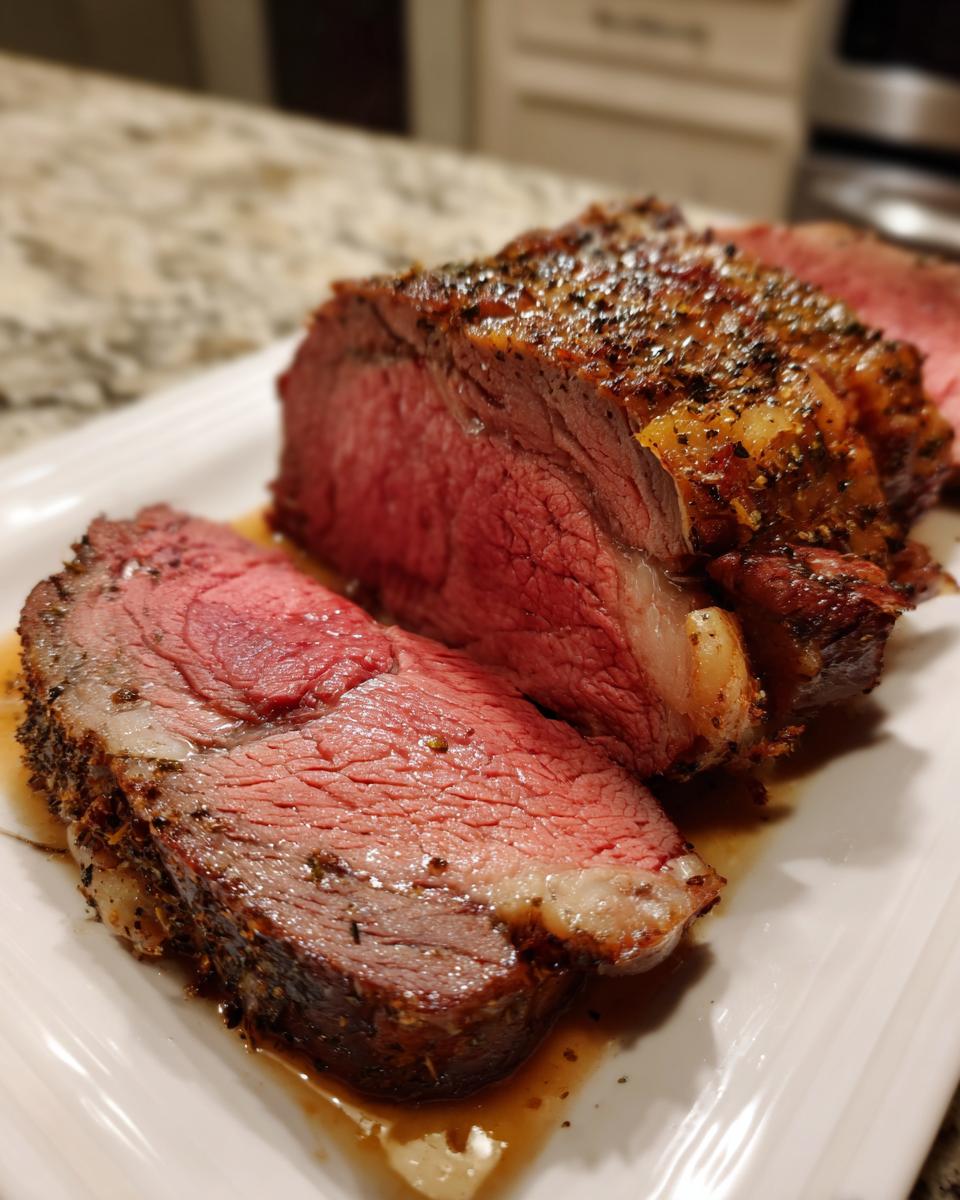
If you need any more tips on timing your sear perfectly for that rich flavor seen in recipes like this one from Simple Whisk, just keep reading!
And don’t forget, you can find help with those quick side dishes, like my baked ranch chicken if someone else is bringing a side!
Tips for a Perfect Standing Rib Roast Every Time
You know I live for that ‘no-fail’ outcome, especially with a big, beautiful centerpiece roast like this! Getting a spectacular standing rib roast isn’t about luck; it’s about obsessing over a few final details before you slice into that reward. That’s why I keep my thermometer handy—it’s my insurance policy for a perfect result. Seriously, if you want to nail that gorgeous pink center, relying on time alone is just asking for trouble, you know?
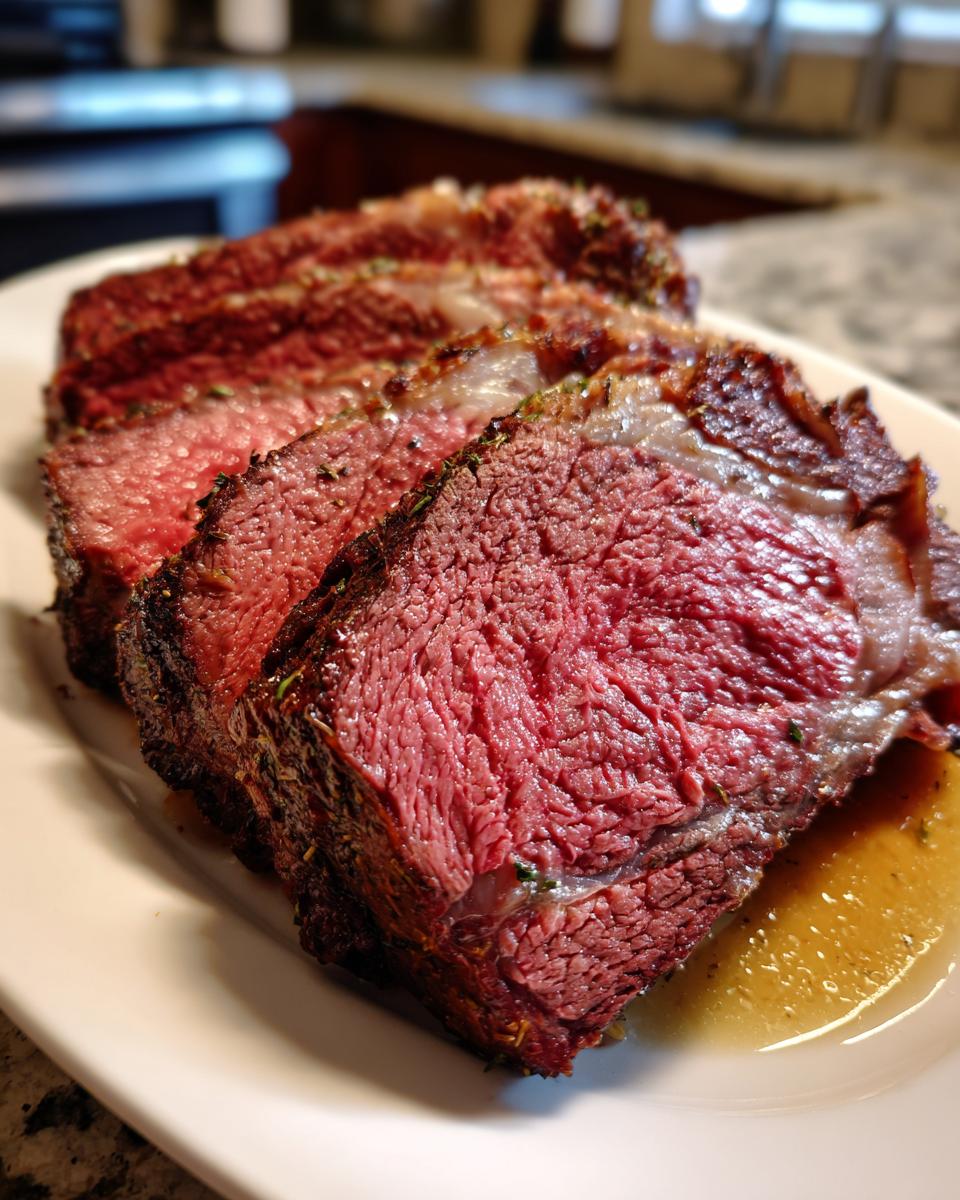
And don’t let those pan drippings go to waste! That liquid gold is perfect for making a savory holiday roast beef gravy to spoon over everything. It’s all about maximizing flavor from start to finish. If you want a little something sweet alongside your savory triumph, check out my caramel recipe—it’s surprisingly simple!
Temperature Checks for Cooking Prime Rib Medium Rare
My most important piece of advice when you’re trying to nail that perfect medium-rare is thermometer placement. You HAVE to insert the probe into the thickest part of the meat—the center of the roast. Make absolutely sure you don’t touch the bone underneath or the side of the pan, or your reading will be way off! For that beautiful, blush pink center—our goal for cooking prime rib medium rare—you want to pull the roast when the thermometer hits 125°F, because it keeps climbing during the rest. If you’re aiming for rare, pull it closer to 115°F before that final sear. You can see a great visual of the probe placement over at Drive Me Hungry; it really helps you visualize avoiding that bone!
Serving Suggestions for Your Centerpiece Roast Dinner
Once you’ve managed that perfect, juicy standing rib roast, the next joy is figuring out what to serve alongside it to make this a true special occasion dinner! You want accompaniments that stand up to that rich, beefy flavor without fighting it. My go-to is always something creamy and something green to cut through the richness. Everything tastes better when it’s served with a big, beautiful feast, right?
For potato fans, you absolutely cannot go wrong pairing this roast with my creamy sweet potato casserole—it brings just the right touch of holiday sweetness. If you’re looking for a warm, savory starter before the big moment, my French onion soup is incredible alongside a slice of the roast beef. It feels so gourmet, but I promise it’s easy!
Storage and Reheating Instructions for Leftover Standing Rib Roast
Oh my gosh, if you somehow have leftovers—which is rare in my house—you’re in luck, because this standing rib roast reheats beautifully! The trick to keeping it tasting like that amazing tender roast beef is to slice it thin *before* you store it. Don’t just stick the whole chunk in the fridge, because that dries out the exterior!
Store your thin slices in an airtight container. When you are ready to enjoy it again, the gentle heat is best. I like to warm just a few slices at a time in a small skillet over very low heat with just a tablespoon of broth or water underneath. This little bit of moisture steams them perfectly. If you’re looking for amazing soup ideas to use those leftover slices, you have to try my creamy tortellini soup, which is fantastic with savory beef mixed in!
Frequently Asked Questions About Your Prime Rib Roast Recipe
I know when you put this much time and love into a gorgeous standing rib roast, you want zero surprises when it’s time to slice! It’s normal to have questions, especially when using a method like the reverse sear. Don’t worry; I’ve gathered the things folks ask me most often about getting this amazing result. If you’re looking for more general guidance on roasting perfection, check out this great article on holiday dinners! If you’re already having trouble with your sweets, baking my banana bread is a great palate cleanser!
Can I use a boneless standing rib roast instead?
You absolutely can, though I always encourage the bone-in version for insulation and flavor—it just makes for a better experience overall! If you switch to a boneless cut, just be aware that it cooks a little quicker because there’s no bone shielding the center meat. Keep a really close eye on that thermometer. You might need to pull it out of the low oven 10 to 15 minutes sooner than the bone-in version calls for. That’s the beauty of the prime rib roast recipe: the thermometer is your guide!
What is the best internal temperature for this prime rib roast recipe?
This is the most important part of the whole process! Remember, those temperatures are pulled *before* the final resting period, as the roast will continue to climb a few degrees while it rests. For a perfect, rosy medium-rare, you want to pull this oven roasted beef when it hits 125°F in the thickest spot. If you want it closer to rare, pull it at 115°F. That final 450°F sear just firms up the outside! Hitting that sweet spot for cooking prime rib medium rare is what makes this method so reliable.
How long does the roast need to rest after cooking?
Never skip this step! You need to let the roast rest, tented loosely with foil, for a full 20 minutes after it comes out of that scorching oven before you slice into it. If you cut it right away—and I know how tempting that is!—all those beautiful juices that have settled during the cooking process will rush right out onto your cutting board, leaving you with a drier piece of meat. Resting allows the juices to redistribute, guaranteeing that incredible moisture you expect from a juicy roast recipe.
Is the reverse sear the absolute best way to cook this centerpiece roast dinner?
For me, hands down, yes! For a large cut like this, especially when you need that gorgeous color on the outside without turning the edges gray, the reverse sear is king. It treats the meat gently at a low temperature first, which is ideal for achieving that perfect edge-to-edge evenness. It takes a little longer overall, but you’re just hanging out, simmering a side dish perhaps, while the oven does the hard work for your beef centerpiece recipe!
Nutritional Estimates for This Garlic Herb Standing Rib Roast
Now, I know we aren’t making this magnificent roast for its health profile—it’s a rich, celebratory meal! But I always want to keep things transparent with you all, just like my Grandma Daisy did in her kitchen. I’ve pulled together some general estimates for a serving of this decadent roast beef. Please remember, these numbers are just a guideline based on an average 5-pound roast prepared exactly as written. If you trim more fat or add lots of our pan gravy, of course, those values will shift!
When we talk about serving size, we are looking at about 6 ounces of cooked meat per person. It’s rich, so a smaller slice goes a long way!
- Serving Size: 6 oz cooked meat
- Calories: Around 450
- Protein: That’s the star! Around 42g
- Fat: This comes primarily from the beef fat itself, around 30g total
- Carbohydrates and Sugar: Virtually zero, which is one upside to a pure meat centerpiece!
This is definitely a dish where the richness is the point, so enjoy it responsibly! It’s all part of that wonderful feeling of a true holiday feast.
Share Your Perfect Standing Rib Roast Experience
Well, friends, we made it! We took a big, beautiful bone-in cut and turned it into that incredible, edge-to-edge pink, juicy centerpiece roast that Daisy would be proud of. Honestly, seeing your triumphs in your own kitchens is the best part of this whole journey for me—it reminds me why I’m sharing all these lessons learned in my own little corner of this food world.
If you followed along and used that low-and-slow reverse sear for your standing rib roast, I really want to hear about it! Did it come out exactly how you hoped? Were your guests impressed by how tender and flavorful that garlic herb crust made the meat? Please, don’t be shy!
Take a moment to leave a rating right down below. And if you snapped a picture of that gorgeous slice of beef, tag me on social media so I can share the joy! It keeps the spirit of Daisy’s kitchen alive for me as I work on new recipes, like my super easy rocky road fudge for dessert!
Thank you for trusting me with your big holiday meal. Happy cooking, and I can’t wait to see how perfectly pink your roast turned out!
PrintFoolproof Garlic Herb Standing Rib Roast with Reverse Sear
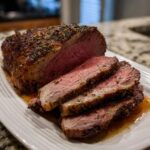
Create an impressive, juicy, and tender centerpiece roast for your special occasion using this straightforward garlic herb standing rib roast recipe featuring the reliable reverse sear method.
- Prep Time: 20 min
- Cook Time: 2 hr 15 min
- Total Time: 2 hr 55 min
- Yield: 6 servings 1x
- Category: Dinner
- Method: Roasting (Reverse Sear)
- Cuisine: American
- Diet: Low Fat
Ingredients
- 1 (4 to 6 pound) bone-in standing rib roast (prime rib)
- 2 tablespoons kosher salt
- 1 tablespoon freshly ground black pepper
- 1 tablespoon olive oil
- 6 cloves garlic, minced
- 2 tablespoons fresh rosemary, chopped
- 1 tablespoon fresh thyme leaves
- 1 tablespoon unsalted butter, softened
- 1 teaspoon Dijon mustard
Instructions
- Remove the roast from the refrigerator 3 hours before cooking. Pat the roast completely dry with paper towels.
- In a small bowl, combine the minced garlic, chopped rosemary, thyme leaves, softened butter, and Dijon mustard to create the herb paste.
- Rub the entire surface of the roast evenly with olive oil. Season generously all over with kosher salt and black pepper.
- Spread the garlic herb paste over the entire roast surface.
- Preheat your oven to 250 degrees Fahrenheit. Place the roast, fat side up, on a wire rack set inside a roasting pan. Do not cover the roast.
- Cook using the reverse sear method: Roast until the internal temperature reaches 115 degrees Fahrenheit for rare, or 120 degrees Fahrenheit for medium-rare. This usually takes about 1.5 to 2 hours, depending on size. Use a meat thermometer inserted into the thickest part of the meat, avoiding the bone.
- Remove the roast from the oven and let it rest on the counter for 20 minutes while you increase the oven temperature to 450 degrees Fahrenheit.
- Return the roast to the 450 degrees Fahrenheit oven. Sear for 8 to 12 minutes, or until a deep brown crust forms. Monitor closely to prevent burning.
- Remove the roast from the oven when the internal temperature reaches 125 degrees Fahrenheit (for rare) or 130 degrees Fahrenheit (for medium-rare).
- Tent the roast loosely with foil and let it rest for at least 20 minutes before slicing. The internal temperature will rise during resting.
- Slice between the bones to serve your tender roast beef centerpiece.
Notes
- For a truly juicy roast recipe, do not skip the resting period; this allows the juices to redistribute.
- If you prefer a bone-in rib roast that cooks faster, consider a smaller cut or use a higher initial low temperature, like 275 degrees Fahrenheit.
- Save the drippings from the pan to make a savory pan gravy for your holiday roast beef.
Nutrition
- Serving Size: 6 oz cooked meat
- Calories: 450
- Sugar: 0
- Sodium: 350
- Fat: 30
- Saturated Fat: 12
- Unsaturated Fat: 18
- Trans Fat: 0
- Carbohydrates: 1
- Fiber: 0
- Protein: 42
- Cholesterol: 140