

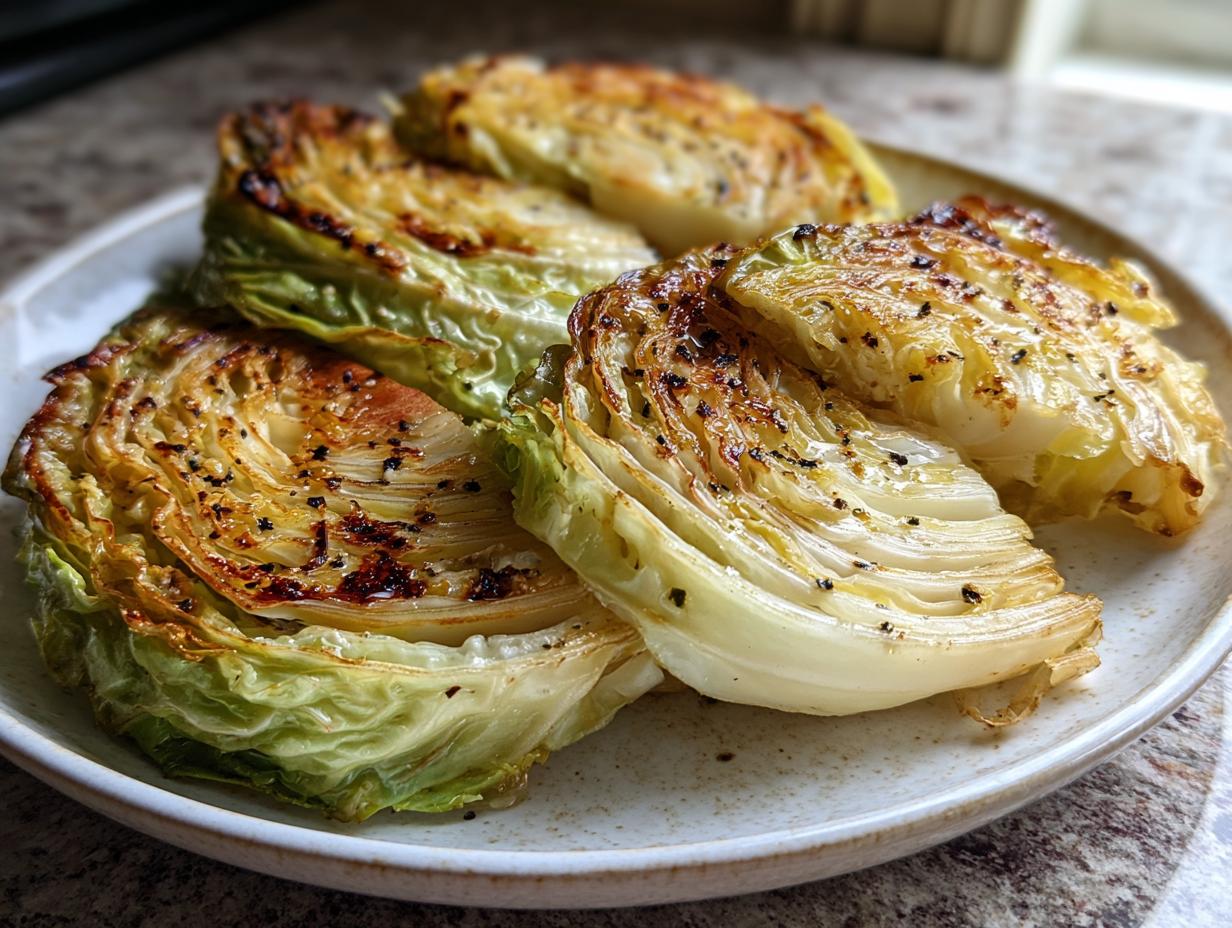
When life speeds up—and let’s face it, it always does—finding quick, healthy sides that actually taste like something can feel like a real puzzle. That’s where my grandmother Daisy’s wisdom kicks back in. She taught me that even the simplest vegetables deserved respect. Right now, everyone is talking about the Cabbage Crush trend, and I get it; it’s sustainable and it’s easy! My answer to that trend is these amazing Pan-Fried Cabbage Steaks. Trust me, this version of simple fried cabbage turns a humble vegetable into something with serious crunch and flavor. It’s the perfect example of taking Daisy’s honest approach and making it work for a Tuesday night when you’ve only got fifteen minutes.
- Why This Fried Cabbage Recipe Fits the Cabbage Crush Trend
- Essential Ingredients for Perfect Pan-Fried Cabbage
- Step-by-Step Instructions for Amazing Fried Cabbage
- Tips for Success with Your Fried Cabbage
- Making Fried Cabbage Part of Sustainable Cooking
- Serving Suggestions for Your Fried Cabbage
- Storage and Reheating Fried Cabbage
- Frequently Asked Questions About Fried Cabbage
- Nutrition Estimates for This Side Dish
Why This Fried Cabbage Recipe Fits the Cabbage Crush Trend
This preparation is everything the Cabbage Crush trend promised: maximum texture satisfaction with minimal fuss. We’re focusing on getting a real sear rather than just steaming the vegetable. It’s proof that you don’t need hours to make some truly delicious healthy sides.
- It delivers unbeatable crunch—that crust is everything!
- It takes almost no time at all.
- Cabbage is inherently affordable and supports quick vegetables on your plate.
By cutting it into thick ‘steaks,’ we create structure that helps maximize that gorgeous brown crust, which is the secret to making fried cabbage satisfying.
Quick Vegetables Preparation Time Breakdown
You cannot beat these numbers, honestly! Total time is just 17 minutes, which includes 5 minutes of prep and only about 12 minutes of actual cooking time. That means you can have this on the table almost as fast as ordering takeout.
Essential Ingredients for Perfect Pan-Fried Cabbage
Daisy always said that great flavor starts with showing up with the basics. This recipe relies on just a few kitchen staples to shine. You’ll need one medium head of green cabbage, cut into four equal wedges, of course. For the pan, grab 2 tablespoons of good olive oil that can handle medium-high heat.
Then, we keep the seasoning super clean: 1 teaspoon of salt, 1/2 teaspoon of black pepper, and just a dash of 1/4 teaspoon of garlic powder. That’s it! Simple, honest, and ready in minutes.
Ingredient Notes and Substitution Options
When choosing your cabbage, pick a head that feels heavy and firm for its size; that density is what prevents it from collapsing into mush when you sear it. If you want that extra little tang that balances the savory sear, try adding a splash of apple cider vinegar right after you flip the wedges for the final cook. It brightens everything up beautifully.
Step-by-Step Instructions for Amazing Fried Cabbage
This is where the magic happens, and honestly, it’s where I had to train myself not to hover! Daisy used to watch me panic when the oil first started smoking, wanting to stir it immediately. But that crust you want on these cabbage steaks? It only forms if you leave it alone. First things first: make sure your wedges have the core intact so they hold together when you flip them. We need that structure!
Heat your olive oil in a big skillet—preferably cast iron, if you have one—over medium-high heat. It needs to be hot enough that the oil shimmers right before you put the cabbage down. This initial high heat is non-negotiable for the best fried cabbage texture.
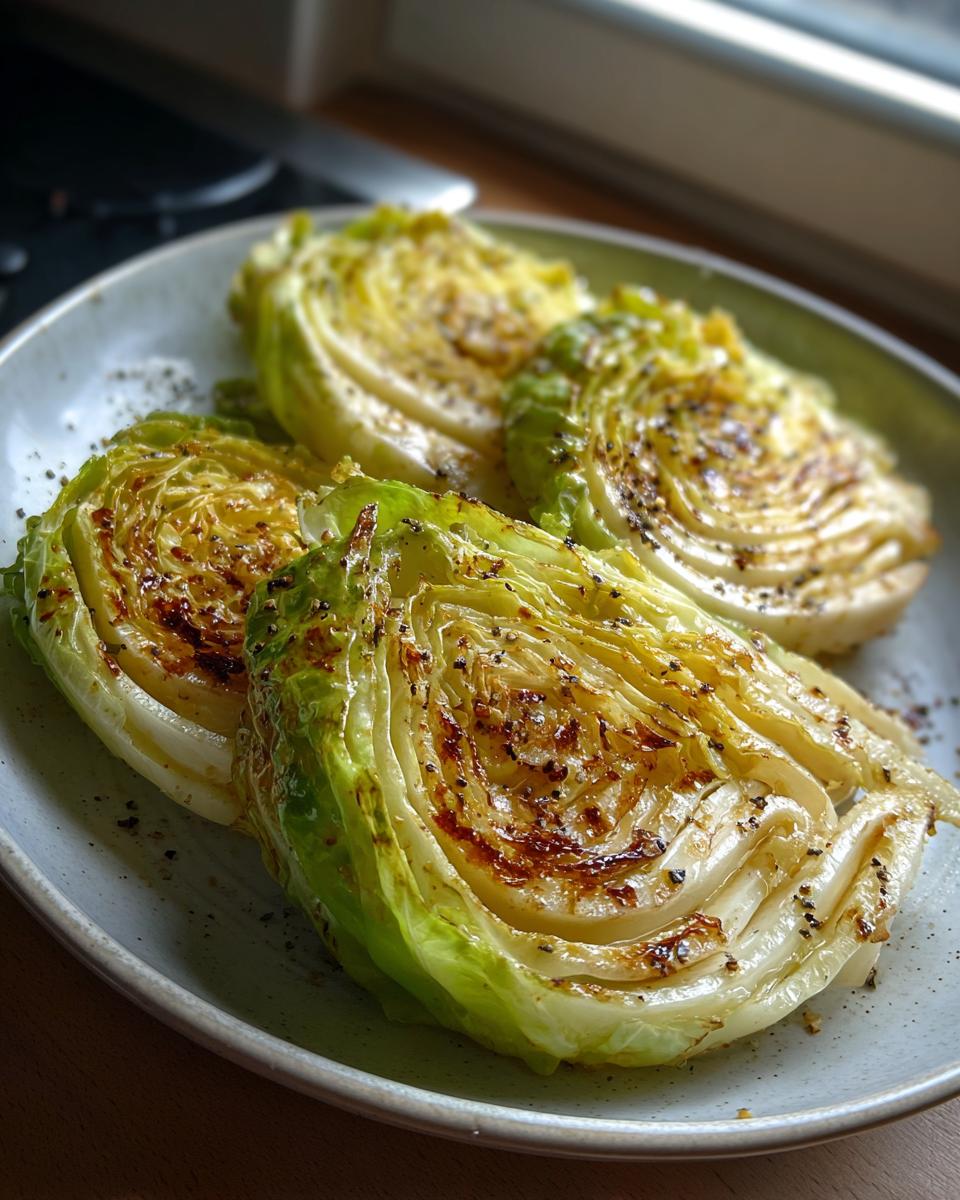
Achieving the Golden Crust on Your Fried Cabbage Steaks
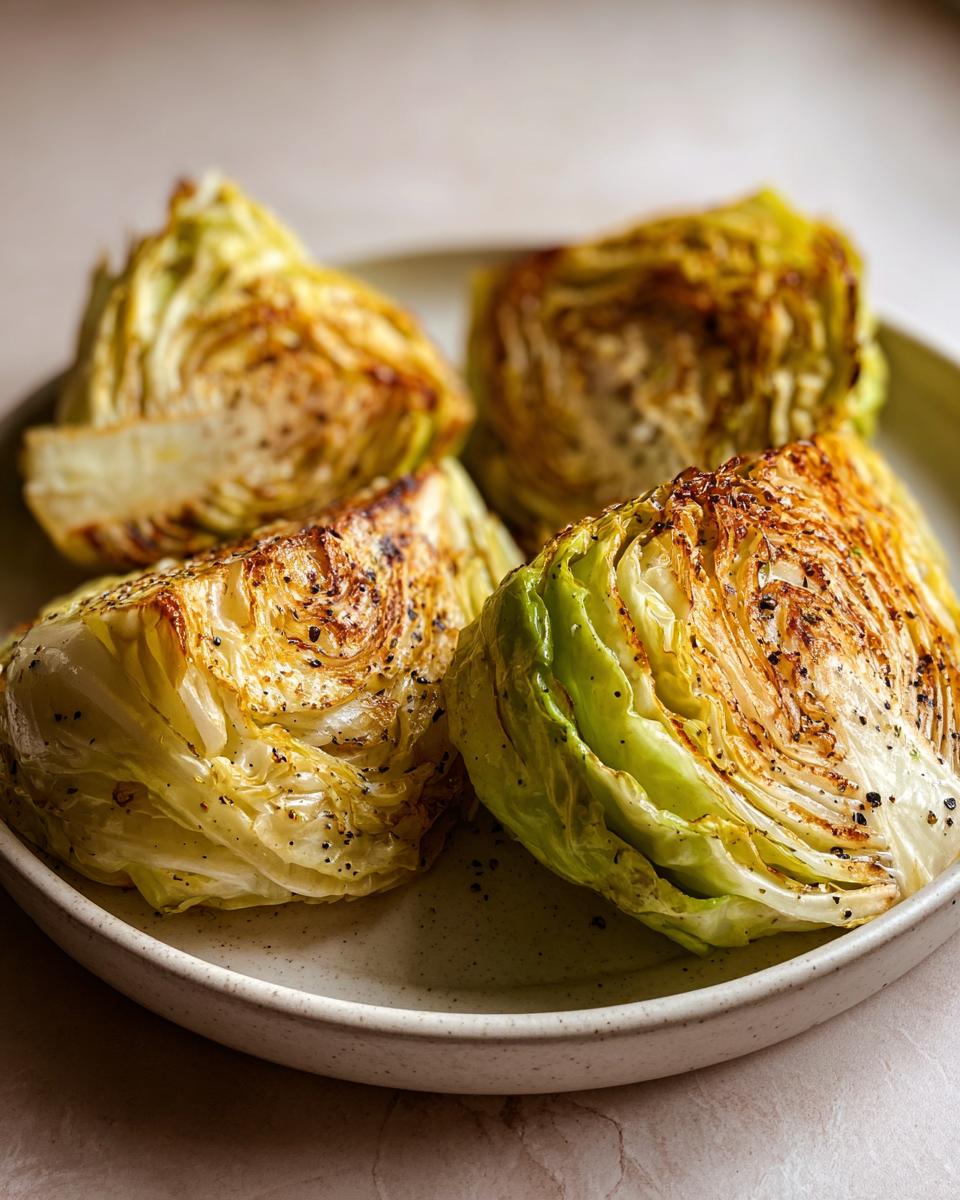
Carefully place those wedges cut-side down onto that hot surface. Don’t crowd the pan; if you do, the temperature drops, and you end up steaming your cabbage instead of searing it. Seriously, work in batches if you need to! You need to let them sit there, undisturbed, for a good 4 to 5 minutes. Resist the urge to peek. When you finally lift one wedge, you should see an incredible, deep golden-brown crust—that’s the Cabbage Crush reward right there.
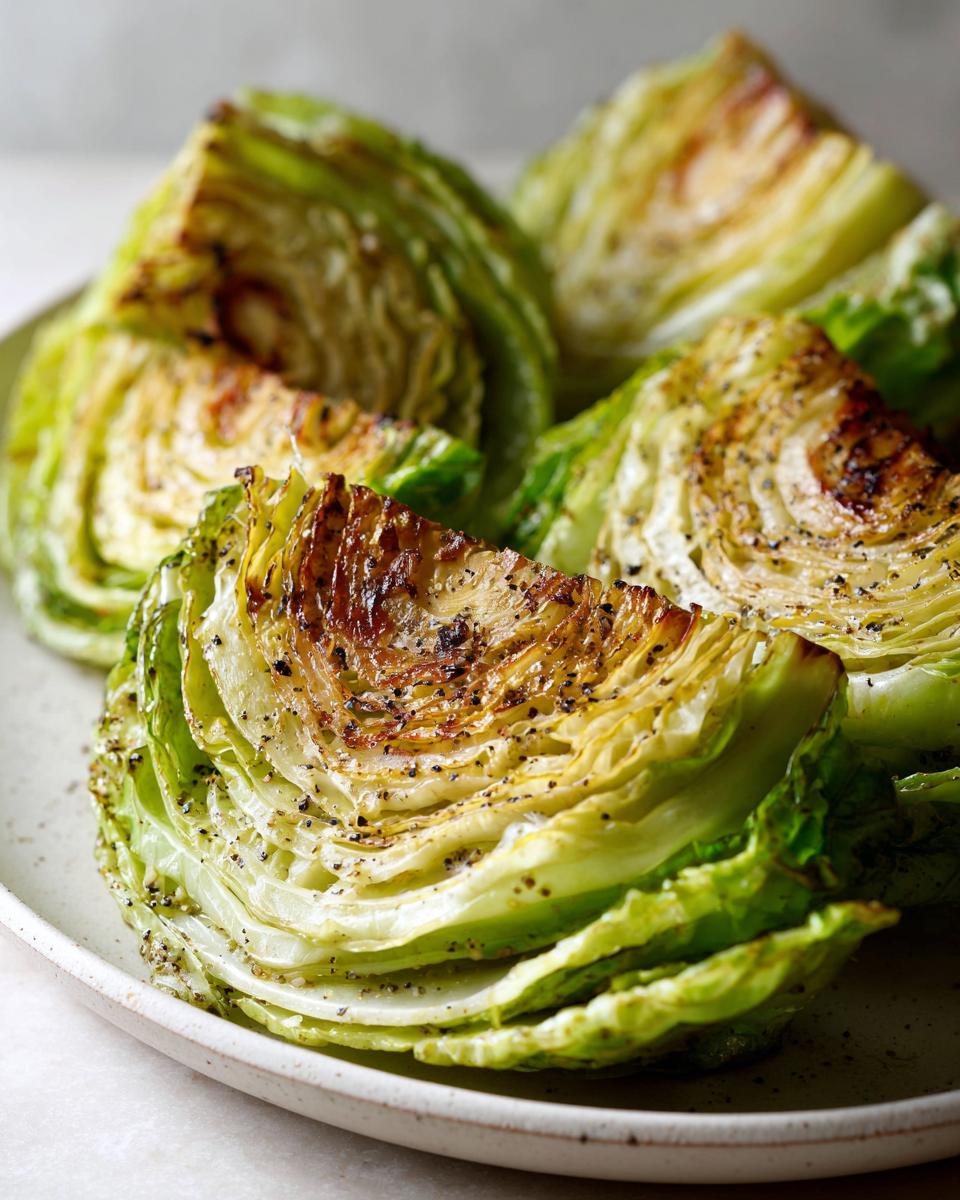
Finishing the Fried Cabbage to Tender-Crisp
Once that crust is set, go ahead and sprinkle your salt, pepper, and garlic powder right over the seared side. Now, carefully flip them over. Immediately knock that heat down to medium-low. Cover the skillet and let it cook for another 5 to 7 minutes. We aren’t aiming for mushy; we want it tender-crisp. That little bit of trapped steam will soften the top layers perfectly while keeping the bottom beautifully crusted. Serve it straight away!
Tips for Success with Your Fried Cabbage
I can’t stress this enough: the pan size makes or breaks this dish. If you try to cram all four wedges into a regular 10-inch skillet, you are sabotaging your own efforts! Those pieces need space to breathe and sear, otherwise, they just sit in their own moisture and steam. Trust me, if you have to do two batches, just do it. That gorgeous crust is worth the extra three minutes.
Remember that little note about Napa cabbage? It’s a great alternative if you happen to have it, but just know it cooks faster than the sturdy green head because it has a higher water content. You’ll want to check it around the 4-minute mark when it’s covered. Sticking to green cabbage usually guarantees that lovely, structured ‘steak’ result that holds up so nicely on the plate.
Making Fried Cabbage Part of Sustainable Cooking
One of the best things about getting back to Daisy’s kind of cooking is that it naturally leans into sustainable cooking principles. Cabbage is such an incredible vegetable for this! It’s usually very inexpensive, it keeps for ages in the fridge without going bad, and you can use almost the whole head without much waste.
When you cut the cabbage into those thick steaks like we do here, you use nearly every part of that head. It means less going into the compost bin and more flavor on your plate. It’s just smart, honest cooking that doesn’t break the bank or hurt the planet.
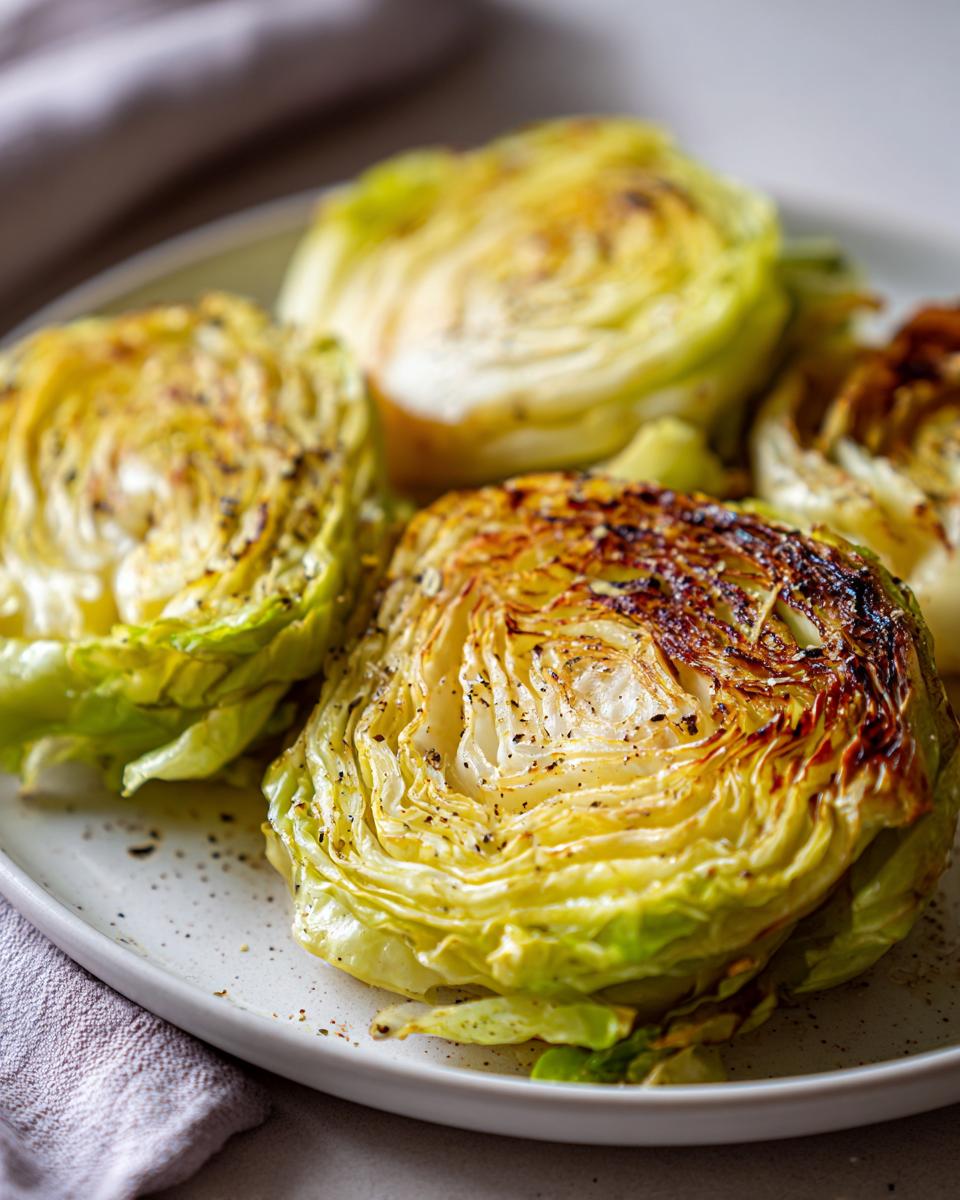
Serving Suggestions for Your Fried Cabbage
Okay, so you’ve managed to pull off that gorgeous sear and you have these amazing, crispy-edged cabbage steaks sitting on your counter. Now what? Because this fried cabbage is so savory and wonderfully seasoned, it ends up being the perfect canvas for almost anything else on your plate. It pairs beautifully with lighter fare, acting as a hearty but low-carb healthy side.
I often think back to the simple dinners Daisy used to make. She’d often serve pan-seared pork chops alongside this—the salty crust of the cabbage just complements the richness of the pork. It’s also fantastic next to grilled chicken, especially if you’re wanting something different than the usual roasted broccoli.
If you’re feeling a little fancier, these go wonderfully with richer mains. Try pairing them with something that has a little sauce or gravy, because you definitely want to drag that cabbage wedge through the extra juices. If you check out my recipe for Easy Chicken Marsala, those pan juices are absolutely divine when soaked up by the tender part of the wedge!
Storage and Reheating Fried Cabbage
I always hope there are leftovers because, even the next day, this cabbage is pretty great, though I have to be honest with you: the texture will change a bit. That amazing crispness from the sear doesn’t last forever, no matter how well you store it. Once the cabbage cools, the residual steam softens it up.
But don’t toss it! Once completely cool, store the wedges in an airtight container. I find they last well in the fridge for about three days. When you’re ready for them again, skip the microwave entirely if you can. The microwave just turns everything into sad, soggy mush.
Your best bet for reheating is putting the cabbage back into a dry, hot skillet over medium heat. Let it sit for a minute or two per side until it warms through. If you want to fake some of that crust back, give the pan one minute of high heat at the end without stirring—it helps dry out some of that moisture that crept in overnight. Managing expectations is key here; it won’t be exactly like the pan-fried version right off the stove, but it’s still miles better than most reheated vegetables!
Frequently Asked Questions About Fried Cabbage
I always get emails about seasoning variations, so let’s clear up some common questions I hear about making this amazing fried cabbage!
Can I make this recipe vegan?
Oh, absolutely! The recipe calls for olive oil, so technically, it’s already vegan as written. Daisy used to cook with bacon drippings sometimes, but if you stick to the olive oil, you’ve got yourself a fantastic, crunchy healthy sides option that no one will even guess is plant-based. You could also use avocado oil if you prefer something with a higher smoke point.
What is the best cabbage for this fried cabbage preparation?
For the absolute best ‘steak’ effect—that firm hold and deep sear—you really want to stick with a standard green round head of cabbage. It holds its shape firmly under the high heat. Like I mentioned earlier, Napa cabbage works too, but its leaves are softer and waterier, so it tends to cook down faster. For this specific method, think firm and dense!
How do I stop my cabbage from steaming instead of searing?
This is the number one question I get! The key to great fried cabbage is heat management and pan size. You need medium-high heat for that very first sear before you cover it. But most importantly, make sure you aren’t crowding the pan! If you cram too many wedges in, they release moisture, and the temperature drops, turning your sear into a sauna. Cook in batches if your skillet isn’t massive. That crust needs direct, uncovered heat!
Nutrition Estimates for This Side Dish
Now, I’m not a nutritionist—I’m just a home cook keeping Daisy’s memory alive—so please treat these numbers as friendly estimates! Since we are focusing on quick, healthy vegetables here, I’m happy to report this side is very light. Per serving (which is one wedge, by the way!), you are looking at roughly 95 calories and only 6 grams of fat.
The breakdown is quite clean: 9 grams of carbohydrates with 3 grams of fiber, which is excellent for a vegetable side dish. If you want to check out other lighter meals, take a peek at my favorite healthy lunch ideas while you’re making your grocery list!
PrintQuick Pan-Fried Cabbage Steaks
Make this simple, crunchy fried cabbage side dish quickly. It fits the Cabbage Crush trend and uses straightforward techniques for a flavorful vegetable preparation.
- Prep Time: 5 min
- Cook Time: 12 min
- Total Time: 17 min
- Yield: 4 servings 1x
- Category: Side Dish
- Method: Pan Frying
- Cuisine: American
- Diet: Vegetarian
Ingredients
- 1 medium head green cabbage
- 2 tablespoons olive oil
- 1 teaspoon salt
- 1/2 teaspoon black pepper
- 1/4 teaspoon garlic powder
Instructions
- Remove any loose outer leaves from the cabbage. Cut the head into four equal wedges, keeping the core intact to hold the wedges together.
- Heat the olive oil in a large skillet or cast-iron pan over medium-high heat until shimmering.
- Place the cabbage wedges cut-side down in the hot skillet. Do not overcrowd the pan; work in batches if necessary.
- Sear the cabbage for 4 to 5 minutes without moving it until the cut side develops a deep golden-brown crust. This creates the ‘steak’ texture.
- Sprinkle the tops of the wedges with salt, pepper, and garlic powder.
- Flip the wedges carefully. Reduce the heat to medium-low, cover the skillet, and cook for another 5 to 7 minutes, or until the cabbage is tender-crisp.
- Remove from heat and serve immediately as a healthy side.
Notes
- For extra flavor, you can add a splash of apple cider vinegar after flipping the wedges.
- If you prefer softer cabbage, increase the covered cooking time by a few minutes.
- This recipe works well with Napa cabbage, though cooking time may vary slightly.
Nutrition
- Serving Size: 1 wedge
- Calories: 95
- Sugar: 3
- Sodium: 290
- Fat: 6
- Saturated Fat: 1
- Unsaturated Fat: 5
- Trans Fat: 0
- Carbohydrates: 9
- Fiber: 3
- Protein: 2
- Cholesterol: 0