

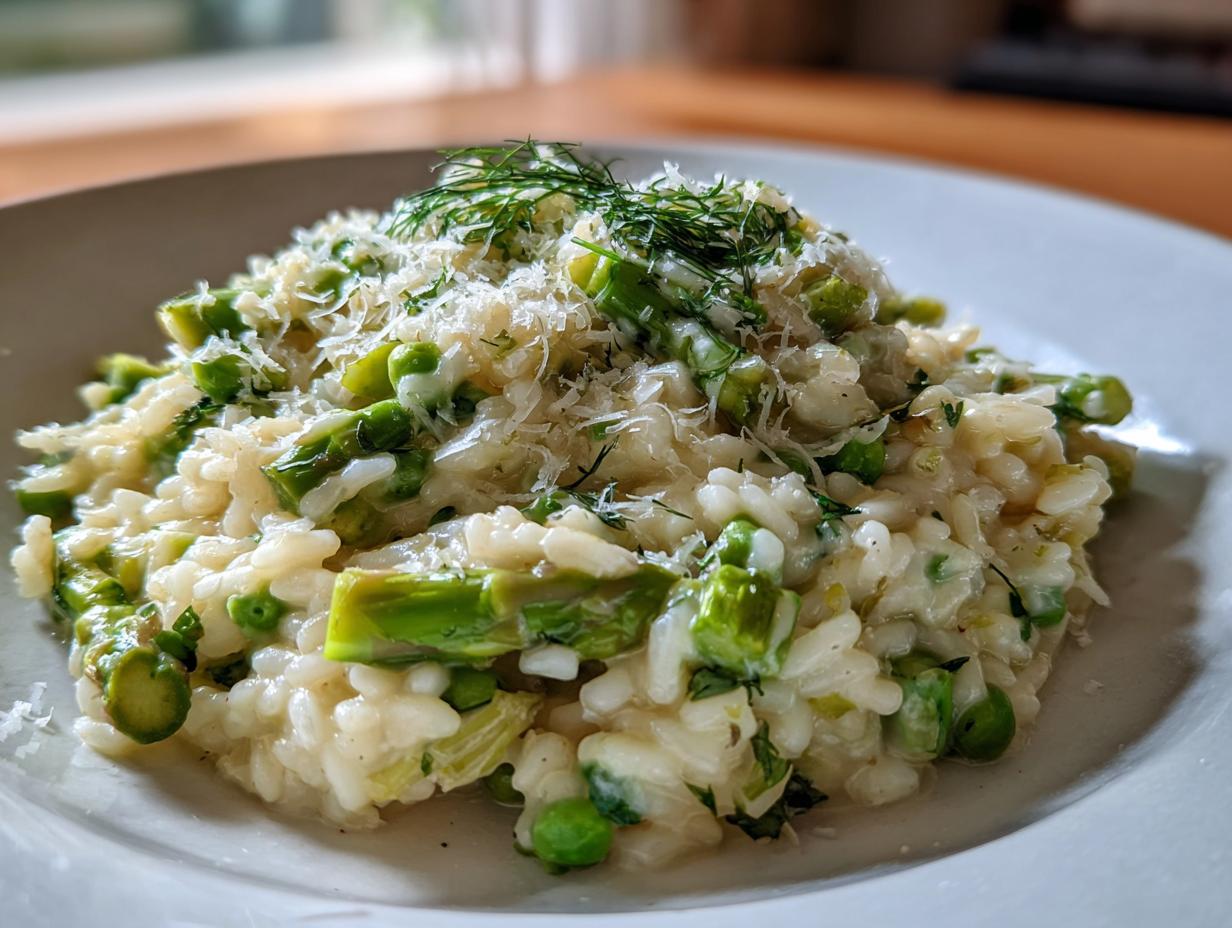
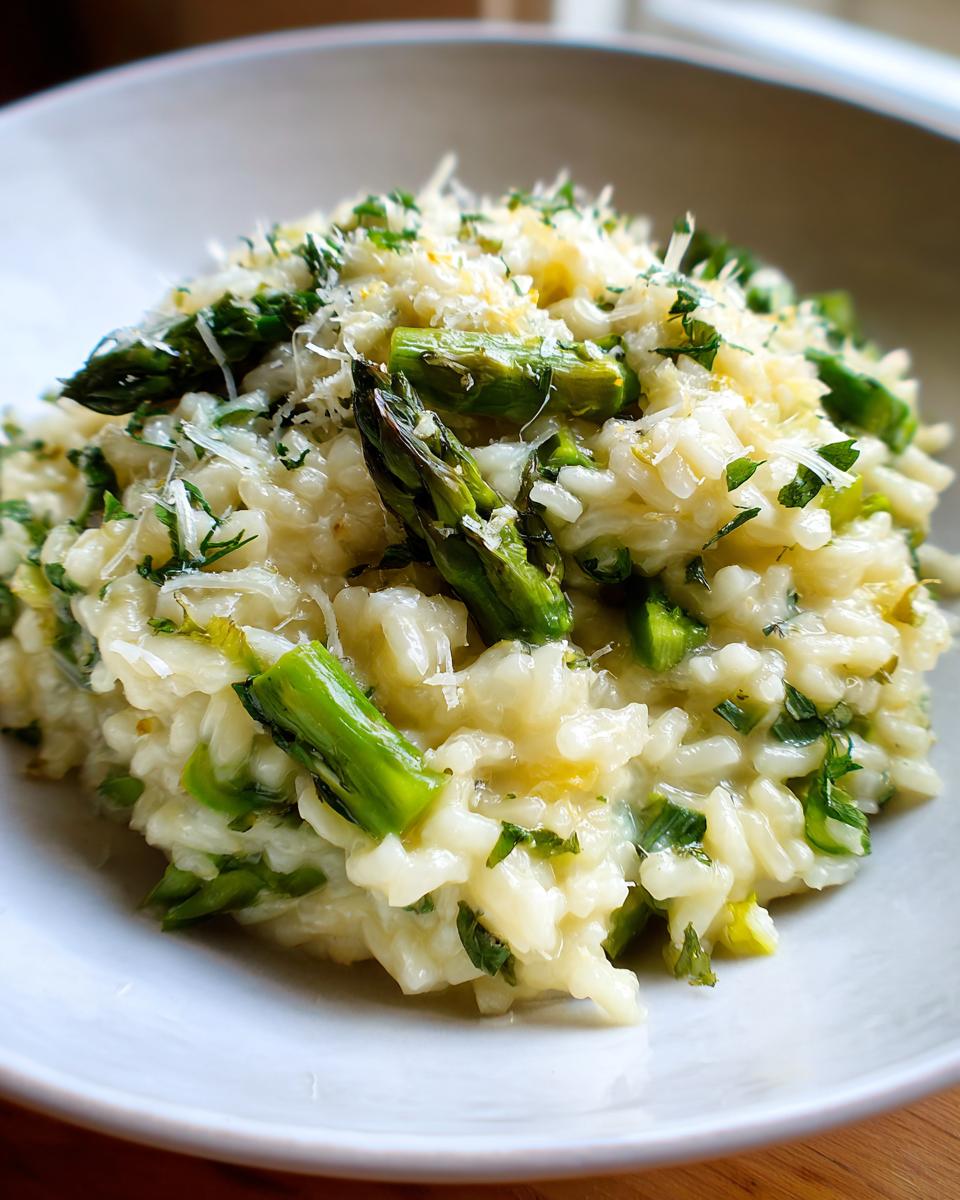
When those first tender stalks of asparagus hit the market, I feel this huge pull to stop rushing and start celebrating the season. Life in the city meant my kitchen was silent for too long, but coming back to Grandma Daisy’s recipes reminded me that slowing down to truly cook is how we reclaim our time. This Lemony Asparagus Risotto is exactly that feeling in a bowl—it’s elegant enough for company, but so comforting and creamy you could eat the whole batch solo on a Tuesday night!
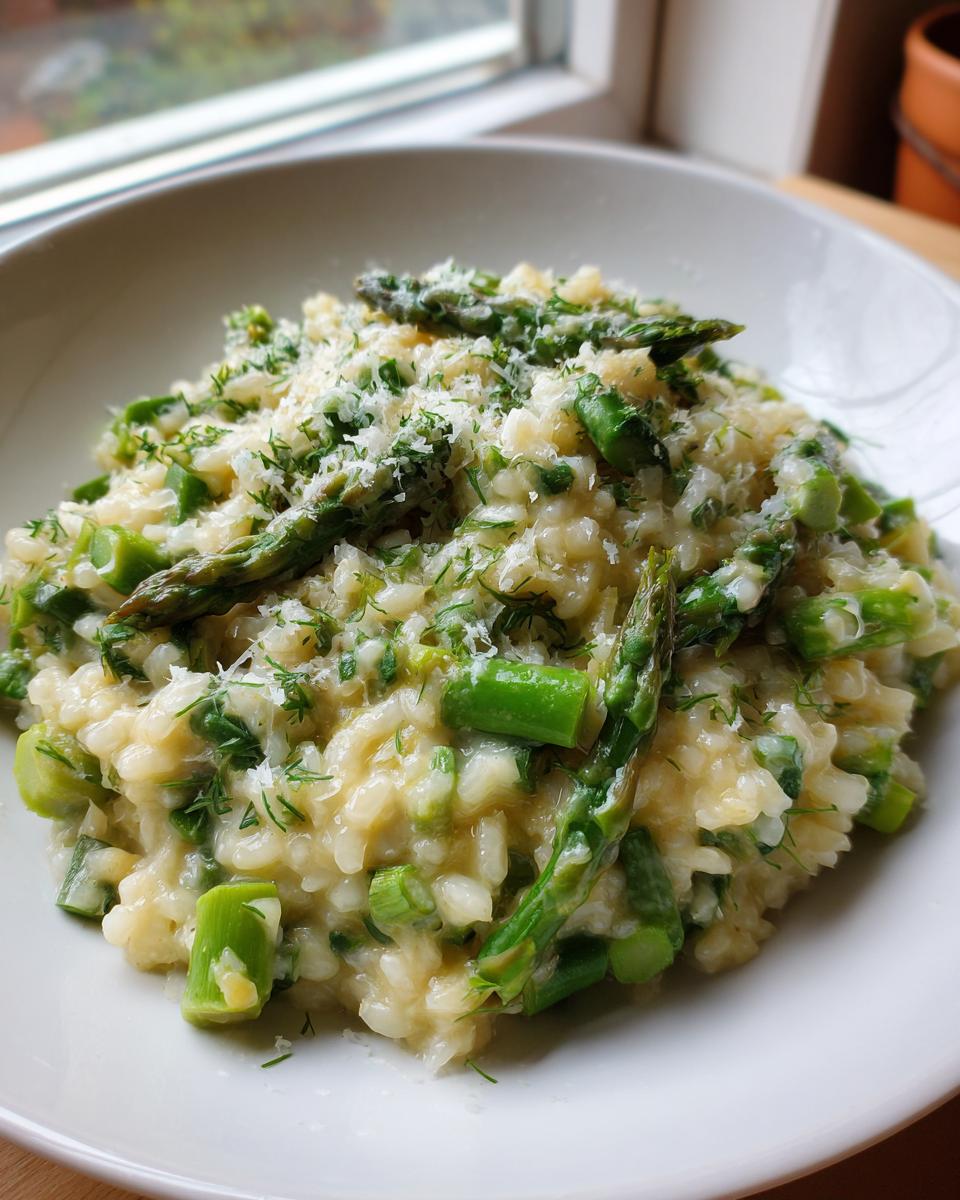
Forget complicated meals that leave you drained. This dish is pure sophistication mixed with cozy, grassy flavors, thanks to tons of fresh lemon and herbs. Trust me, mastering this creamy rice technique turns a simple weeknight into a beautiful moment. You’ll want to try out this wonderful weeknight dinner idea right away.
- Why This Asparagus Risotto is Your New Spring Favorite
- Essential Ingredients for Authentic Asparagus Risotto
- Step-by-Step Guide to Making Perfect Asparagus Risotto
- Expert Tips for the Best Asparagus Risotto Results
- Ingredient Notes and Substitutions for Your Asparagus Risotto
- Serving Suggestions for This Seasonal Dinner
- Storage and Reheating Instructions for Asparagus Risotto
- Frequently Asked Questions About Creamy Rice Dishes
- Share Your Experience Making This Asparagus Risotto
Why This Asparagus Risotto is Your New Spring Favorite
This isn’t just another rice side dish; it’s a complete celebration of spring produce, ready in under an hour. When the asparagus is perfect, you have to treat it right! This recipe is all about giving you maximum elegant flavor with simple, straightforward steps. It truly is sophisticated comfort food.
The Perfect Creamy Rice Texture
We are aiming for that signature lushness you only get from proper technique. Constant stirring with the Arborio rice releases just the right amount of starch. It’s essential to stop when the rice is al dente—tender, but still offering a tiny, satisfying bite in the middle.
Bright, Grassy Flavor Profile
What sets this Asparagus Risotto apart is how bright it tastes. We rely heavily on fresh lemon zest and juice to cut through the richness of the cheese and butter. Mixing in fresh dill or basil at the very end gives that gorgeous, grassy aroma that screams springtime.
Essential Ingredients for Authentic Asparagus Risotto
When I first tried making risotto without following every measurement exactly, it turned out like sticky oatmeal! Don’t let that happen to you. The secret to unlocking that lovely, restaurant-quality richness lies in paying close attention to what goes into the pot, especially when celebrating beautiful seasonal produce. For this Asparagus Risotto, quality matters far more than quantity.
Since this dish hinges on those delicate spring flavors, we need the best supporting players. You absolutely must use fresh asparagus—pre-cut veggies just lose that vibrant snap. Also, make sure your Parmesan is the real deal, not the dusty stuff from the green can; it melts so much better and tastes richer. By the way, if you’ve ever wondered how to get deep flavor fast, you should check out my guide on caramelized onions—though for this risotto, we keep the onions quick and mild!
Here is exactly what you’ll need on hand before you even turn on the stove:
- 1 tablespoon olive oil
- 1 small yellow onion, finely chopped
- 2 cloves garlic, minced (use a microplane grater if you want it to totally disappear!)
- 1 1/2 cups Arborio rice (this is non-negotiable for the starch!)
- 1/2 cup dry white wine (Pinot Grigio works perfectly)
- 6 cups low-sodium chicken or vegetable broth, kept warm
- 1 pound fresh asparagus, trimmed and cut into 1-inch pieces
- 1/2 cup grated Parmesan cheese, plus more for serving
- 2 tablespoons unsalted butter (use the good stuff here!)
- 1 teaspoon lemon zest
- 2 tablespoons fresh lemon juice
- 1/4 cup chopped fresh dill or basil (I love using dill for extra freshness!)
- Salt and black pepper to taste
Step-by-Step Guide to Making Perfect Asparagus Risotto
Okay, here’s where the magic happens, and frankly, where most people get scared off. Don’t worry! This isn’t hard, but it does demand your attention for about 20 minutes. Think of it as mandatory kitchen meditation. You want to stay right by the stove; this creamy rice won’t forgive you if you wander off to answer a text! When you’re ready to start, make sure that broth is simmering gently in a separate pot—cold broth into hot rice is a disaster, trust me. If you want to explore other slow-cook, creamy rice projects later, you can check out my guide on creamy old-fashioned rice pudding, but for now, focus here!
Sauté Aromatics and Toast the Rice
First things first: heat up that olive oil in your biggest, heaviest Dutch oven over medium heat. We want a gentle medium, not screaming hot! Toss in your finely chopped onion and let them soften until they look totally translucent, maybe five minutes. Then, slide in the minced garlic; garlic burns fast, so keep a close eye and give it just sixty seconds until you can really smell it.
Now, dump in all that gorgeous Arborio rice. This is the toasting step, and it’s crucial for texture. You need to stir it constantly, scraping the bottom of the pot, for a full two minutes. You’ll know you’re there when the edges of the rice grains start looking glassy or translucent, but the center is still opaque white. It’s like preparing a canvas before painting!
The Broth Addition Process for Creamy Rice
This is the main commitment: the slow addition of broth. Pour in your half-cup of white wine and stir like mad until that liquid has completely vanished into the rice. Now, grab your ladle of warm broth. Add just one ladleful—maybe a cup—to the pot. Lower the heat if things are bubbling too aggressively. You must stir continuously, slowly, until that broth is nearly gone before you even think about adding the next one.
This process is what coaxes the starch out, creating the signature velvety sauce. Keep going, adding the ladlefuls one by one, stirring all the time. This repetitive action takes patience, usually about 15 to 20 minutes total, until you are nearing the end of your stock. This slow method guarantees you get that perfect texture for your Asparagus Risotto.
Incorporating Asparagus and Finishing the Asparagus Risotto
When you have about two ladlefuls of broth left—that’s when we introduce the green goodness. Stir in your 1-inch pieces of fresh asparagus. Continue adding broth slowly until the rice is tender but still has that al dente bite. You might not use every last drop of broth, so stop when the rice looks creamy and perfect for you.
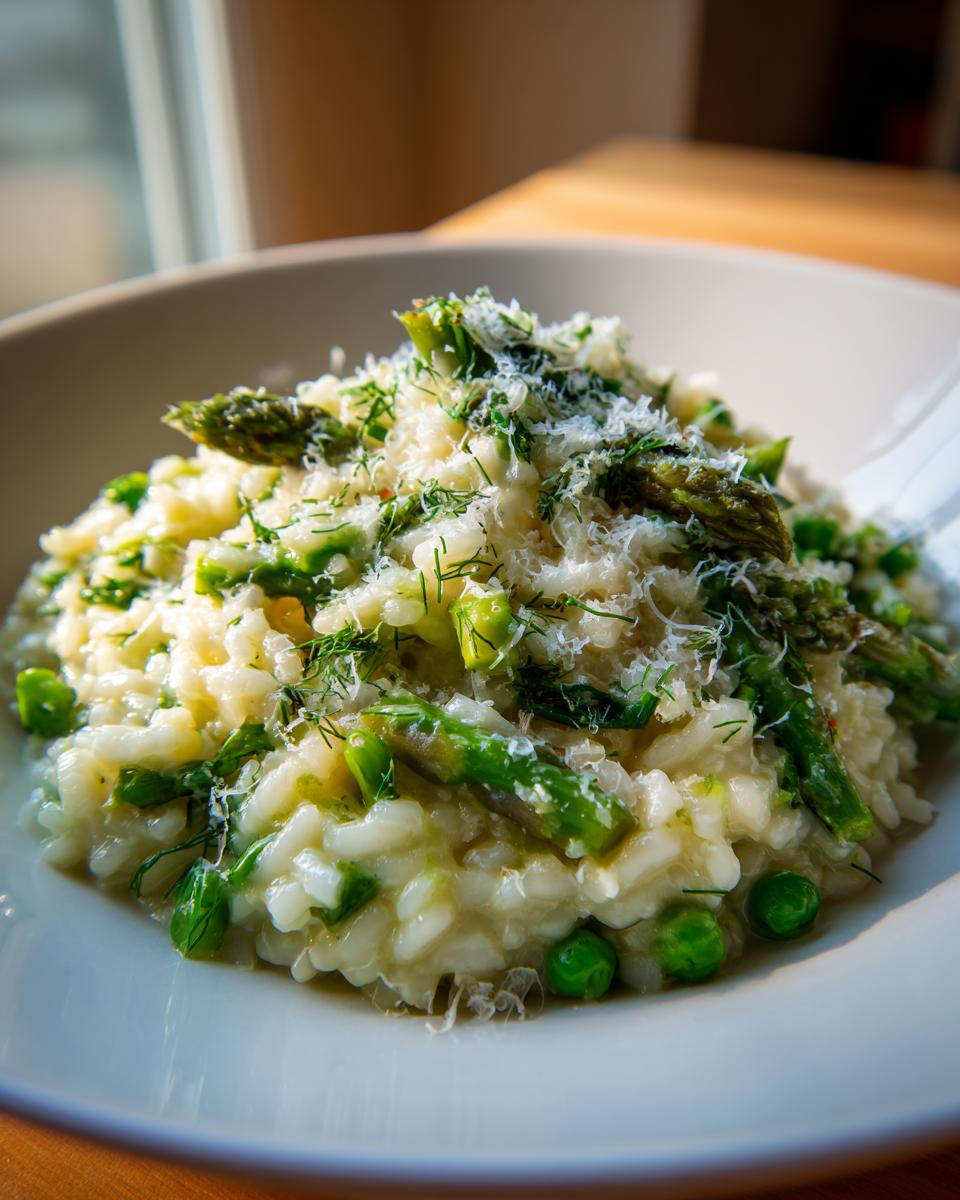
Pull the pot completely off the heat! This prevents scrambling the cheese. Now, incorporate the final ingredients for the mantecatura: stir in the Parmesan, the two tablespoons of butter, your lemon zest, and the fresh lemon juice. Agitate it vigorously until it emulsifies into that incredibly rich, shiny sauce. Finally, stir in your fresh dill or basil. Taste it right then and season with salt and pepper. Serve immediately!
Expert Tips for the Best Asparagus Risotto Results
Look, I’m usually the first person to recommend cutting corners, but not with this Asparagus Risotto. If you follow my grandmother Daisy’s wisdom, you’ll nail that incredible texture every time. The biggest thing? Keep that broth warm—I mean truly hot—throughout the entire cooking process. Adding cold stock stops the rice from releasing its starch properly, and you end up with lukewarm lumps instead of that signature creamy rice.
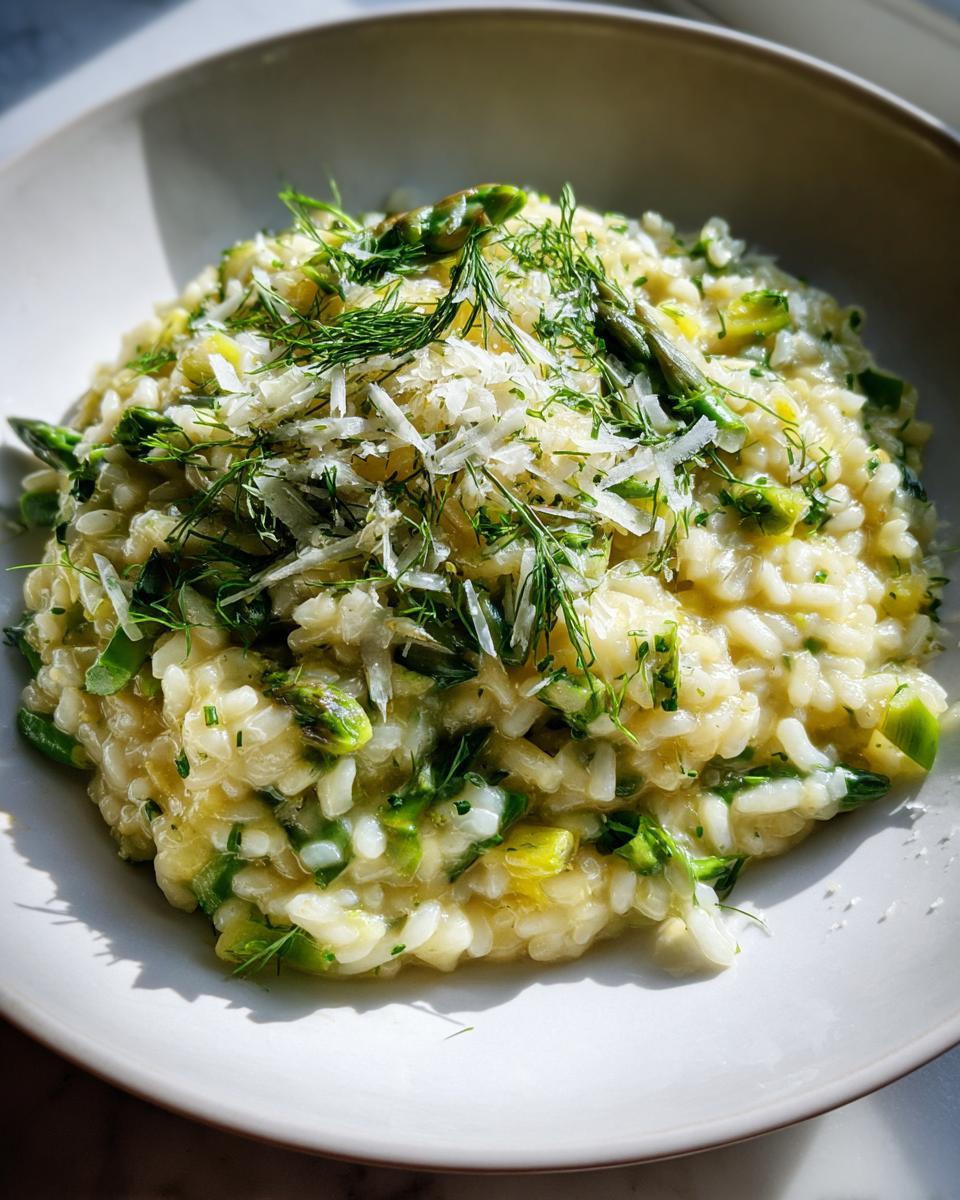
I learned this the hard way when I was juggling a work call while trying to finish a batch; I poured in a cold ladle before the previous one was absorbed, and honestly, the whole pot turned gummy. It was a tragedy! Remember, you are stirring constantly to release the starch; that’s what replaces heavy cream. Also, if you really want that deep, grassy asparagus flavor to punch through, try blanching the tips separately and tossing them in during the last five minutes. You can learn some amazing techniques for patience over at my post on making a sourdough starter, which definitely requires a similar focused energy!
Ingredient Notes and Substitutions for Your Asparagus Risotto
I get asked all the time about swaps, and since this dish is so focused on fresh spring flavor, any substitution needs to be treated carefully. Don’t panic if you’re missing one thing, though! We can absolutely work around it while keeping this an amazing Asparagus Risotto.
Let’s talk wine first. If you don’t keep dry white wine on hand, skip it, but replace that acid! You can use an extra splash of fresh lemon juice mixed with water, or even white wine vinegar in a pinch. Just use about half the amount of wine, and remember that vinegar needs to cook down fully so you only taste brightness, not sourness.
The broth question is huge, especially if you are aiming for a vegetarian meal. Using low-sodium vegetable broth works beautifully, but make sure it’s flavorful! If it tastes watery on its own, your risotto will taste bland. You need a rich stock base. Also, for the herbs, I adore dill because it gives that unique, almost anise-like freshness that pairs surprisingly well with asparagus, but basil offers a gentler, sweeter Italian note. If you are worried about the rice texture, remember that true Arborio is best, but if you must swap, Carnaroli is the next best thing for that starchy release needed for creamy rice.
Serving Suggestions for This Seasonal Dinner
This rich Asparagus Risotto is often the star of the plate, so keep the sides light and bright! Because we’ve introduced so much flavor with the lemon and herbs, you don’t want heavy sauces competing. A simple grilled shrimp or pan-seared scallop is perfection for turning this into a fancy seasonal dinner. If you prefer sticking strictly to vegetarian options, serve it alongside a clean, crunchy salad, perhaps one with shaved fennel. A simple protein is all you need to complement this luxurious, creamy rice.
Storage and Reheating Instructions for Asparagus Risotto
This is the hard part of loving risotto—it absolutely *hates* being refrigerated. Seriously, if you have leftovers of any creamy rice dish, eat them that same night if you can! The magic starch structure collapses as it cools, and it ends up stiff and gluey the next day. I’m just being honest with you, because I don’t want you to be disappointed!
If you absolutely must save some, put it in a shallow, airtight container and only keep it for a day, max. When you reheat it, you cannot use the microwave if you value your sanity! Instead, dump the portion you want into a small saucepan over the lowest possible heat. You need to revive it by slowly stirring in a splash—just a tiny splash—of warm broth or even water. Keep stirring gently until it loosens back up and gets creamy again. It takes patience, but it’s better than a solid rice brick!
Frequently Asked Questions About Creamy Rice Dishes
I always get questions about risotto after folks try it the first time, which usually means they are falling in love with making creamy rice dishes but need a little technique boost! Don’t worry about those little hurdles; every home cook faces them when starting out. I’ve gathered the ones I hear the most often right here. If you are looking for other fantastic, comforting meals that feel rich but come together quicker, you should definitely take a look at my creamy garlic parmesan chicken pasta!
Can I use pre-cut asparagus in my Asparagus Risotto?
You absolutely *can*, and if you are in a huge rush, it’s better than serving no risotto at all! But promise me you’ll taste the difference. Pre-cut asparagus has already started losing moisture and flavor. If you use it, you might need to cook it for just a minute or two longer when you first add it in Step 6, since older stalks can be a bit tougher than the fresh, tender ones I rave about. I still think fresh is king for that grassy pop, though!
What is the best substitute for Arborio rice in this creamy rice recipe?
This is the million-dollar question for any true Asparagus Risotto! Arborio is the gold standard because it has a high starch exterior and a firm core, which is exactly what we need for that creamy result without getting mushy. If you can find it, Carnaroli rice is technically even better—it’s sometimes called the ‘king’ of risotto rice because it releases starch beautifully but holds its shape even better than Arborio. Please, please avoid regular long-grain white rice, though; it doesn’t have the necessary starch coating, and you’ll end up with separate grains swimming in plain broth, not the luscious, cohesive sauce we’re aiming for.
How long should I stir the rice?
I get why people ask this, looking for a magic number! Honestly, the time isn’t what matters; the *result* of the stirring matters. You stir constantly during the broth additions because that friction is physically rubbing the starch off the outside of the rice grain. You stop stirring the second the broth is absorbed and move on to the next ladle. The whole process usually takes about 15 to 20 minutes of focused stirring, but really, you know you’re done when the liquid coats the back of your spoon perfectly and the rice is creamy but still firm to the bite.
Share Your Experience Making This Asparagus Risotto
Now that you’ve conquered the world of creamy rice and brought home this amazing Asparagus Risotto, I truly want to know what you think! This recipe is a tribute to Grandma Daisy’s patience, and seeing you all embrace that simple, slow cooking makes my connection to her stronger.
Leave a comment down below! Did you stick with the bright zing of dill, or did you go for the sweet pairing of basil? I’m dying to hear about your results—was the texture perfect? Did you manage to stop stirring at the right moment?
If you snapped a quick picture of your beautiful bowl of spring goodness, don’t keep it secret! Tag me on social media so I can see these vibrant dishes lighting up your tables. If you have any lingering questions that I didn’t cover in the FAQs, feel free to reach out to me directly through the contact page. Happy cooking this spring!
PrintLemony Asparagus Risotto with Fresh Herbs

Make this creamy rice dish to celebrate spring produce. This risotto features bright lemon and fresh asparagus for a sophisticated yet comforting seasonal dinner.
- Prep Time: 15 min
- Cook Time: 35 min
- Total Time: 50 min
- Yield: 4 servings 1x
- Category: Main Course
- Method: Stovetop
- Cuisine: Italian
- Diet: Vegetarian
Ingredients
- 1 tablespoon olive oil
- 1 small yellow onion, finely chopped
- 2 cloves garlic, minced
- 1 1/2 cups Arborio rice
- 1/2 cup dry white wine
- 6 cups low-sodium chicken or vegetable broth, kept warm
- 1 pound fresh asparagus, trimmed and cut into 1-inch pieces
- 1/2 cup grated Parmesan cheese, plus more for serving
- 2 tablespoons unsalted butter
- 1 teaspoon lemon zest
- 2 tablespoons fresh lemon juice
- 1/4 cup chopped fresh dill or basil
- Salt and black pepper to taste
Instructions
- Heat the olive oil in a large, heavy-bottomed pot or Dutch oven over medium heat. Add the onion and cook until soft, about 5 minutes.
- Add the garlic and cook for 1 minute until fragrant.
- Add the Arborio rice to the pot. Stir constantly for 2 minutes until the edges of the grains look translucent.
- Pour in the white wine. Stir and cook until the wine is completely absorbed.
- Add one ladleful (about 1 cup) of the warm broth to the rice. Stir continuously until the liquid is almost fully absorbed before adding the next ladleful. Continue this process, adding broth one ladleful at a time and stirring constantly. This process takes about 15-20 minutes.
- When you have about 2 cups of broth remaining, stir in the asparagus pieces. Continue adding broth until the rice is creamy and cooked al dente (tender with a slight bite in the center). You may not need all the broth.
- Remove the pot from the heat. Stir in the Parmesan cheese, butter, lemon zest, and lemon juice. Mix well until the risotto is smooth and creamy.
- Stir in the fresh dill or basil. Season with salt and pepper to your taste.
- Serve immediately in bowls, topping each serving with extra Parmesan cheese if desired.
Notes
- Keep your broth warm throughout the cooking process; adding cold liquid stops the cooking and affects the final texture.
- Stirring constantly releases the starch from the rice, which creates the signature creamy texture without needing heavy cream.
- If you prefer a stronger grassy flavor, blanch the asparagus tips separately and stir them in during the last 5 minutes of cooking.
Nutrition
- Serving Size: 1 serving
- Calories: 450
- Sugar: 4
- Sodium: 550
- Fat: 14
- Saturated Fat: 8
- Unsaturated Fat: 6
- Trans Fat: 0
- Carbohydrates: 68
- Fiber: 4
- Protein: 16
- Cholesterol: 25