

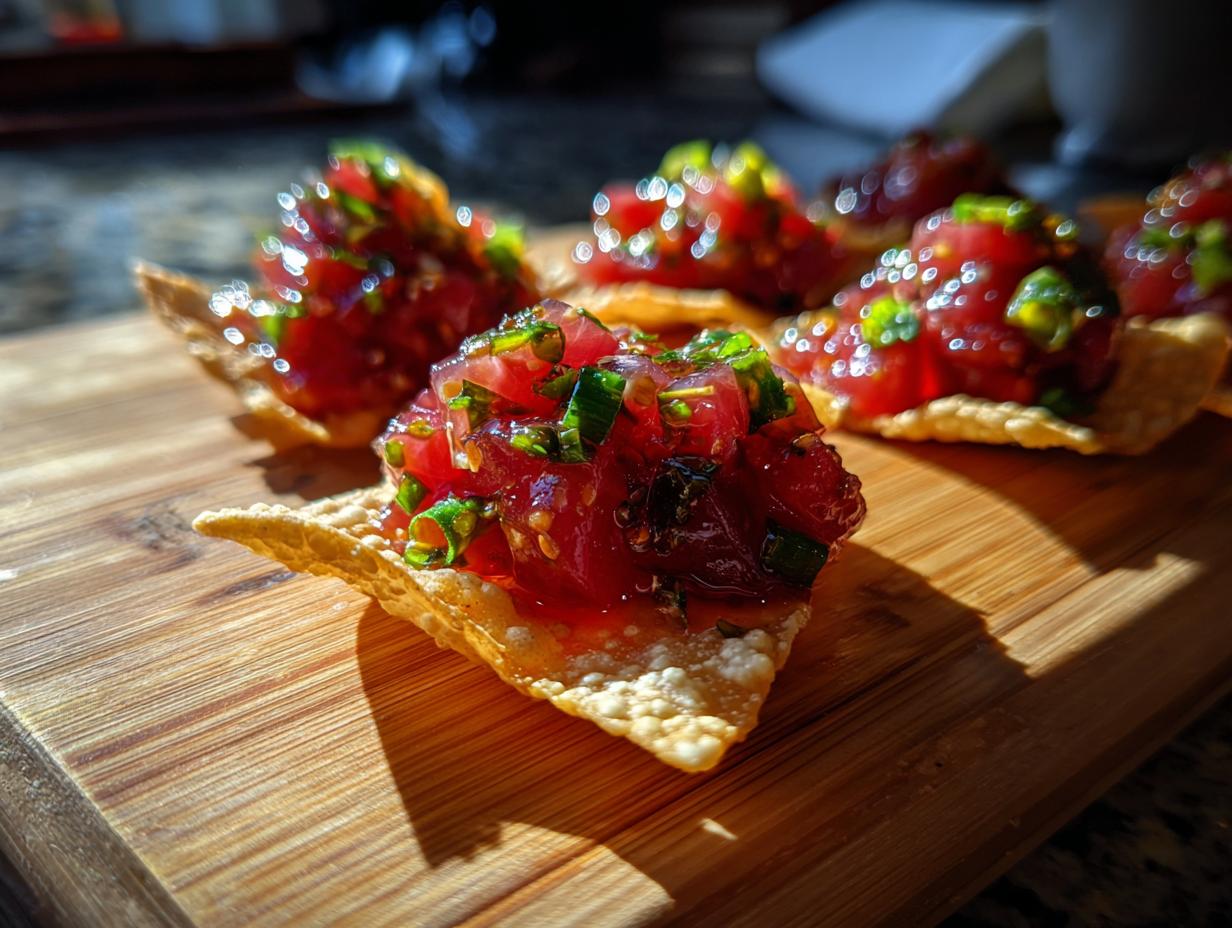
Sometimes you just need an appetizer that screams ‘I tried really hard,’ but only took you about fifteen minutes, right? I totally get it. When I’m looking for something both elegant and refreshingly light, especially when the summer heat has me avoiding the stove, I turn straight to my Ultimate Quick & Spicy Tuna Tartare served on those crisp little wonton chips. It looks like something straight out of a fancy restaurant, but trust me, it’s pure Daisy philosophy in action: simple, high-quality ingredients transformed with minimal fuss. This recipe for exquisite **tuna tartare** is my modern answer to serving something spectacular when I’m short on time. It’s fresh, it’s bright, and it comes together faster than waiting for delivery!
- Why This Quick & Spicy Tuna Tartare Recipe Works for You
- Sourcing the Best Sushi Grade Tuna for Your Tuna Tartare
- Gathering Ingredients for Quick & Spicy Tuna Tartare
- How to Make Tuna Tartare: Step-by-Step Instructions
- Tuna Tartare Serving Ideas for Elegant Dinner Starters
- Tips for Success When Making Gourmet Raw Tuna
- Storage and Handling of Leftover Tuna Tartare
- Frequently Asked Questions About Tuna Tartare
- Estimated Nutritional Data for Spicy Tuna Tartare
- Share Your Quick Seafood Dishes Experience
Why This Quick & Spicy Tuna Tartare Recipe Works for You
I hear you when you say you want elegance without the all-day cooking commitment. That’s exactly why this dish lives on my fast-rotation menu! It hits all those high notes you’re looking for—it’s incredibly fast, it tastes gourmet, and the spicy Asian marinade gives it such a beautiful kick.
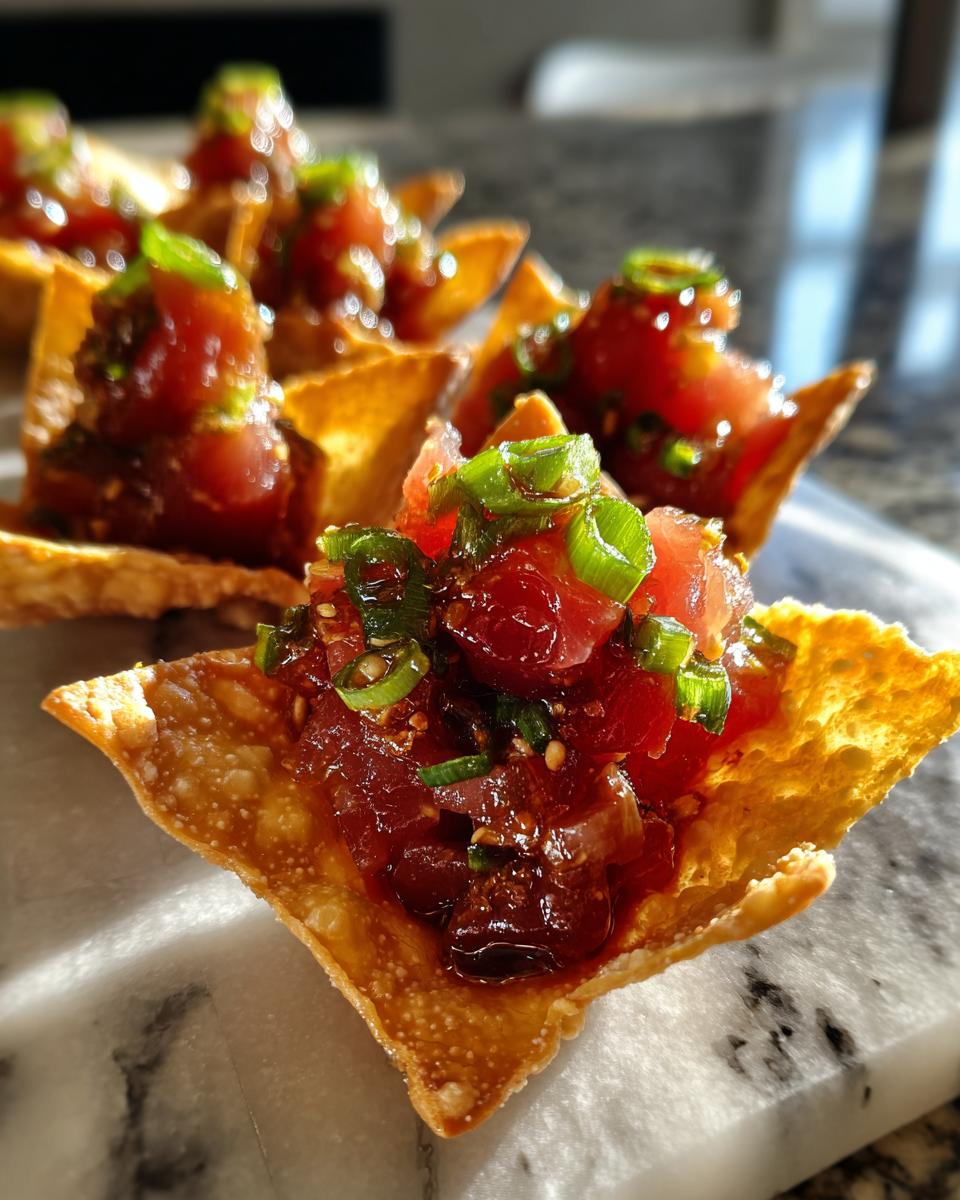
- Speed: Seriously, under fifteen minutes, that’s the promise.
- Flavor: That bright sesame, ginger, and sriracha blend is just irresistible.
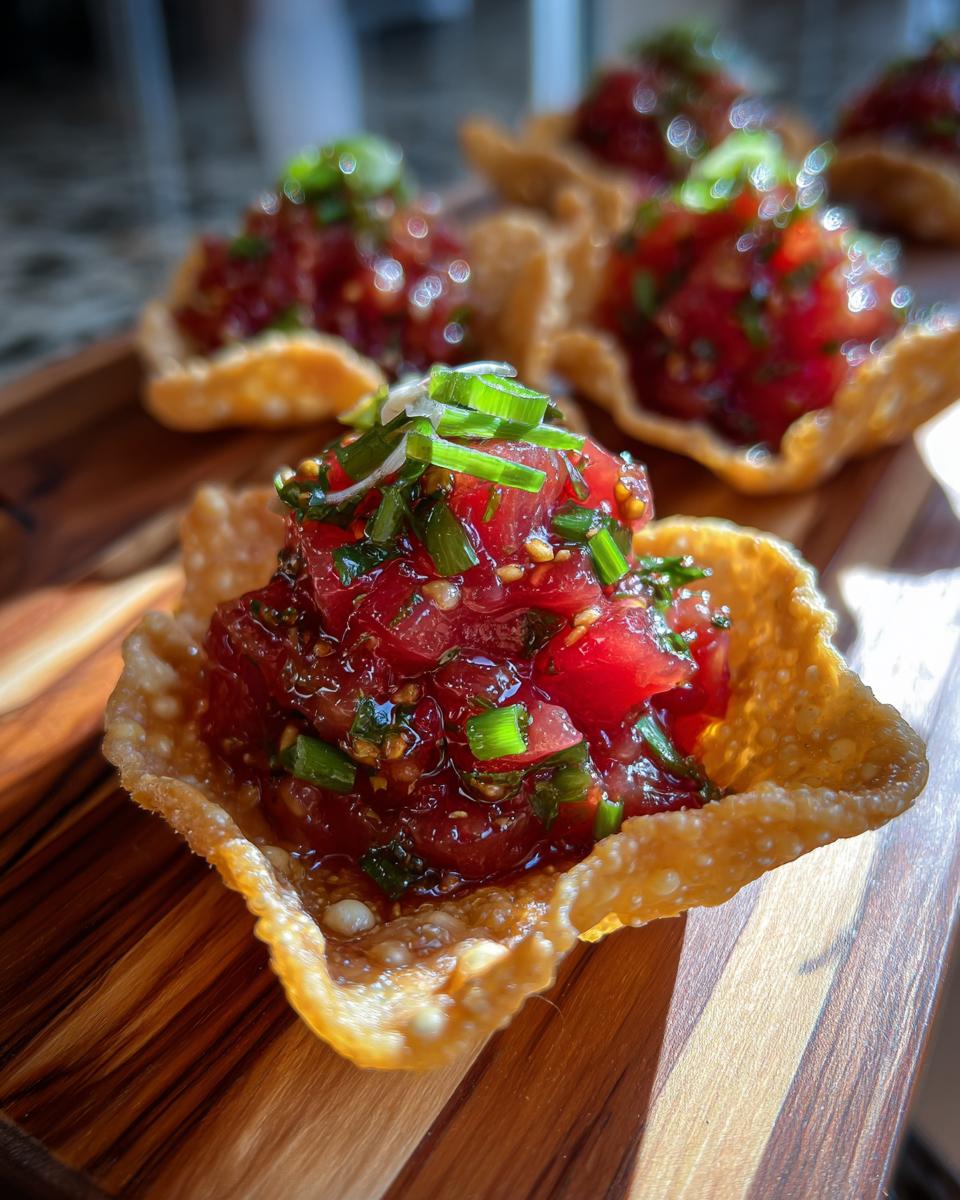
- Visual Appeal: It stacks beautifully on those wonton things, making you look like a culinary genius!
Speed and Simplicity: Making Tuna Tartare in Minutes
This is truly a champion among **No Cook Seafood Appetizers**. Because there’s zero actual cooking involved—we’re just dicing and tossing—the active time is so low. You spend maybe ten minutes mixing the marinade and the fish. If your wonton chips are ready to go, you are serving a stunning dish almost instantly. It’s perfect for those nights when you get home late but still want something delightful.
Achieving Restaurant Quality Tuna Tartare at Home
The secret to making this feel like a million bucks isn’t complicated technique; it’s quality ingredients. When you use great fish and balance that citrus-soy dressing just right, the result is undeniably **Restaurant Quality Tartare at Home**. It’s all about respecting the raw product. When you nail that fresh, bright flavor, nobody will believe you whipped it up so quickly!
Sourcing the Best Sushi Grade Tuna for Your Tuna Tartare
Okay, this is the absolute most important part of the whole process, so listen closely! Since we aren’t cooking this fish at all, you simply cannot use standard grocery store tuna. You have to be strict here: you need real, honest-to-goodness **sushi grade tuna** or sashimi-grade fish. I learned that the hard way once when I tried to substitute, and trust me, it wasn’t worth the worry. When you go to the fish counter, don’t be shy—ask them directly, “Is this fish handled and frozen correctly for raw consumption?” That direct question gets you the right answer immediately. Choosing the **Best Tuna for Tartare** means the flavor will be clean and buttery, not gamey at all. This quality step is what separates a good meal from indigestion, so please prioritize it! Knowing how to handle rice properly is key if you ever want to move on to bigger sushi projects, but for tartare, the quality of the fish itself is number one. If you feel like brushing up on your rice prep for future raw fish adventures, check out this guide on how to make perfect sushi rice later on.
Ingredient Notes and Substitutions for Tuna Tartare
Along with the star—the tuna—the way you dice everything matters tremendously. For texture, you need the avocado pieces to be almost exactly the same size cubes as your tuna pieces, blending seamlessly when you fold them in. If you’re watching carbs, or maybe you just ran out of wonton wrappers (oops!), toss those veggies aside! This dish is fantastic piled onto crisp cucumber rounds or even sturdy endive leaves for a low-carb appetizer. Just make sure if you’re serving it on something crunchy, that vehicle is ready *before* you dice the fish, because you want instant assembly after mixing.
Gathering Ingredients for Quick & Spicy Tuna Tartare
Pulling this together is so satisfying because you’re using mostly pantry staples for the dressing part! You need about a pound of that perfect, finely diced sushi-grade ahi tuna, and then we build our flavor around it. Don’t forget the fresh green elements: we need one scallion, thinly sliced, for a little bite. If you’re adding avocado—which I often do, as you saw—that needs to be diced to match the tuna perfectly. Also, make sure you have sesame seeds ready for that final flourish. It’s a small pile of amazing things that come together in seconds.
Components for the Asian Marinade Tuna
The heart of this flavor profile is our **Asian Marinade Tuna** blend. You’ll whisk together soy sauce, sesame oil, rice vinegar, and grated fresh ginger. This is where the spice comes in! I always start with just one teaspoon of Sriracha because I need to taste the balance first. If you like it hotter, go ahead and boost that Sriracha up—this dish should absolutely be as spicy as *you* want it to be. That brightness from the vinegar really cuts through the richness of the tuna beautifully.
How to Make Tuna Tartare: Step-by-Step Instructions
Alright, let’s get moving! Since this is such a fast assembly, we need to think just one step ahead when planning. The general rule is: prep your crunchy base first, then mix your delicate tuna just before serving. That way, the wontons are crisp and the fish is perfectly chilled when it hits the plate. Remember, the magic here is light handling, so be gentle when that marinade meets the fish. If you want to dive deeper into mixing up some amazing citrus sauces for seafood in general, I’ve got a great guide on marinade ideas for tuna steak that might spark some joy.
Preparing the Crispy Base for Your Tuna Tartare
First things first: those wonton chips need to be ready and waiting! You can bake them until they are light golden brown and brittle, or you can quickly fry them in oil heated to about 350°F until they float and are that perfect shade. Either way, the goal is total crispness! Lay them out on paper towels to drain off any excess fat or just to cool down while you work on the star of the show. They need to be totally cool before we start spooning the tartare on top.
Mixing the Perfect Spicy Tuna Tartare
Once your tuna is diced small and your marinade is whisked, pour that bright, zesty liquid right over the fish in a chilled bowl. Now, gently fold in your scallions and avocado, if you’re using it. I mean, gently—like you’re tucking in a baby. We are not whipping cream here; we are coating the cubes! Overmixing breaks down the fish and makes it mushy, which totally ruins that luxurious texture. As soon as everything is just coated, sprinkle in just half those sesame seeds, give it one last tender toss, and serve it right away. Seriously, eat this stuff immediately for the best experience!
Tuna Tartare Serving Ideas for Elegant Dinner Starters
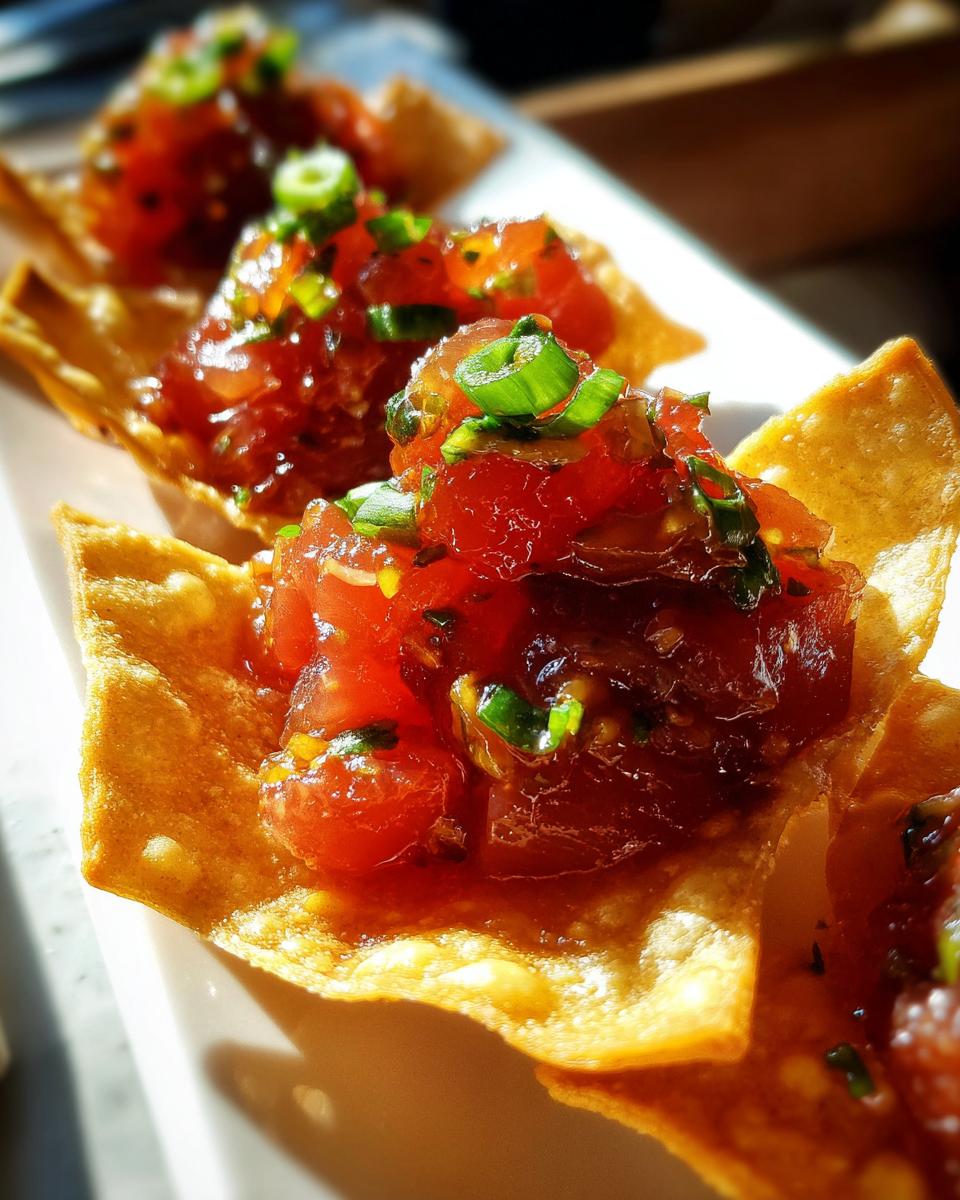
We’ve done the hard work making the *best* spicy tuna tartare, so now we have to show it off, right? Presentation is everything when you’re aiming for that gourmet feel! Of course, those crispy wonton chips we made are my go-to—they give you that perfect crunch contrast against the cool, soft fish. It’s such a fantastic structure for an appetizer. But if you’re hosting a crowd or just want something a little different, don’t stress! You can skip the chips entirely. Try serving the mixture scooped into halved, ripe avocado “cups”—it adds creaminess and looks so rich and green against the red tuna. I also love serving it over thin slices of crisp cucumber right off the grill; it keeps things light, fresh, and satisfies that low-carb craving beautifully. Remember, even a tiny sprig of fresh cilantro or a drizzle of extra-good olive oil makes a huge difference. For an extra flair that feels very high-end, sometimes I emulate the famous Nobu tuna tartare presentation by serving a small mound on slate tiles. If you’re looking for more inspiration on amazing appetizer spreads, check out my notes on putting together a great Kani salad!
Tips for Success When Making Gourmet Raw Tuna
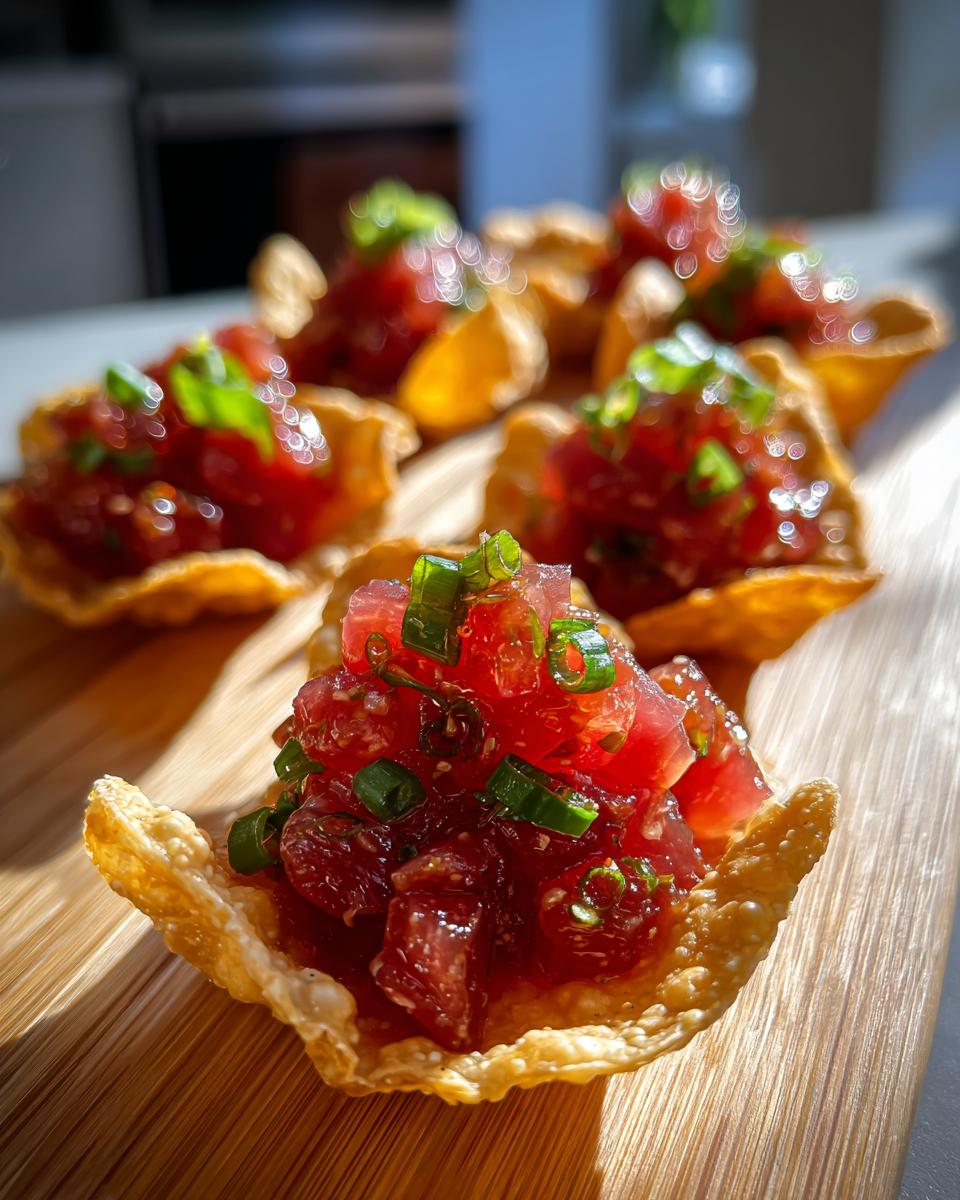
Getting that truly **Restaurant Quality Tuna Tartare at Home** vibe means paying attention to a few little tricks that Daisy always taught me. It’s not just about tossing ingredients together; it’s about temperature and precision, especially with raw fish. My first big tip is to chill everything first! Before you even start dicing, stick your mixing bowl and your knife in the freezer for about fifteen minutes. Working with cold equipment keeps the fish firm and prevents it from getting that gummy texture we hate. Plus, a cold bowl slows down the heating process when you start layering the marinade in.
Second, let’s talk about that dice. Remember, we want tiny, uniform cubes, not chunks or flakes. Think of it as a very precise, tiny vegetable brunoise. Consistent size means every single spoonful has the same mix of fish, avocado, and seasoning. You’ll know you’re close when the texture looks almost like coarse ground meat, but still holds its shape. Lastly, taste as you go! The balance of acid (vinegar) and salt (soy sauce) changes based on the natural flavor of your tuna that day. Always stir a little, taste a little, and adjust that final sprinkle of sea salt until it just sings!
Storage and Handling of Leftover Tuna Tartare
Now, I hate to bring up the boring but necessary topic of leftovers, but since we are dealing with raw fish, we have to be smart about safety! Honestly, the very best way to enjoy this **spicy tuna tartare** is right away. As soon as that acid hits the fish, it starts to change the texture, so waiting even a few hours can make it less vibrant.
If you truly have some left—maybe you made a big batch for sampling—transfer it immediately into a very small, airtight container. Make sure it is sealed tight and put it straight in the coldest part of your fridge. You should aim to eat any leftovers within 12 hours, tops. After that, the quality drops off, and it just isn’t worth the risk anymore. It’s a dish made for the moment, which is why I always try to only cut what I know we’ll finish!
Frequently Asked Questions About Tuna Tartare
I get so many questions when people try making raw fish for the first time, and that’s totally understandable! Since this recipe is all about using that gorgeous, fresh fish, I figured I’d tackle some of the most common things folks ask me about making delicious **Gourmet Raw Tuna** appetizers. If you ever want to branch out into cooked fish, my thoughts on blackened salmon are always popular!
What is the difference between poke and tuna tartare?
That’s a great question, because they both use raw tuna, but they are totally different experiences! The biggest difference is the cut and the dressing. Poke is usually made with larger, rustic cubes of fish—think more like little chunky jewels. Tuna tartare, on the other hand, needs to be finely diced so it can almost meld together when the dressing hits it. Tartare is heavily dressed and marinated right before serving, while poke often has a lighter, simpler dressing.
Can I use canned tuna for tuna tartare?
Please, no! Don’t even think about it for this dish. Canned tuna is cooked, it’s soft, and the texture is completely destroyed once you start trying to mix it. For this recipe, you are committed to that gorgeous, firm bite that only **sushi grade tuna** gives you. Stick to the fresh, raw, high-quality stuff; it’s the whole point!
How can I make a Nobu Style Tuna Tartare variation?
To get that famous, deep, savory flavor profile that people rave about, you need to amp up the umami a little bit. While my recipe is bright and spicy, for a **Nobu Style Tuna Tartare**, try bumping up the rice vinegar just a hair and add a quarter teaspoon of the finest minced garlic you can manage to your marinade. It adds that extra layer of sharp complexity. If you want to see how some folks handle that style, check out this great tuna tartare recipe resource!
Estimated Nutritional Data for Spicy Tuna Tartare
You know I always preach about using real ingredients, not just counting numbers, but since we all like to keep track sometimes, here are the rough estimates for this dish. Remember, this data is based on dividing the ingredients out into four equal appetizer servings, so if you eat half the plate—well, you know the score! This is just a guideline for our delicious **Quick Seafood Dish**.
- Calories: Approximately 280 per serving
- Protein: A whopping 25 grams! That fresh tuna really delivers.
- Fat: Around 14 grams (mostly healthy fats from the tuna and sesame oil)
- Carbohydrates: About 15 grams (mostly coming from the wonton chips we use for serving!)
- Sugar: Very low, around 3 grams
Because this recipe serves as more of a **Light Summer Appetizer**, it keeps things feeling elegant without weighing you down. Enjoy knowing you’re eating something both impressive and quite nutritious!
Share Your Quick Seafood Dishes Experience
Now that you’ve rocked this stunning and fast meal, I really want to hear about it! Did you serve it up on those crispy wonton chips, or did you opt for something totally different? Did you manage to get that perfect level of spicy heat in your **tuna tartare**? Drop a comment below and let me know how this **Easy Ahi Tuna Recipe** worked out for your dinner party or simple weeknight! And if you need more fast, quality meals for those busy evenings, take a peek at my ideas for weeknight dinner ideas!
PrintQuick & Spicy Tuna Tartare on Crispy Wonton Chips
Make restaurant-quality spicy tuna tartare at home in under 15 minutes. This recipe uses sushi-grade ahi tuna with a bright, Asian-inspired marinade and serves beautifully on crispy wonton chips.
- Prep Time: 15 min
- Cook Time: 0 min
- Total Time: 15 min
- Yield: 4 appetizer servings 1x
- Category: Appetizer
- Method: No Cook
- Cuisine: Asian Fusion
- Diet: Low Calorie
Ingredients
- 1 pound sushi-grade ahi tuna, finely diced
- 2 tablespoons soy sauce or tamari
- 1 tablespoon sesame oil
- 1 tablespoon rice vinegar
- 1 teaspoon sriracha (adjust for heat preference)
- 1 teaspoon fresh ginger, grated
- 1 scallion, thinly sliced
- 1/2 ripe avocado, finely diced (optional, for mixing in)
- 1 teaspoon toasted sesame seeds
- Pinch of sea salt
- 12–16 wonton wrappers, baked or fried until crisp (for serving)
Instructions
- Prepare the wonton chips: Bake or lightly fry wonton wrappers until golden and crisp. Set aside to cool.
- Prepare the tuna: Place the finely diced sushi-grade tuna in a non-reactive bowl.
- Make the marinade: In a small bowl, whisk together the soy sauce, sesame oil, rice vinegar, sriracha, and grated ginger.
- Combine: Pour the marinade over the diced tuna. Gently fold in the sliced scallions and the diced avocado, if using. Mix just until combined; do not overmix.
- Season: Add a small pinch of sea salt and gently fold in half of the toasted sesame seeds.
- Plate: Spoon the tuna mixture onto the prepared crispy wonton chips.
- Garnish: Sprinkle the remaining toasted sesame seeds over the top of each serving. Serve immediately for the best texture.
Notes
- You must use sushi-grade or sashimi-grade tuna for safety when eating raw. Ask your fishmonger specifically for tuna intended for raw consumption.
- For a Nobu style flavor, increase the rice vinegar slightly and add a tiny dash of finely minced garlic to the marinade.
- If you prefer a low-carb option, serve this tartare over cucumber slices or crisp lettuce cups instead of wonton chips.
Nutrition
- Serving Size: 1/4 of recipe
- Calories: 280
- Sugar: 3
- Sodium: 550
- Fat: 14
- Saturated Fat: 2
- Unsaturated Fat: 12
- Trans Fat: 0
- Carbohydrates: 15
- Fiber: 2
- Protein: 25
- Cholesterol: 45