

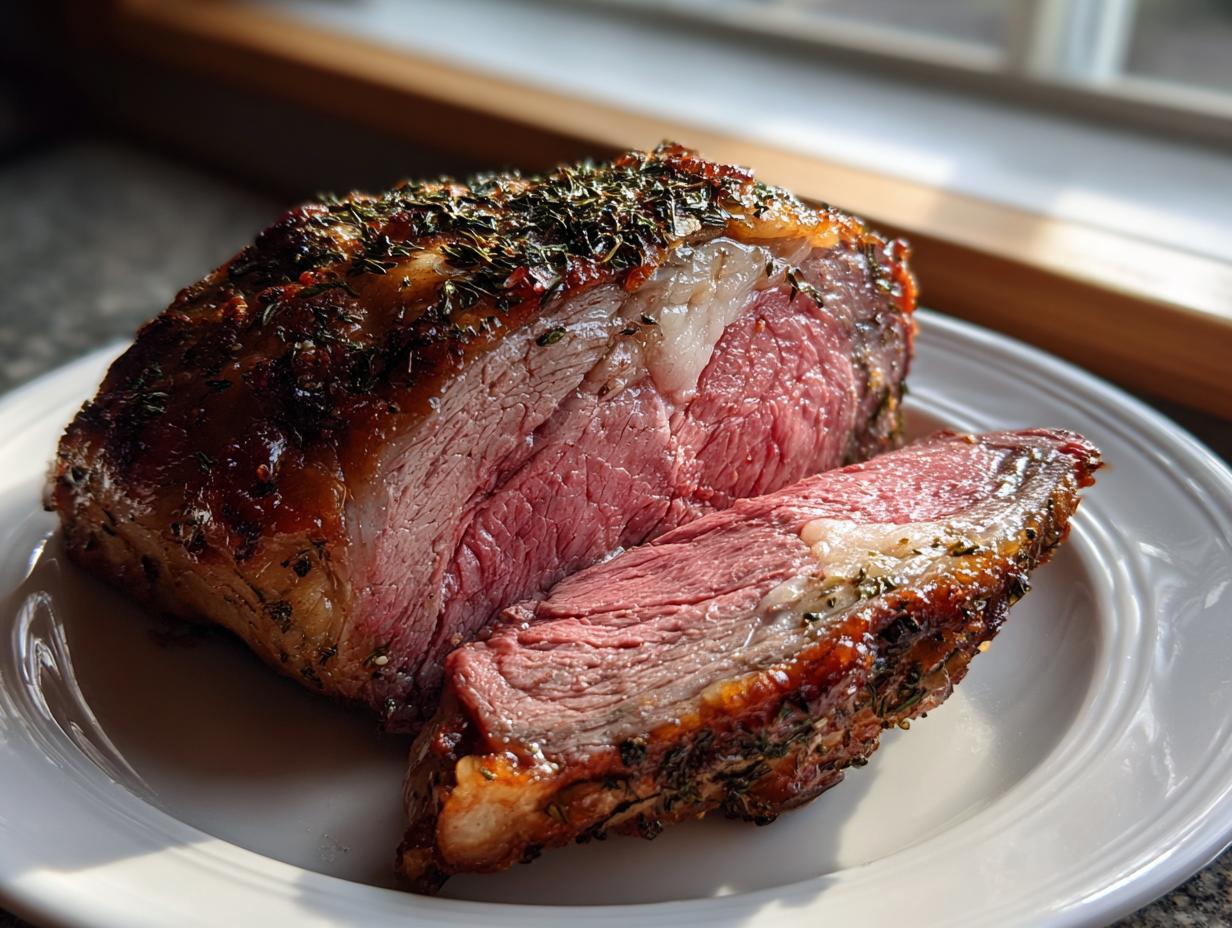
Okay, let’s talk about the big leagues. Holidays. Hosting. That moment when everyone is staring at the oven, just *hoping* you nailed the main event. I get it; hosting can feel like walking a tightrope! That’s why I’m handing you my absolute secret weapon: this truly Fool-Proof 500 Rule Prime Rib Recipe. Forget dry, sad roast beef. This method locks in the juices for that melt-in-your-mouth experience every single time. When I started cooking again, like my Grandma Daisy taught me, I needed reliability—and this prime rib recipe delivers that perfect, pink, medium-rare center. We all need a guaranteed win, thanks to the technique I learned from watching my grandmother—it’s the ultimate fool-proof 500 rule for incredible beef.
- Why This Prime Rib Recipe Guarantees Success (The 500 Rule)
- Gathering Ingredients for Your Prime Rib Recipe
- Step-by-Step Instructions: How to Cook Prime Rib Oven
- Tips for a Perfect Prime Rib Recipe Every Time
- Making Au Jus from Your Prime Rib Recipe Drippings
- Serving Suggestions for Your Holiday Roast Recipe
- Storing and Reheating Leftover Prime Rib Recipe
- Frequently Asked Questions About This Prime Rib Recipe
- Nutritional Estimates for Your Prime Rib Roast
- Share Your Christmas Dinner Centerpiece Success
- Nutritional Estimates for Your Prime Rib Roast
- Share Your Christmas Dinner Centerpiece Success
Why This Prime Rib Recipe Guarantees Success (The 500 Rule)
So, you want the secret to a tender prime rib roast that doesn’t taste like shoe leather? It’s all about heat manipulation. This Easy Prime Rib Method is truly foolproof because we shock the roast. We crank the oven up to 500 degrees for just fifteen minutes. That initial blast is purely cosmetic—it builds a gorgeous, savory crust, sealing in all that amazing flavor we packed on with the rub.
After that short blast, we immediately drop the oven temperature down to 325°F. This lets the inside cook gently and evenly, leading you straight to that perfect medium-rare center without burning the outside. Trust me, this method is a game-changer for your holiday roast recipe! We never open that door until it’s time to check the thermometer, which is key to success. You can read more about why this technique works so well over at Whitney Bond’s kitchen.
Bone-In vs. Boneless Prime Rib Guide
Do you have a standing rib roast or a boneless cut? Either works wonderfully here! If you have a bone-in roast, those ribs act like little insulation shields, making the meat closer to the bone cook a tiny bit slower. That means the bone-in cut gives you a slightly juicier, more evenly cooked result overall, in my opinion. Boneless roasts cook faster because the heat penetrates right through. Just remember that if you go boneless, you might need to shave a few minutes off the total cooking time once the temperature drops!
Gathering Ingredients for Your Prime Rib Recipe
Alright, you need the right players on your team for a knockout roast! You’ll find the full list of what we need—salt, pepper, rosemary, and that beautiful butter—in the recipe card below, but let’s talk prepping. The single most important thing is letting that roast chill out! Take it out of the fridge at least two to three hours before you even think about turning on the oven. Room temperature meat cooks so much more evenly. It’s a non-negotiable step for a perfect prime rib recipe!
Crafting the Best Prime Rib Rub
This garlic-herb butter mixture is what gives you that amazing crust. We blend softened butter with minced garlic and all our dried herbs and spices. When you apply the best prime rib rub, don’t just pat it on! I like to use my hands and really push that mixture all over the roast, working it into every nook and cranny you can find. Think of yourself as tenderizing the outside layer before it even hits the heat. It’s messy, but oh so worth it. If you need a great side dish to go with this masterpiece, check out my recipe for the sweet potato casserole!
Step-by-Step Instructions: How to Cook Prime Rib Oven
Now for the main event! This is exactly how to cook prime rib oven style using the blast-and-reduce method that keeps everything juicy. First things first: get that oven up to 500 degrees Fahrenheit. Once it’s roaring hot, put your herb-rubbed roast fat-side up in the pan, and let it hang out there for precisely 15 minutes. That quickly sets that crust you worked so hard to create. Don’t peek, don’t touch! After the beep, immediately drop the heat down to 325°F without opening the door—letting that heat escape ruins our timing!
From here on out, we are relying completely on our trusty meat thermometer. This is where we earn that perfect medium rare prime rib result. You’ll cook it at the lower temperature until the thermometer reads 125°F in the thickest part. If you want to know more about timing, check out this guide on oven-roasting techniques. If you’re after a simple side, my garlic butter rice pairs beautifully with this rich roast.
Achieving Medium Rare Prime Rib Temperature
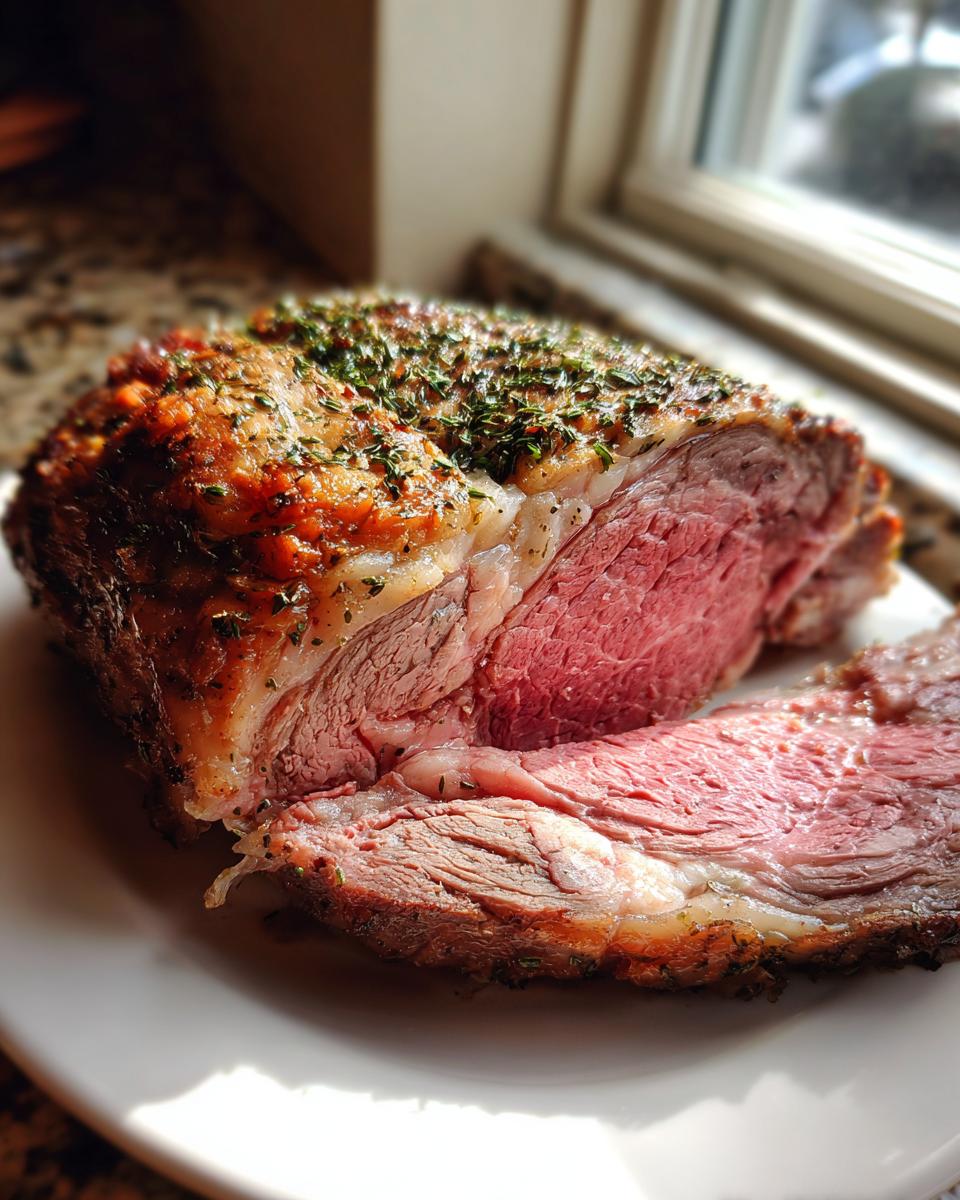
Listen, folks, a thermometer is your best friend here. If you eyeball this, you might end up with a lovely piece of roast beef, but not the luxurious medium rare prime rib we are aiming for. When you check the probe, make sure you are deep into the center of the thickest part, but definitely not touching the pan or any bone underneath. Pull the roast out of the oven the second it hits 125°F. I repeat: 125°F is the magic number to pull the prime rib! This is the #1 step for a juicy roast beef.
The Essential Prime Rib Resting Period
Okay, the clock says 125°F, so you take the roast out. It’s hot, I know, but you absolutely *cannot* carve it yet! Tent it loosely with foil—and I mean loosely, you don’t want to steam that crust we built! Let it rest for a full 20 minutes undisturbed. Why? It’s called carryover cooking. That residual heat keeps cooking the meat, bumping the temp up another 5 to 10 degrees, bringing you perfectly to that 130-135°F zone. Even more importantly, this rest lets all those delicious juices redistribute throughout the meat, ensuring every single slice cuts like a tender prime rib roast.
Tips for a Perfect Prime Rib Recipe Every Time
We’ve got the temperature trick down, but let’s lock in that perfect prime rib recipe with a few extra moves. First, when you are shopping for that standing rib roast, try to pick one that’s not too huge unless you have a massive crew coming over! A roast that’s too thick can sometimes mean the outside is cooked before the center hits that sweet spot. Also, once you drop the heat to 325°F, you absolutely must resist opening the oven door!

Every time you look, you lose 25 degrees, and that messes up our calculated timing. Trust the thermometer and trust the process we went over. If you need some side inspiration to go along with this incredible roast—maybe something classic like stuffing—check out my recipe for the best sausage stuffing recipe. For more temperature confirmations, I always double-check the tips from Alright With Me!
Making Au Jus from Your Prime Rib Recipe Drippings
You’ve rested your roast, you’ve carved up some glorious slices of juicy roast beef, and now you’re staring at that roasting pan full of flavorful, dark bits left behind. Don’t you dare waste those! Those are liquid gold for making a quick, fantastic Roast Beef with Au Jus. It’s so simple, it feels like cheating.
After you pull the roast out, carefully pour off most of the fat settled on top—you want those meaty brown bits, not a layer of grease. Set the pan right on your stovetop over medium heat. Add maybe a cup or two of beef broth—or even some water in a pinch! Scrape up all those wonderful, stuck-on bits from the bottom of the pan using a wooden spoon. That’s where all the deep, savory flavor lives!

Let that mixture simmer and reduce slightly until it thickens up just a little bit. If you want it a bit richer, you can whisk in a tiny bit of flour or cornstarch mixed with cold water—that’s called a slurry, and it thickens things up fast! If you’re looking for a creamy option later on, I have a great creamy garlic sauce recipe, but for au jus, we keep it simple: broth and those glorious drippings. A simple pan sauce really sets off the richness of the prime rib perfectly!
Serving Suggestions for Your Holiday Roast Recipe
You’ve managed the perfect roast! Now we need to make sure the rest of the table matches that impressive centerpiece. When planning your buffet for this holiday roast recipe, think creamy, slightly sour, or green things to cut through that incredible richness of the beef. I always pair mine with my ultimate loaded mashed potato casserole because, let’s be honest, you need that creamy texture soaking up the au jus.
Prime Rib Serving Guide: Slicing Technique
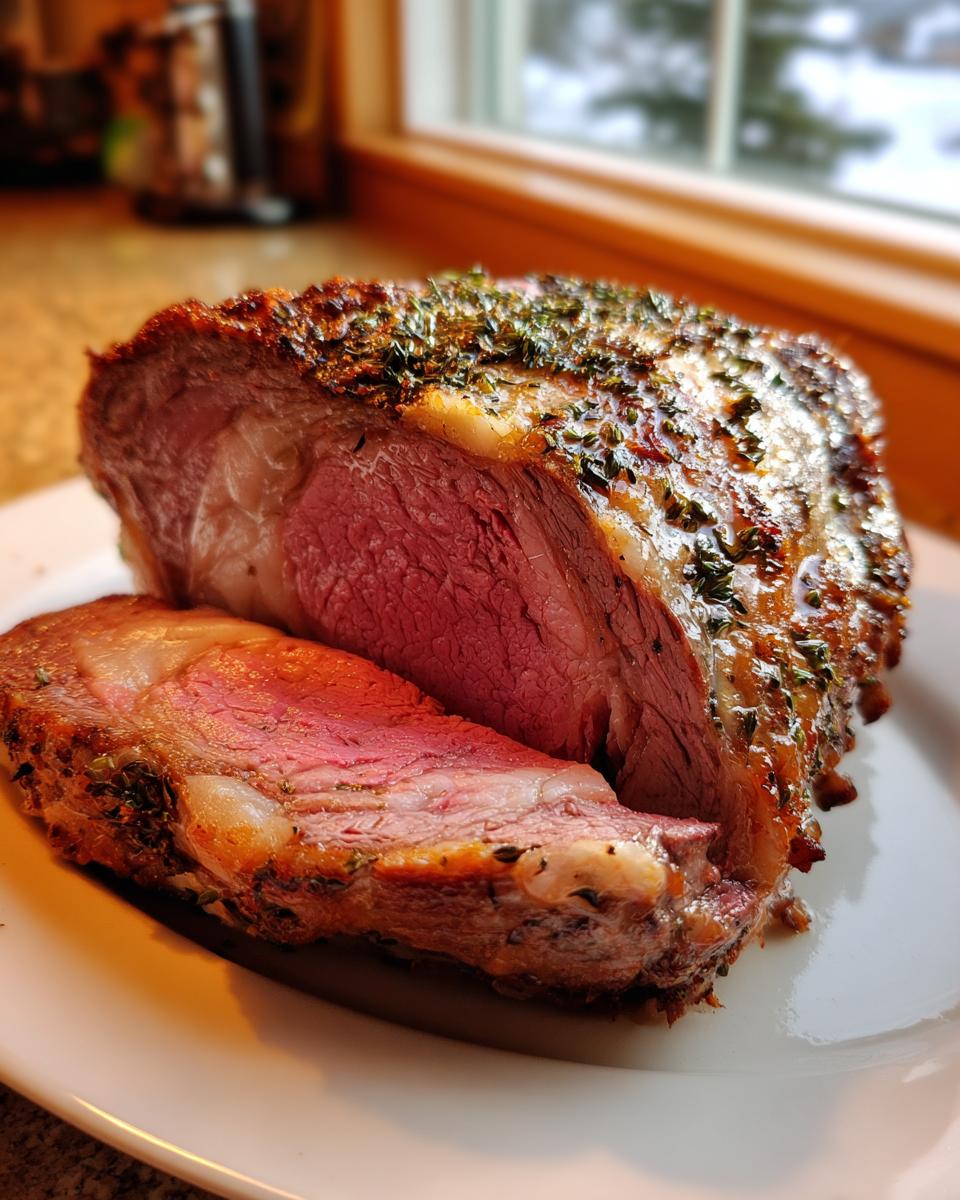
This is the last test of your commitment to a juicy roast beef! Once the roast has rested its full 20 minutes—seriously, don’t cheat this step—it’s time to carve. You must slice *against* the grain. Look closely at the surface of the roast; you’ll see the muscle fibers running one way. Use a long, sharp knife and cut perpendicular (across) them. Cutting this way shortens those tough muscle fibers, which is exactly why slicing against the grain ensures every single piece is incredibly tender!
Storing and Reheating Leftover Prime Rib Recipe
You finished dinner, the guests have gone home, and you’re left with glorious, leftover prime rib. Don’t you dare just toss it in a plastic bag and risk it drying out in the fridge! We worked too hard for that perfect tender prime rib roast to let it get tough later. The good news is that leftovers are fantastic, provided you treat them right.
For safe storage, get that precious beef into an airtight container right away. It’s best eaten within three to four days. Honestly, I rarely have leftovers past day two because my family usually fights over the last slices cold! The way I see it, the faster you eat it, the better it is, especially if you plan on making something easy like roast beef sandwiches the next day.
Now, reheating is where people mess up. If you throw a thin slice back into a hot oven or blast it in the microwave, you’re just asking for dry meat. The trick to keeping those slices juicy is moisture! You need extra liquid. I always put my leftover slices in a skillet over medium-low heat, and I pour just a tiny splash of beef broth (or that awesome au jus we made!) right into the pan. You just want enough liquid to create steam around the slices.
Let the slices gently warm through, turning them once or twice until they are heated the way you like them. They soak up that moisture while they heat, and you end up with meat that’s nearly as tender as when it first came out of the oven. It’s a simple way to maintain the quality of your incredible roast!
Frequently Asked Questions About This Prime Rib Recipe
I know when you’re planning a huge meal, your head swims with details! So, let’s tackle a few things that pop up most often when people are making this Perfect Prime Rib Recipe. If you have more questions after you try it, feel free to reach out. I’m always happy to chat technique!
What is the general cooking time per pound for this roast?
This is tricky because every oven is different, but for our 325°F phase, you’re generally looking at about 13 to 15 minutes per pound after that initial 15-minute blast at 500°F. This gets you that gorgeous Medium Rare Prime Rib. Remember, the absolute best way to know for sure is by using a reliable thermometer—don’t guess on such an important piece of meat!
Can I use a slow cooker instead of the oven?
Oh, honey, that’s a whole different ballgame! This Easy Prime Rib Method relies on dry, high heat to create that crust quickly and then finish slow. A slow cooker, or Crock-Pot, uses moist heat, so you’ll end up with a delicious, tender, **slow roasted rib roast**, but it won’t develop that beautiful brown crust we worked for. If you want to use a slow cooker, you need a completely different recipe, but for this particular method, stick to the oven!
What if I don’t have a roasting pan?
Don’t panic if your roasting pan decided to take a vacation! You absolutely can use a sturdy, heavy-duty baking sheet. The key is to elevate the roast so that air can flow all the way around it—that’s what helps it brown evenly. You can use a metal cooling rack, or you can improvise by creating a ‘rack’ using a few rolled-up balls of heavy-duty foil placed underneath the roast. Just make sure whatever you use can handle the heat. You can find more tips on handling meat over at Better Homes & Gardens.
Can I use this Easy Prime Rib Method for a Boneless Roast?
Yes, absolutely! As I mentioned earlier, the 500-degree blast still works wonders for setting that crust on a boneless cut. Since there are no bones acting as insulation, the boneless roast will cook slightly faster overall. I usually shave about 2 to 3 minutes per pound off the total cooking time when comparing it to a bone-in cut of the same weight. Keep that thermometer handy!
If you’re still figuring out what to serve alongside this amazing roast, I have tons of ideas for quick weeknight dinners that use similar herb profiles!
How do I know if my prime rib needs more time?
If you pull it out and the thermometer reads 120°F, and you were aiming for medium-rare (130–135°F final), don’t worry about it being ruined! Just pop it back in the oven at 325°F and check the temp again in 5-minute increments. It’s much, much easier to add 5 minutes of cooking time than it is to fix an overcooked roast! This technique is all about building confidence so you can serve the best holiday meal possible.
Nutritional Estimates for Your Prime Rib Roast
Just to keep you perfectly informed on what you’re enjoying, here are the estimated nutritional breakdowns based on a 6-ounce cooked portion of this prime rib recipe. Remember, these are just ballpark figures since the fat content on your specific roast can vary wildly!
- Serving Size: 6 oz cooked portion
- Calories: 450
- Sugar: 0
- Sodium: 450
- Fat: 30g
- Saturated Fat: 14g
- Unsaturated Fat: 16g
- Trans Fat: 0
- Carbohydrates: 0
- Fiber: 0
- Protein: 40g
- Cholesterol: 140mg
This is a rich meal, so enjoy those vegetables on the side, like my favorite creamy garlic sauce if you want something different! These estimations are just a guide based on the ingredient amounts listed.
Share Your Christmas Dinner Centerpiece Success
Okay, I’ve laid out my absolute best advice and shared all the secrets Grandma Daisy taught me about making this Christmas Dinner Centerpiece shine! Now, it’s your turn to shine in your own kitchen! I truly hope this prime rib recipe removes all the stress you had about cooking a massive roast.
If you try this 500 Rule method and it comes out juicy and pink—and I know it will—I want to hear all about it! Please leave a rating and review right below the recipe card. Tell me how many people you served and what sides you paired it with. Seeing your success is the best pat on the back for me! If you want to chat more about how your roast turned out, or if you have follow-up cooking questions, don’t hesitate to reach out via my contact form. I love seeing your takes on my favorite holiday feast main course!
Nutritional Estimates for Your Prime Rib Roast
Just to keep you perfectly informed on what you’re enjoying, here are the estimated nutritional breakdowns based on a 6-ounce cooked portion of this prime rib recipe. Remember, these are just ballpark figures since the fat content on your specific roast can vary wildly!
- Serving Size: 6 oz cooked portion
- Calories: 450
- Sugar: 0
- Sodium: 450
- Fat: 30g
- Saturated Fat: 14g
- Unsaturated Fat: 16g
- Trans Fat: 0
- Carbohydrates: 0
- Fiber: 0
- Protein: 40g
- Cholesterol: 140mg
This is a rich meal, so enjoy those vegetables on the side, like my favorite creamy garlic sauce if you want something different! These estimations are just a guide based on the ingredient amounts listed.
Share Your Christmas Dinner Centerpiece Success
Okay, I’ve laid out my absolute best advice and shared all the secrets Grandma Daisy taught me about making this Christmas Dinner Centerpiece shine! Now, it’s your turn to shine in your own kitchen! I truly hope this prime rib recipe removes all the stress you had about cooking a massive roast.
If you try this 500 Rule method and it comes out juicy and pink—and I know it will—I want to hear all about it! Please leave a rating and review right below the recipe card. Tell me how many people you served and what sides you paired it with. Seeing your success is the best pat on the back for me! If you want to chat more about how your roast turned out, or if you have follow-up cooking questions, don’t hesitate to reach out via my contact form. I love seeing your takes on my favorite holiday feast main course!
PrintFool-Proof 500 Rule Prime Rib Roast
Cook a juicy, tender prime rib with a perfect crust every time using this simple oven method. This recipe guarantees a medium-rare result for your holiday centerpiece.
- Prep Time: 20 min
- Cook Time: 1 hr 45 min
- Total Time: 2 hr 45 min
- Yield: 6 servings 1x
- Category: Main Course
- Method: Oven Roasting
- Cuisine: American
- Diet: Low Fat
Ingredients
- 1 Standing Rib Roast (Prime Rib), bone-in or boneless, about 4-6 lbs
- 3 tablespoons coarse sea salt
- 2 tablespoons black pepper
- 1 tablespoon dried rosemary
- 1 tablespoon dried thyme
- 1 tablespoon garlic powder
- 1/4 cup softened unsalted butter
- 4 cloves garlic, minced
Instructions
- Remove the roast from the refrigerator 2 to 3 hours before cooking. Let it sit at room temperature.
- Preheat your oven to 500 degrees Fahrenheit.
- In a small bowl, combine the softened butter, minced garlic, salt, pepper, rosemary, thyme, and garlic powder to create the herb rub.
- Rub the entire surface of the prime rib evenly with the herb butter mixture.
- Place the roast, fat side up, in a roasting pan. If using a bone-in roast, you can rest it on the bones or use a roasting rack.
- Place the roast in the preheated 500°F oven and cook for exactly 15 minutes. This sets the crust.
- Reduce the oven temperature to 325 degrees Fahrenheit without opening the door.
- Continue roasting until the internal temperature reaches 125°F for medium-rare (about 13-15 minutes per pound after the initial 15 minutes at high heat). Use a meat thermometer inserted into the thickest part of the meat, avoiding bone.
- Remove the roast from the oven when it reaches 125°F.
- Tent the roast loosely with foil and let it rest for 20 minutes before carving. The internal temperature will rise to about 130-135°F during resting.
- Carve against the grain and serve immediately.
Notes
- For a bone-in roast, the bones act as insulation, requiring slightly longer cooking time than a boneless roast of the same weight.
- If you prefer rare, pull the roast at 120°F. For medium, pull at 135°F.
- Save the pan drippings to make a simple au jus sauce.
Nutrition
- Serving Size: 6 oz cooked portion
- Calories: 450
- Sugar: 0
- Sodium: 450
- Fat: 30
- Saturated Fat: 14
- Unsaturated Fat: 16
- Trans Fat: 0
- Carbohydrates: 0
- Fiber: 0
- Protein: 40
- Cholesterol: 140