

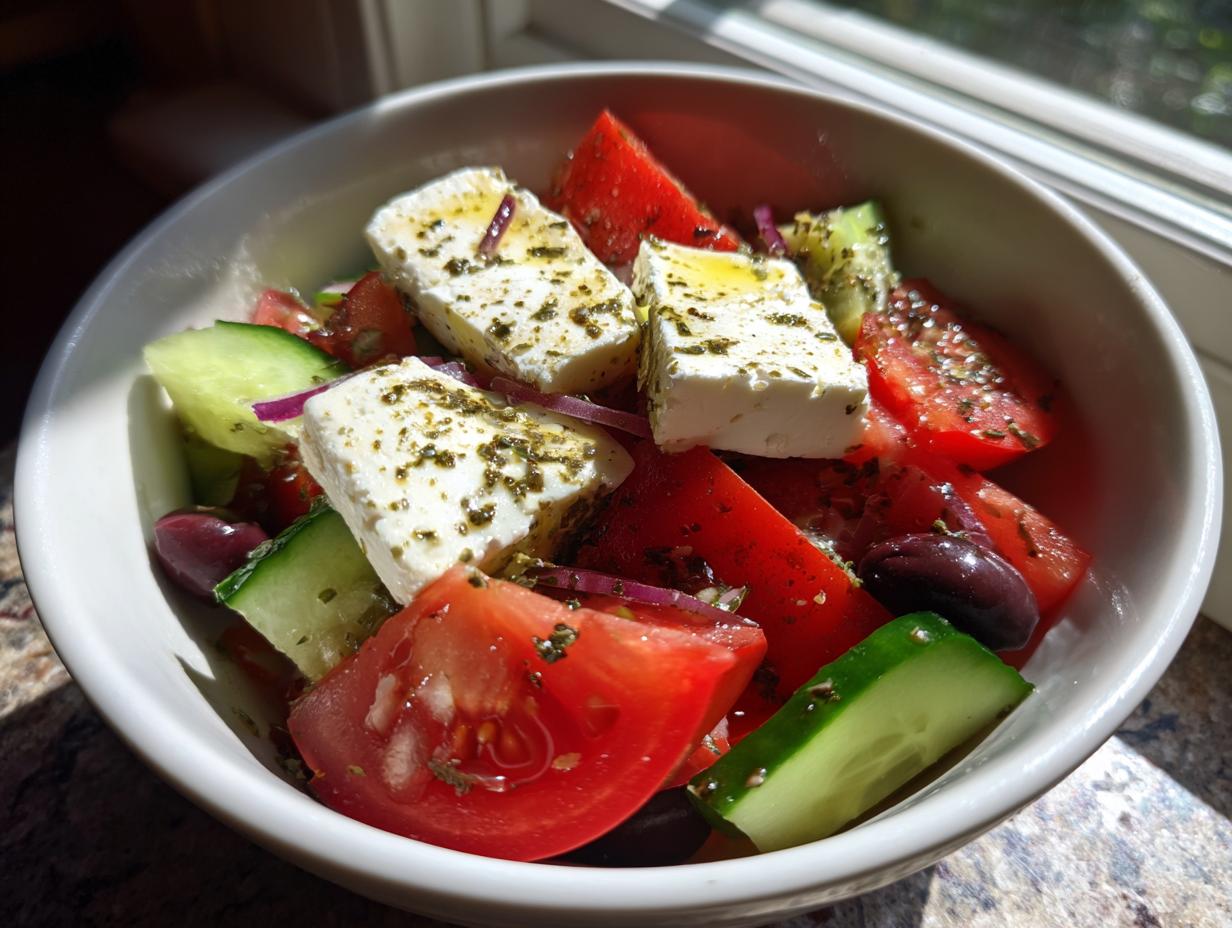
Oh, I just adore the Mediterranean way of eating, don’t you? It’s all about letting a few beautiful, fresh ingredients shine without getting bogged down in complicated steps. That’s exactly what we’re doing today with the most classic, vibrant meal on the planet: the authentic greek salad. Forget those watery versions with limp lettuce—we are making the real deal, Horiatiki! The best part? This entire masterpiece, from chopping to serving, takes about ten minutes flat. It reminds me so much of Grandma Daisy’s wisdom; she always said the best food uses the fewest, best ingredients. This recipe honors that tradition completely.
- Why This Authentic greek salad Recipe is a Mediterranean Must-Have
- Gathering Ingredients for Your greek salad
- Crafting the Best greek dressing: Homemade greek vinaigrette
- Assembling Your greek salad Instructions
- Ingredient Notes and Substitutions for this mediterranean diet recipe
- Serving Suggestions for Your Simple greek side dish
- Storage and Reheating Instructions
- Frequently Asked Questions About Making a greek salad
- Share Your Experience Making This Fresh Vegetable Salad
Why This Authentic greek salad Recipe is a Mediterranean Must-Have
Honestly, this simple vegetable preparation is my absolute favorite for busy nights. It’s so incredibly good for you, and it nails that fresh, zesty flavor everyone craves when it gets hot outside. Once you see how fast it comes together, it’ll become a staple!
- It’s a truly quick mediterranean salad solution when you need something healthy *fast*.
- This is a naturally healthy vegetarian salad that doesn’t feel like it’s missing anything important.
Ready in 15 Minute Salad Recipe Time
Seriously, we’re talking ten minutes of hands-on time here. Since there is zero cooking involved, you just chop, drizzle, and serve. If you’re looking for other speedy sides, you might want to check out my Cilantro Lime Quinoa Salad, but this one wins on pure speed when you’re starving!
The Essence of a classic greek salad recipe
When I say authentic, I mean it! We are focusing on the Horiatiki style here. That means absolutely no lettuce allowed, folks. It’s all about letting those crisp cucumbers and ripe tomatoes be the stars. Quality ingredients make all the difference when the recipe is this simple.
Gathering Ingredients for Your greek salad
Okay, let’s talk about what you need to grab. Since this greek salad with feta and olives relies so much on the quality of its parts, I need you to promise me you’ll stick close to the list. I made a note to check out my guide on caramelizing onions if you ever want to get fancy, but for this classic version, we just need thinly sliced ones. Remember, we aren’t cooking anything, so everything needs to be perfectly fresh for that amazing texture.
Vegetable Components for a crisp cucumber tomato salad
The tomatoes are the backbone here. Don’t grab those sad, pale ones from the back of the shelf! You want them ripe—really ripe, almost heavy—so they can hold up against the dressing and give you those beautiful, juicy wedges. For the cucumber, I prefer the English kind because you don’t have to peel them, and they have fewer seeds. Chop them into thick half-moons; we want rustic chunks, not tiny dice!
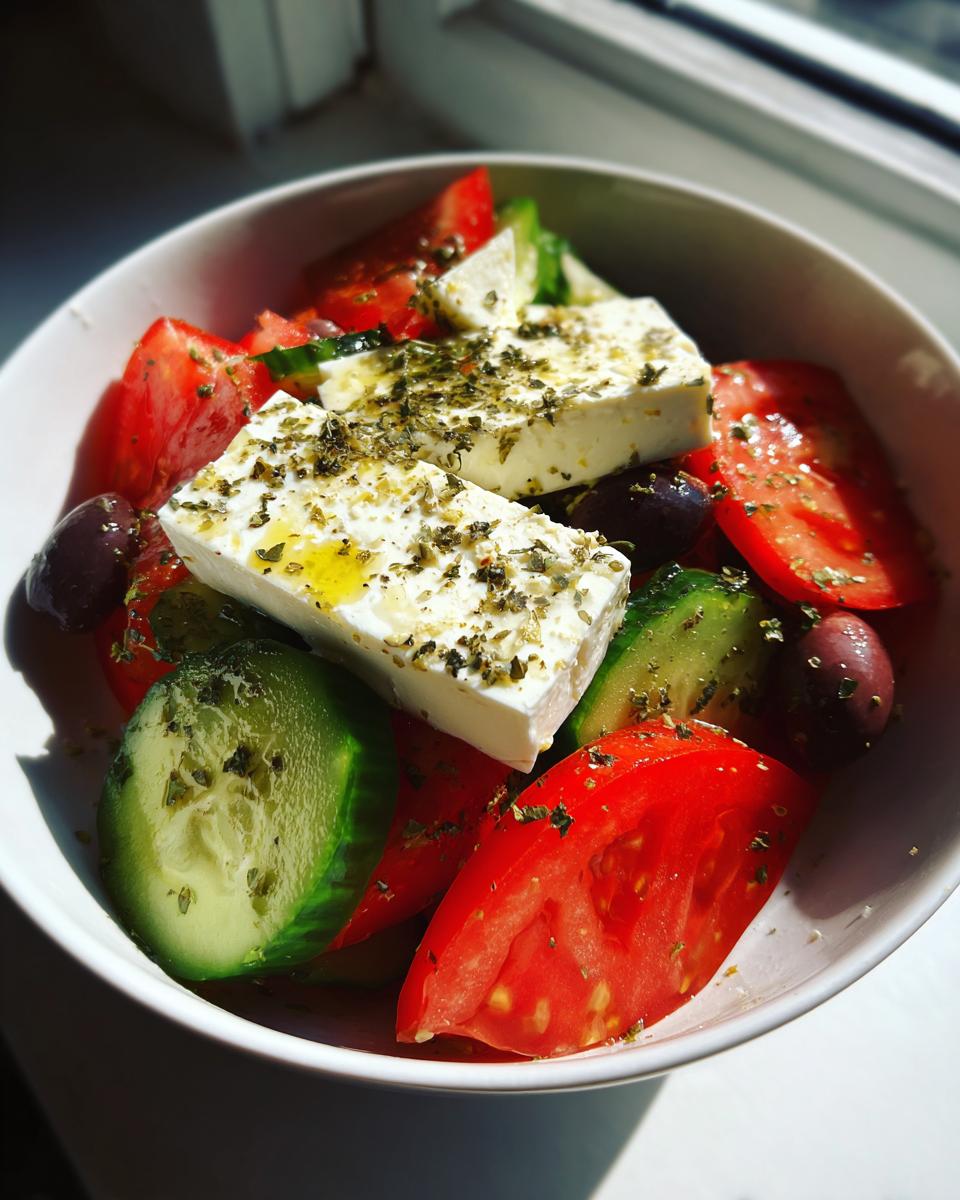
The Essential Feta and Olives for your greek salad with feta and olives
Listen closely, this is non-negotiable if you want the real flavor. Skip the powdered, pre-crumbled feta that comes in a plastic shaker. You absolutely must buy a solid block of feta cheese, and if you can find it packed in brine, even better! That salty liquid keeps it creamy and sharp. And the olives? Only Kalamata. They have that distinct deep purple color and rich, almost fruity flavor that store-brand black olives just can’t touch. Get the ones with the pits if you can—they always taste better!
Crafting the Best greek dressing: Homemade greek vinaigrette
Okay, this is where so many people cut corners, and trust me, it’s the biggest mistake you can make! The best greek dressing, or vinaigrette, should sing! It needs that bright, tangy punch to cut through the richness of the feta and the sweetness of the tomato. Since we are making the classic greek salad recipe, we need a simple homemade greek vinaigrette, not some thick, herby store-bought jar garbage. It takes literally five minutes, so we have no excuses!
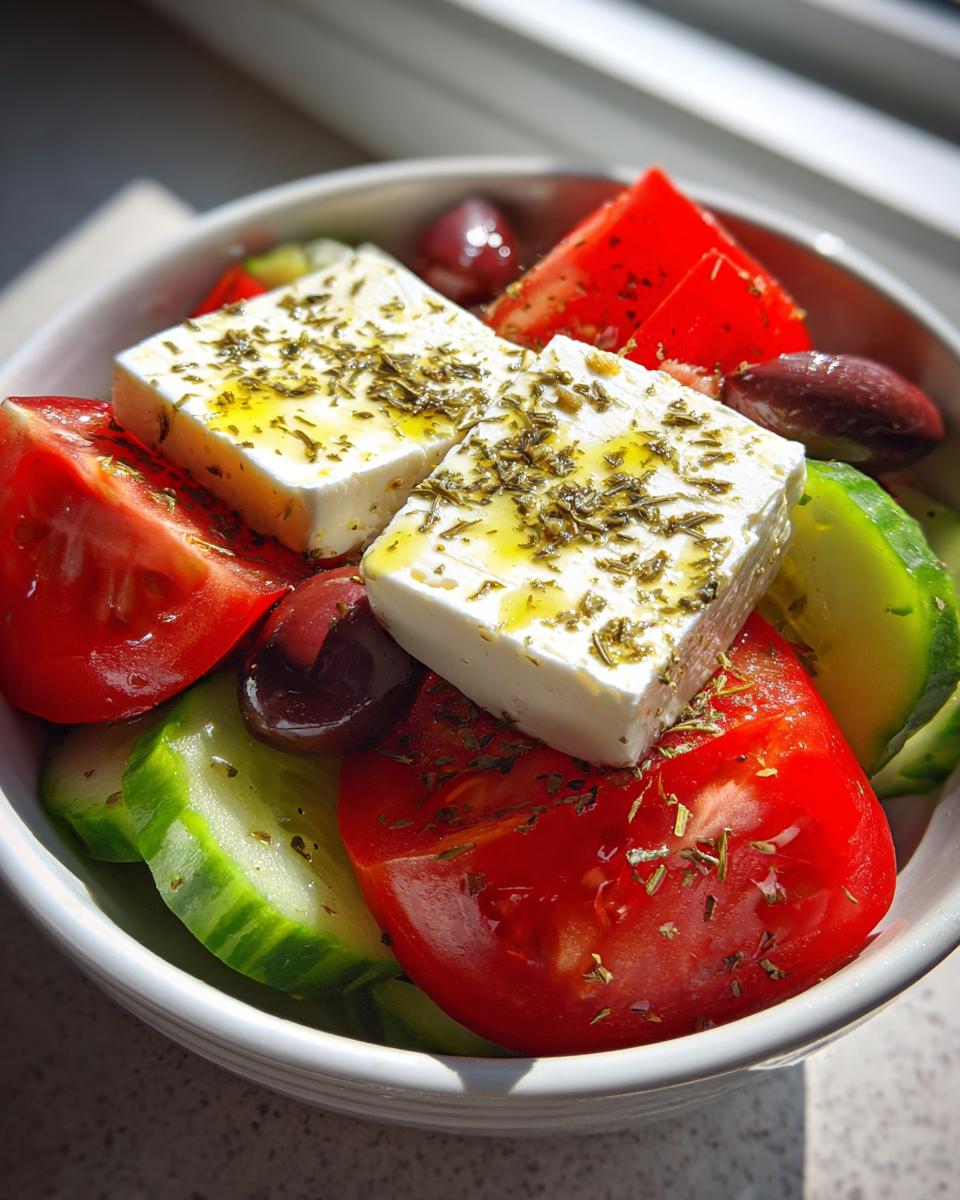
Grab a small bowl or, my personal favorite, a small jar with a tight-fitting lid. If you use a jar, shake it like you mean it until everything is totally combined. If you are whisking, do it vigorously! You want to see that beautiful lemon and vinegar mixture start to look slightly thicker—that’s the oil and acid getting friendly. Remember how much Daisy loved whipping things until they were airy? Feel that energy while you mix this up!
Tips for a bright lemon dressing
Here’s my little trick for maximizing the punch of the herbs without them getting lost in the emulsion. I reserve the dried oregano for last. Whisk the oil, vinegar, salt, and pepper until they look pale and happy. Then, you gently fold in that oregano right at the end and give it one final, quick stir. When you drizzle it over the salad, that fresh hit of oregano scent is going to be incredible. If you want to see a fun way I whip fats for another recipe, check out my whipped honey butter—same concept, just sweet instead of savory!
This dressing is fantastic, and if you ever want to compare notes on authenticity, my friend over at The Mediterranean Dish has a great breakdown of what makes a truly traditional Greek salad base. But for now, get pouring!
Assembling Your greek salad Instructions
We’ve chopped, we’ve dressed—now for the fun part! This assembly process is where we really pay homage to how they do things back in Greece. It’s all about presentation first, then tossing right before you eat. Remember, that crispness goes away fast once the salty feta starts weeping its juices everywhere, so time is of the essence here. This is the final stop before the table for your quick mediterranean salad!
Layering the Fresh Vegetable Base
Start with your serving bowl—I like using a wide, shallow one rather than a deep pot because it lets us see all those gorgeous colors! Gently place your tomato wedges, those thick cucumber half-moons, the thinly sliced red onions, and those salty Kalamata olives right into the bowl. Try to distribute them somewhat evenly. Don’t stir them yet! We are building a foundation right now.
Final Touches for the Traditional greek salad
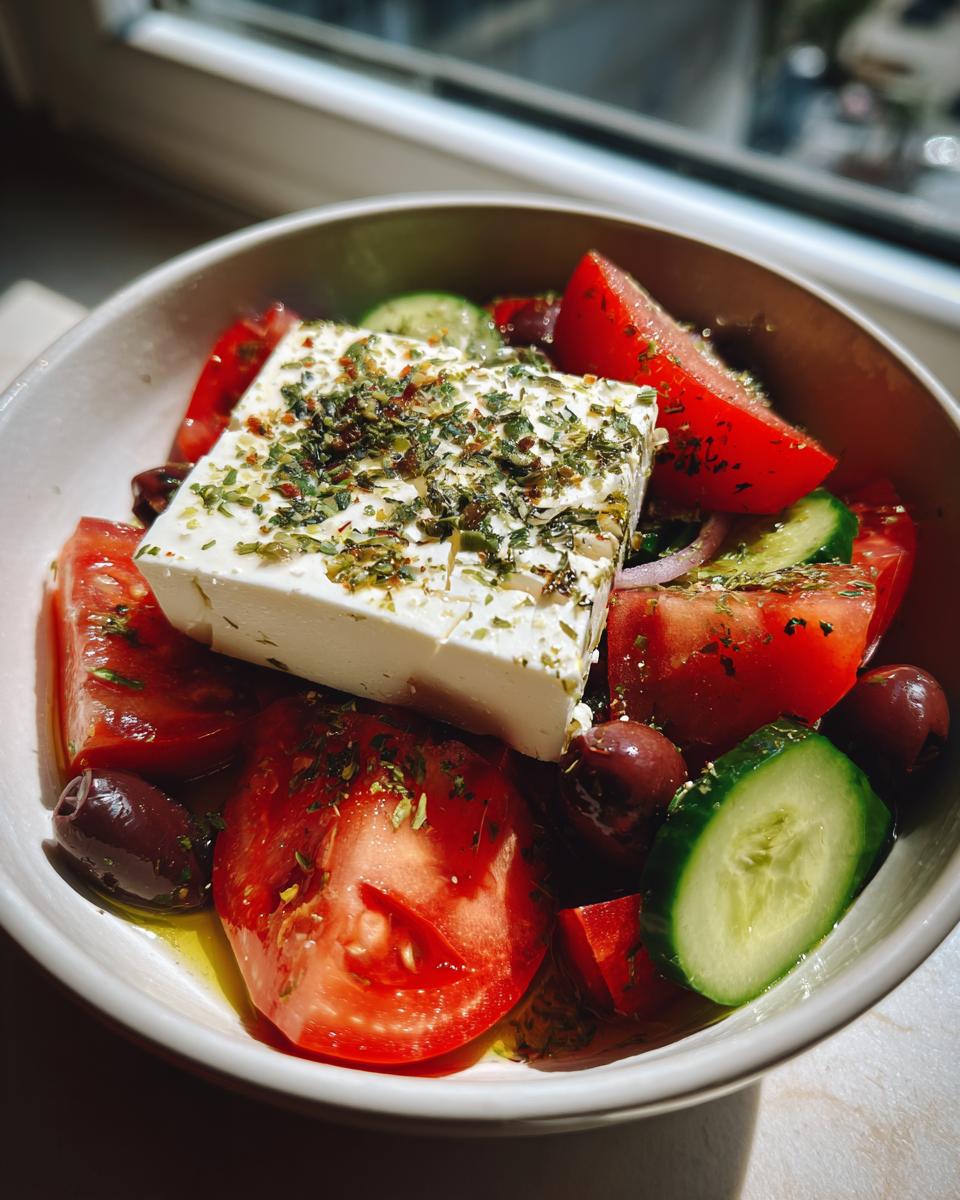
Next, take that beautiful, creamy block of feta cheese and carefully lay it right on top of the vegetables. That’s how you present an authentic horiatiki salad! Now, take your bright dressing and drizzle it evenly over *everything*. You can save a splash of the olive oil for a final sheen if you want to get fancy. See how that oregano scent starts lifting off the top? I recommend serving it immediately, letting people gently toss their own portion on their plate rather than mixing the whole bowl. If you need a main to go with this simple side, check out my weeknight dinner ideas!
Ingredient Notes and Substitutions for this mediterranean diet recipe
When I first started making this regularly, I had so many questions, mostly because American recipes love to sneak in extra things! That’s where the real knowledge behind an authentic mediterranean diet recipe comes in. I want you to feel empowered to make this your own, but also to respect the original, simple style. Let’s talk about how to handle common substitutions.
The biggest question I always get is about lettuce. True, traditional Horiatiki—the standard greek salad served in Greece—does not have any lettuce at all! It’s just big, beautiful chunks of tomato, cucumber, onion, olives, and that slab of feta. If you add lettuce, you’re making a delicious, but different, garden salad. If you simply must have greens, use a crisp romaine, but know you are moving away from the traditional style. I stick to the original; it keeps things clean and truly lets those vegetables shine. For more light, clean eating inspiration, check out my guide on healthy lunch ideas!
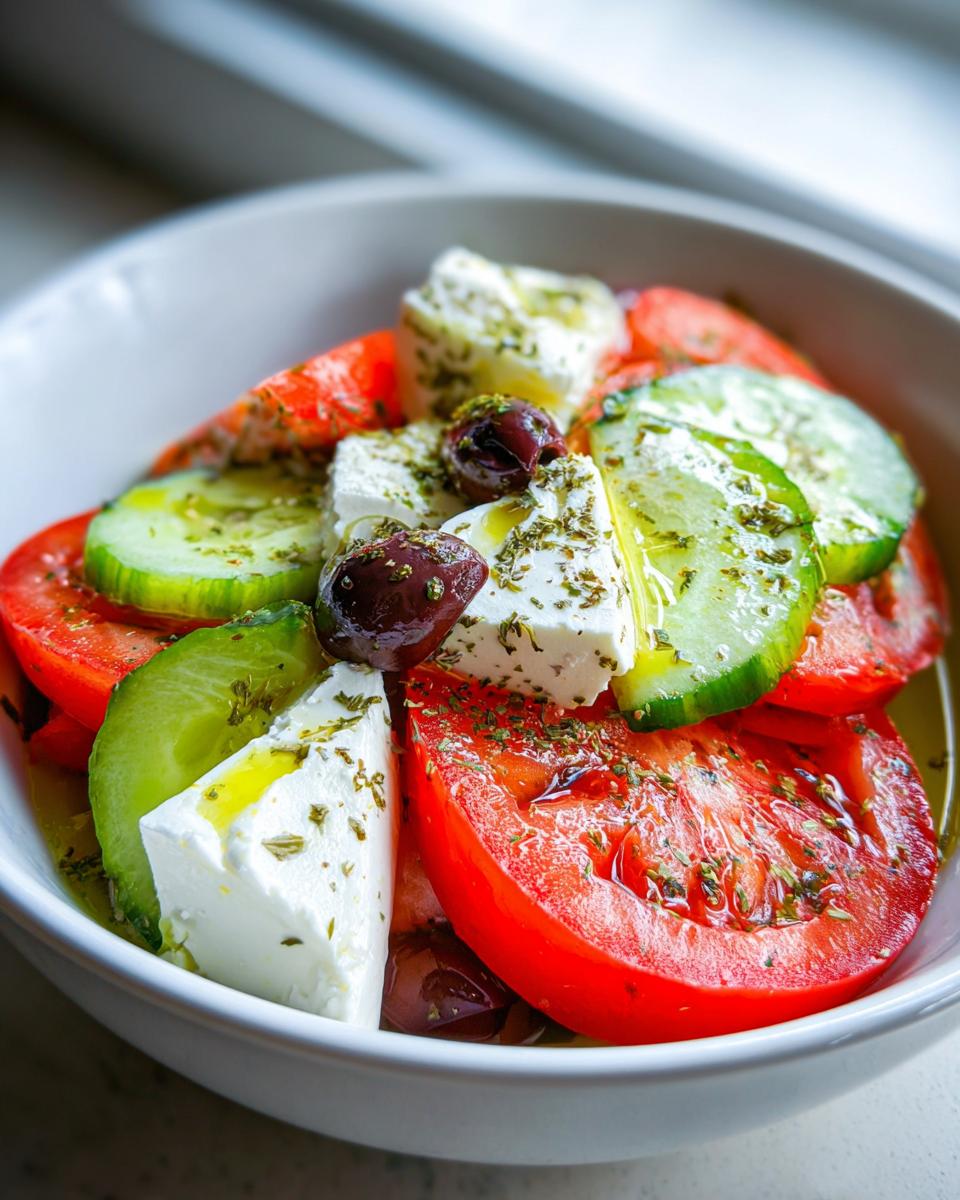
What if you can’t find red wine vinegar? That’s okay! Red wine vinegar is crucial because it has that specific complex, somewhat fruity tartness. If you’re truly stuck, white wine vinegar is the next best thing, but you might need to add just a tiny splash less because it can be sharper. Lemon juice alone is too bright and changes the whole flavor profile of the dressing dramatically, so I try to avoid using it as the sole acidic element. For the most authentic flavor experiences, I always recommend checking out experts like the folks at Downshiftology, who also champion the simple approach here.
And just one more note on the olives: If you find Kalamata olives too intense, try rinsing them lightly under cold water before adding them in. This takes away just a touch of that briny saltiness, which can be helpful if you are sensitive to sodium, but honestly, that sharp kick is what balances out the olive oil perfectly!
Serving Suggestions for Your Simple greek side dish
Now that we have this incredibly vibrant cucumber tomato salad ready, what are we having it with? Since this is a simple greek side dish, it’s begging to be paired with something grilled outside. It’s the perfect, cool counterbalance to heat!
I almost always serve this alongside my recipe for Crispy Baked Chicken Wings when we have friends over because you get the savory, salty flavors working together beautifully. It’s also genuinely wonderful next to grilled fish or even tucked into a pita pocket with some hummus for a quick, healthy lunch. It holds up so well and makes any meal feel instantly summery. Don’t be afraid to experiment!
Storage and Reheating Instructions
Okay, let’s be real—a fresh vegetable salad like this is always, *always* best enjoyed the second the dressing hits the ingredients. That beautiful crunch of the cucumber and the firmness of the tomato fades fast once the vinegar and olive oil start working their magic. So, while I say serve it immediately, I know life happens! If you have leftovers, we need a strategy to keep things from turning into sad, watery mush.
The biggest secret here, which really separates the casual cook from the pro, is separation! Never, ever store the salad dressed. If you know you are making a large batch for meal prep, keep everything completely separate until serving time. Seriously, Daisy taught me that the dressing is the destroyer of texture.
Keep your homemade Greek vinaigrette in a small jar in the fridge. Since it’s mostly olive oil and proper vinegar, it might solidify a bit when cold—that’s totally fine! Just pull it out about 20 minutes before you plan to eat so it warms up slightly; you want it pourable, not slushy. You can keep that dressing good for three days, easy peasy.
For the vegetables and the feta, store them in an airtight container in the crisper drawer. The key thing to watch for is the onion—it releases strong flavors when stored. If you hate the idea of super pungent onion in leftover cucumber, slice a little less than you think you need for the initial batch. When you go to eat the leftovers the next day, combine the veggies and feta, drizzle with the saved dressing, toss quickly, and enjoy that refreshing taste all over again!
Frequently Asked Questions About Making a greek salad
Is authentic greek salad supposed to have lettuce?
That’s one of the biggest questions I get! The short answer is no, absolutely not. If you are making a truly authentic greek salad, which is called *Horiatiki* in Greece, there is no lettuce involved whatsoever. It’s a celebration of tomato, cucumber, onion, olives, and that gorgeous slab of feta. If you see lettuce, that recipe is leaning closer to an Americanized version. We’re sticking to tradition here because the flavor profile just works better without the bulk of lettuce getting in the way!
Can I prepare the ingredients for this greek salad ahead of time?
Yes, you totally can, but you have to be smart about it—remember what I said about sogginess? The golden rule for making this ahead is to keep every single component separate until you are ready to eat. Your dressing should be pre-made and stored in the fridge, as detailed above. The vegetables can be chopped and kept dry in the fridge, and the feta should be kept cool. When you are about five minutes away from serving, toss the veggies gently with the dressing and then top with the feta. That way, you get the freshness without the wilt factor, which is perfect for meal prepping your next healthy breakfast idea, like my Healthy Breakfast Ideas!
What is the best way to cut the vegetables for this salad?
We are going for rustic, chunky, and hearty cuts here! Think about how you’d chop vegetables if you were sitting at a little taverna on a Greek island—not precise, small cubes. For the tomatoes, those wedges are perfect; they absorb the dressing nicely. For the cucumber, stick to thick half-moons, maybe a quarter-inch thick. We want every bite to have substance and texture. Small cuts get drowned out and turn soft too quickly. We want that satisfying, crisp bite for our quick mediterranean salad!
Share Your Experience Making This Fresh Vegetable Salad
Now that you’ve got the secret to an incredibly fresh and authentic greek salad dressing and assembly down pat, I just have to hear about it! Please, please, please, come back here and leave me a star rating—it really helps other home cooks find this recipe. Tell me how it worked for your gathering!
Did you serve this simple, vibrant salad as a summer bbq side dish, or did you sneak some leftovers into your lunch the next day? Let me know what you paired it with! I love hearing how you adapt these simple, wholesome recipes for your own table. And if you managed to keep the feta on top like a perfect block, give yourself a pat on the back!
If you’re already planning what to serve next, maybe you need something sweet after all that beautiful savory freshness. You can always browse through my collection of delicious dessert recipes when you’re ready for your next kitchen project!
PrintClassic Greek Salad (Horiatiki) with Bright 5-Minute Lemon Vinaigrette
Make this authentic Greek salad, Horiatiki, featuring fresh vegetables, salty feta, and Kalamata olives. The simple, bright lemon vinaigrette comes together in five minutes, making this a quick, healthy Mediterranean side dish.
- Prep Time: 10 min
- Cook Time: 0 min
- Total Time: 10 min
- Yield: 4 servings 1x
- Category: Salad
- Method: No Cook
- Cuisine: Greek
- Diet: Vegetarian
Ingredients
- 2 large ripe tomatoes, cut into wedges
- 1 large English cucumber, cut into thick half-moons
- 1/2 red onion, thinly sliced
- 1 cup Kalamata olives, whole or pitted
- 8 ounces block feta cheese, cut into thick slices or cubes
- 1/4 cup extra virgin olive oil
- 2 tablespoons red wine vinegar
- 1 teaspoon dried oregano
- 1/4 teaspoon sea salt
- Freshly ground black pepper to taste
Instructions
- Prepare the vegetables: Place the tomato wedges, cucumber pieces, sliced red onion, and Kalamata olives into a large, shallow serving bowl.
- Arrange the feta: Place the thick slices or cubes of feta cheese directly on top of the vegetables. Do not mix it in yet.
- Make the dressing: In a small bowl or jar, whisk together the extra virgin olive oil, red wine vinegar, dried oregano, sea salt, and black pepper until well combined.
- Dress the salad: Drizzle the homemade Greek vinaigrette evenly over the vegetables and feta.
- Serve immediately: Sprinkle a little extra dried oregano over the feta before serving. You can gently toss the salad just before eating, or serve it family-style so people can mix their own portions.
Notes
- For the most authentic experience (Horiatiki), avoid adding lettuce. This recipe focuses on the traditional vegetable base.
- Use high-quality feta cheese packed in brine for the best salty, creamy texture.
- You can make the bright lemon dressing up to three days ahead and store it in the refrigerator. Let it warm slightly before using.
Nutrition
- Serving Size: 1 serving
- Calories: 310
- Sugar: 5
- Sodium: 650
- Fat: 28
- Saturated Fat: 10
- Unsaturated Fat: 18
- Trans Fat: 0
- Carbohydrates: 10
- Fiber: 3
- Protein: 10
- Cholesterol: 40